
— —
Automatic Pipe Welding Manipulator Performance Checklist
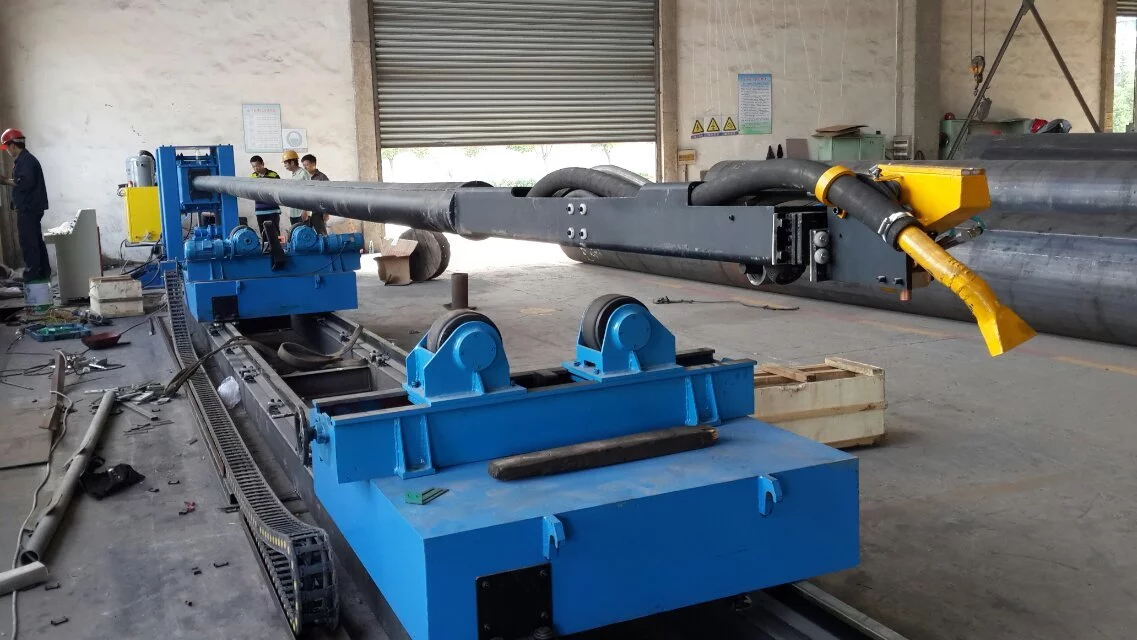
Evaluating an Automatic Pipe welding manipulator requires more than checking basic motion and load capacity—it demands a clear review of precision, stability, safety, integration, and long-term reliability.
For technical assessment teams, a structured performance checklist helps verify weld consistency, fabrication efficiency, and suitability for demanding industrial pipe welding applications.
Scenario Background: Why Application Conditions Change the Checklist
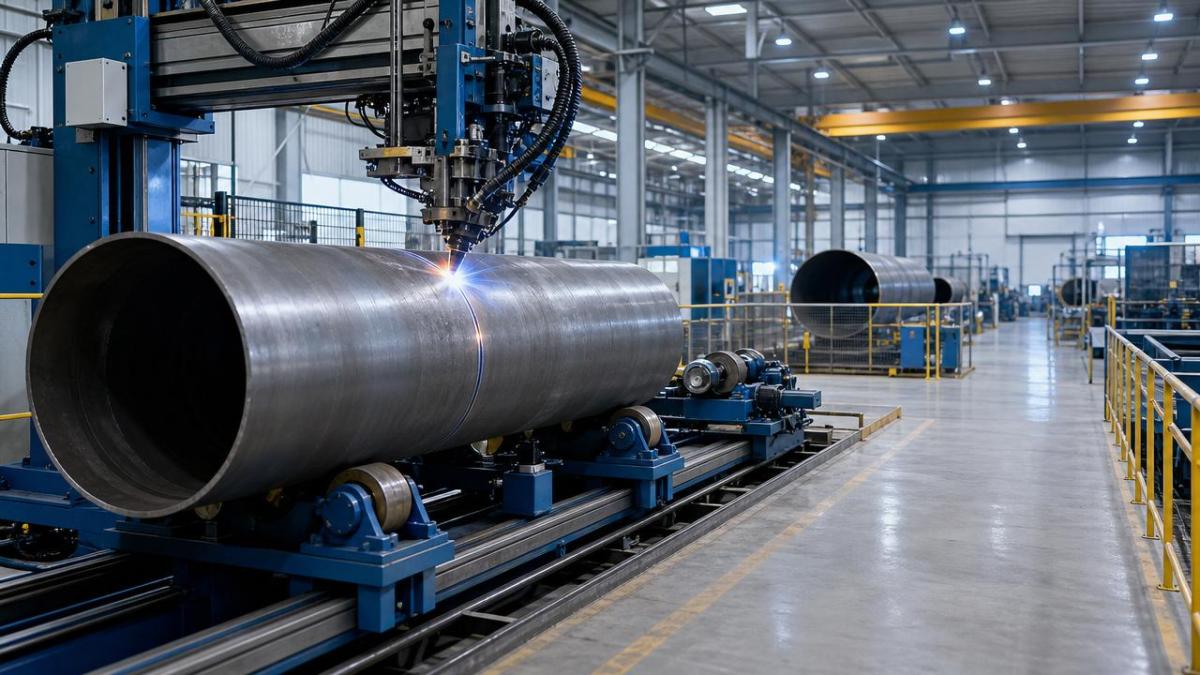
An Automatic Pipe welding manipulator performs differently across pressure vessel, boiler, shipbuilding, chemical, energy, and machinery fabrication environments.
Each scenario changes pipe diameter, joint position, welding process, heat input, rotation accuracy, and inspection expectations.
A good checklist should connect equipment performance with actual production conditions, not only catalog specifications.
When an Automatic Pipe welding manipulator is assessed in context, hidden risks become easier to identify before installation.
Core Baseline Before Any Scenario Review
- Confirm rated load against the heaviest pipe, fixture, torch, and accessory combination.
- Check column, boom, travel carriage, and rotation stability under realistic duty cycles.
- Review repeat positioning accuracy during start, stop, return, and height adjustment.
- Verify compatibility with SAW, MIG, TIG, plasma, or hybrid welding processes.
- Confirm electrical control logic, emergency stops, grounding, and interlock functions.
Pressure Vessel Welding: Precision Under Heavy Sections
Pressure vessel production often demands stable welding over thick shells, long seams, and strict inspection requirements.
In this scenario, the Automatic Pipe welding manipulator must maintain torch alignment during long heat cycles and heavy workpiece rotation.
Check boom deflection at full extension, especially when welding nozzles, circumferential seams, or longitudinal joints.
The manipulator should move smoothly without vibration that could disturb arc stability or bead geometry.
Key Judgment Points for Heavy Fabrication
- Measure actual vertical and horizontal travel accuracy under load.
- Review anti-fall mechanisms, brake reliability, and overload protection.
- Confirm compatibility with welding rotators and turning rolls.
- Check cable management for long-stroke movement and high-current welding.
Before welding, edge preparation also affects manipulator performance results.
For plate and shell bevel preparation, an Edge milling machine can improve joint consistency before automatic welding.
The XBJ series supports straight flanges, bevel edges, and U type grooves, helping reduce fit-up variation before welding automation begins.
Boiler and Heat Exchanger Work: Repeatability Across Many Joints
Boiler and heat exchanger fabrication involves repeated pipe connections, tube sheets, headers, and compact joint layouts.
An Automatic Pipe welding manipulator should support repeat positioning without time-consuming recalibration between similar welds.
The checklist should include torch adjustment range, fine feed response, and visibility around crowded work areas.
Smooth low-speed motion matters here because small joint errors may create rework or difficult nondestructive testing results.
Recommended Checks for Repetitive Production
- Test parameter recall for common pipe sizes and welding positions.
- Confirm control response during tack-to-weld transitions.
- Inspect torch oscillation, seam tracking, and arc length correction options.
- Record setup time between different pipe diameters and wall thicknesses.
Shipbuilding and Offshore Fabrication: Stability Over Large Structures
Shipbuilding applications often combine large assemblies, variable access space, and long pipe spools.
The Automatic Pipe welding manipulator must remain stable when floor conditions, workpiece length, and welding access change frequently.
Travel rails, column stiffness, and operator control placement become important decision points.
A manipulator with unstable travel may create inconsistent bead width on long pipe seams.
Scenario-Based Inspection Priorities
- Inspect rail straightness, anchoring, and protection against workshop debris.
- Check whether the control pendant supports safe remote operation.
- Review compatibility with positioners, rotators, and spool handling systems.
- Confirm corrosion protection for humid or coastal fabrication environments.
Chemical and Energy Piping: Safety and Traceability First
Chemical and energy piping often requires strict weld documentation, stable penetration, and reliable process control.
An Automatic Pipe welding manipulator should support consistent welding conditions across materials such as carbon steel, stainless steel, and alloys.
The assessment should include grounding quality, arc interference resistance, and data connection possibilities.
For regulated production, repeatability is not enough; the process also needs measurable and traceable output.
Safety and Control Items to Verify
- Emergency stops must be reachable from normal operation zones.
- Limit switches should stop dangerous overtravel before mechanical impact.
- Electrical cabinets should match workshop dust and protection requirements.
- Welding parameter interfaces should support stable signal transmission.
Machinery Manufacturing: Flexibility for Mixed Workpieces
Machinery fabrication workshops may handle pipes, cylinders, structural parts, and irregular welded assemblies in one production area.
Here, an Automatic Pipe welding manipulator must balance accuracy, adjustment speed, and broad process compatibility.
The checklist should not focus only on maximum capacity.
It should also examine how quickly the equipment adapts between short runs and custom jobs.
Flexibility Indicators
- Fast adjustment of boom height, extension, and torch angle.
- Stable low-speed and medium-speed movement.
- Clear integration with CNC cutting, milling, and welding robot lines.
- Simple maintenance access for gearboxes, guides, motors, and sensors.
Different Scenario Requirements Compared
Performance Checklist for an Automatic Pipe Welding Manipulator
A complete Automatic Pipe welding manipulator checklist should connect mechanical, electrical, welding, and service factors.
The following items help reveal whether the equipment can support stable production beyond the acceptance test.
Mechanical Performance
- Column and boom structure should resist vibration during continuous welding.
- Guide surfaces should move smoothly with no abnormal noise or jumping.
- Travel speed should remain stable at low and high settings.
- Load capacity should include welding head, flux hopper, cables, and accessories.
Welding Process Performance
- Arc start and stop positions should be repeatable.
- Torch angle adjustment should be precise and lock securely.
- Seam tracking should respond without overcorrection.
- Oscillation settings should match actual groove width and welding procedure.
Control and Integration
- Control panels should be clear, responsive, and protected from dust.
- Interfaces should coordinate with rotators, positioners, and welding power sources.
- Speed adjustment should be stable through variable frequency control.
- System alarms should identify faults quickly and accurately.
Scene Adaptation Suggestions Before Final Selection
Selection should begin with real workpiece data, not only a general equipment category.
Pipe diameter range, wall thickness, weld length, groove form, and production rhythm should guide the configuration.
- For heavy pipes, prioritize rigidity, brake safety, and rotator synchronization.
- For repeated small batches, prioritize quick setup and stored welding programs.
- For long seams, prioritize travel smoothness and cable protection.
- For regulated industries, prioritize traceability, interlocks, and stable interfaces.
- For mixed fabrication, prioritize modular accessories and easy maintenance.
Joint preparation should be evaluated together with welding automation.
XBJ series milling equipment can process 6–80mm plates, with heavy models covering 6–400mm thickness.
Its bevel range, automatic clamping, edge detection, and high-speed milling help support consistent groove quality before welding.
Common Misjudgments When Reviewing Performance
One common mistake is treating rated load as the only capacity measure.
An Automatic Pipe welding manipulator may carry the load but still lose precision at full boom extension.
Another mistake is ignoring the difference between demonstration welding and daily industrial operation.
Continuous production exposes heat, dust, vibration, cable wear, operator habits, and maintenance quality.
Often Overlooked Points
- Return movement accuracy after long operation.
- Wire, gas, flux, and power cable interference.
- Access for cleaning guide rails and checking fasteners.
- Availability of spare parts and technical documentation.
- Compliance with ISO9001 quality expectations and CE safety practices.
Supplier Capability and Long-Term Reliability
Equipment performance also depends on design experience, production control, and after-sales support.
Wuxi Armada International Trade Co., Ltd supplies automatic welding equipment, CNC cutting machines, welding robots, lathes, milling machines, and forming equipment.
Located in Wuxi, Jiangsu Province, the company supports mechanical equipment projects for domestic and international industrial applications.
Production and design are organized according to ISO9001 quality systems and EU CE standards.
This background helps align an Automatic Pipe welding manipulator with broader fabrication lines and related processing equipment.
Action Guide: Build a Practical Validation Plan
Before confirming an Automatic Pipe welding manipulator, prepare a validation plan using actual drawings, welding procedures, and production targets.
Run tests with representative pipes, realistic accessories, and normal workshop conditions.
Record motion accuracy, weld appearance, setup time, alarm response, and operator adjustment requirements.
Compare the findings with inspection standards, production rhythm, and maintenance capacity.
A well-structured checklist turns equipment selection into a measurable technical decision.
When the Automatic Pipe welding manipulator matches the real scenario, fabrication quality, efficiency, and reliability can improve together.