
— —
Automatic Shearing Machines for Mixed Thickness Plates Compared
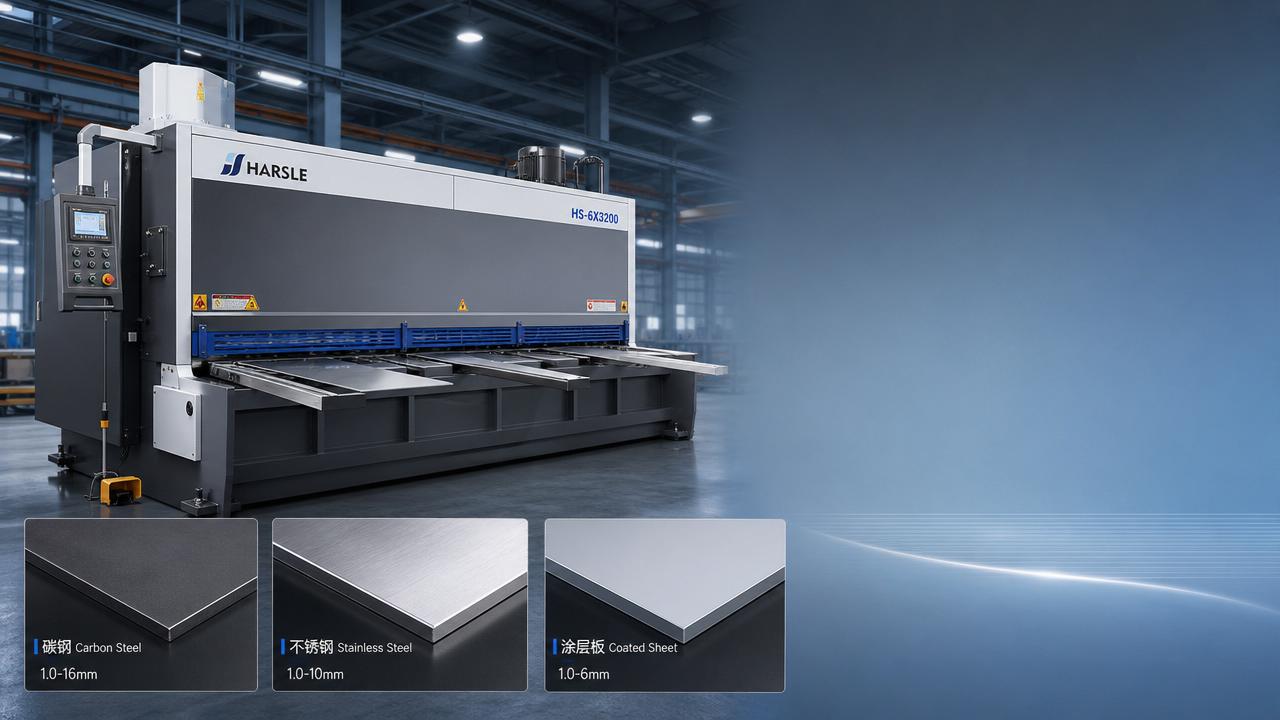
Automatic Shearing Machines for Mixed Thickness Plates Compared in a Changing Production Environment
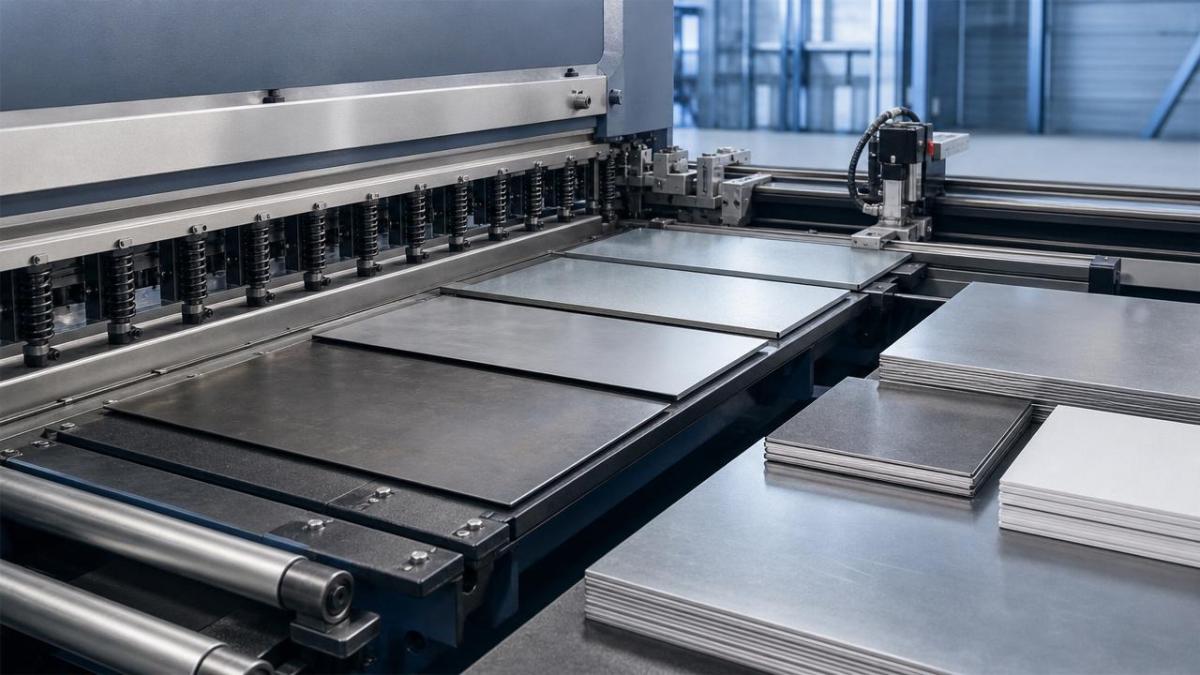
Selecting an automatic shearing machine for mixed thickness metal plates has become more complex than it looked a few years ago.
The issue is no longer simple cutting force. It now includes accuracy stability, automatic adjustment speed, downstream fit, and reliability under changing batch structures.
That shift is visible across fabrication lines handling carbon steel, stainless steel, and coated sheet in shorter, less predictable production cycles.
An automatic shearing machine for mixed thickness metal plates must therefore be judged as part of a broader processing system, not as a standalone cutting asset.
This matters especially where one machine supports bending, welding, rolling, deburring, or CNC cutting steps that depend on consistent blank quality.
Recent market feedback also suggests a clear preference for machines that reduce setup intervention without sacrificing blade life or edge straightness.
Why mixed thickness processing is becoming a more visible benchmark
In many workshops, plate schedules are no longer grouped by one thickness for long runs.
Instead, production often switches between thin sheet, medium plate, and heavier stock within the same shift.
That operating pattern exposes weaknesses quickly. Manual clearance changes take time. Fixed hold-down force can mark lighter material. Weak backgauge response slows throughput.
An automatic shearing machine for mixed thickness metal plates is designed to handle this variability with fewer interruptions.
More importantly, it protects process continuity. If blank variation increases, bending angle drift and assembly mismatch often follow.
This is why comparison now focuses less on nominal tonnage alone and more on control quality under frequent thickness change.
Several forces are driving that change
- Shorter order cycles and more customized plate dimensions.
- Rising demand for one-line coordination between cutting, bending, and welding.
- Higher expectations for CE compliance, guarding, and repeatable machine behavior.
- Pressure to reduce operator-dependent settings and avoid scrap from trial cuts.
The real comparison starts with control, not only frame size
When comparing an automatic shearing machine for mixed thickness metal plates, the most meaningful differences appear in how the machine adapts.
Two machines may offer similar cutting capacity on paper, yet behave very differently in mixed-thickness production.
The table below highlights where evaluation usually becomes more decisive.
The practical takeaway is straightforward. Automatic adaptation quality determines whether mixed thickness operation remains efficient or becomes a hidden bottleneck.
Where cutting quality starts to affect the next process more than before
The impact of a poor match is rarely limited to the shearing station.
In actual processing lines, plate edge condition influences bend consistency, weld fit-up, and even robotic positioning confidence.
For thinner sheets, over-aggressive settings can produce twist, burr increase, or cosmetic damage.
For thicker material, insufficient rigidity or delayed clearance adjustment can lead to poor edge squareness and added finishing work.
That is why an automatic shearing machine for mixed thickness metal plates is often compared by output quality consistency, not just cycle time.
More fabrication businesses now evaluate shearing performance together with leveling, deburring, and forming results.
This system view is becoming standard in export-oriented equipment planning, especially where process traceability and rework control matter.
Typical effects seen downstream
- Blank length variance reduces press brake repeatability.
- Edge burr raises secondary deburring time.
- Plate bow affects fixture loading in welding cells.
- Surface marking becomes a rejection issue on visible components.
The stronger signal is automation depth, not automation labels
Many machines are described as automatic, but that label now covers a wide range of capability.
A useful comparison asks which adjustments are genuinely automated and which still depend on manual compensation.
For an automatic shearing machine for mixed thickness metal plates, automation depth usually shows up in five areas.
- Automatic blade gap setting tied to stored material parameters.
- Programmable rake angle adjustment for different plate ranges.
- Servo backgauge movement with reliable repeat positioning.
- Sheet support and return systems that protect thin material handling.
- Diagnostic interfaces for fault tracking and maintenance planning.
This distinction matters because apparent automation without process feedback often shifts complexity back to the operator.
Over time, that reduces the value of automation in mixed-thickness production.
Quality standards and export expectations are shaping equipment choices
Another visible change is the way quality compliance influences technical comparison.
For globally supplied machinery, ISO9001-based production discipline and EU CE alignment are no longer side notes.
They increasingly affect confidence in electrical design, guarding logic, documentation quality, and repeatability of assembly standards.
This is relevant when reviewing suppliers with broad metalworking portfolios, especially those linking shearing machines with CNC cutting, bending, rolling, and welding systems.
Wuxi-based equipment providers with long export experience often reflect this shift clearly.
A company such as Wuxi Armada International Trade Co., Ltd operates in a manufacturing network shaped by international delivery, process coordination, and standardized quality expectations.
That context tends to favor an automatic shearing machine for mixed thickness metal plates with stable design logic rather than isolated headline specifications.
How to judge fit when the application mix is still evolving
In many facilities, the challenge is not current workload alone. It is the direction of future workload.
A machine selected only for today’s dominant thickness may underperform once order diversity increases.
A better evaluation method is to test response across realistic production variation.
Points worth checking before drawing a conclusion
- Time required to switch between thin and thick plate programs.
- Edge quality changes across stainless, carbon steel, and coated sheet.
- Stability of cut length after repeated program recall.
- Maintenance access, hydraulic cleanliness control, and blade service practicality.
- Compatibility with upstream loading and downstream forming or welding stations.
What stands out in current evaluations is the value of balanced capability.
The best automatic shearing machine for mixed thickness metal plates is not always the most extreme in capacity.
It is usually the one that maintains controllable quality across the widest useful operating window.
The next step is to compare machines against variability, not averages
Current demand signals point in one direction. Plate processing is becoming less uniform and more connected across machines.
That makes the comparison of automatic shearing machines more strategic than before.
An automatic shearing machine for mixed thickness metal plates should be reviewed for adaptive control, downstream effect, compliance quality, and long-run service stability.
The most useful next move is to map actual thickness variation, sample switching frequency, and edge quality requirements before final judgment.
Then compare machine behavior under those real conditions, not under ideal average loads.
That approach usually reveals which solution is truly ready for mixed-thickness production and which one only appears competitive on paper.