
— —
Common Guillotine Shear Problems: Burrs, Blade Wear, and Inaccurate Cuts Explained
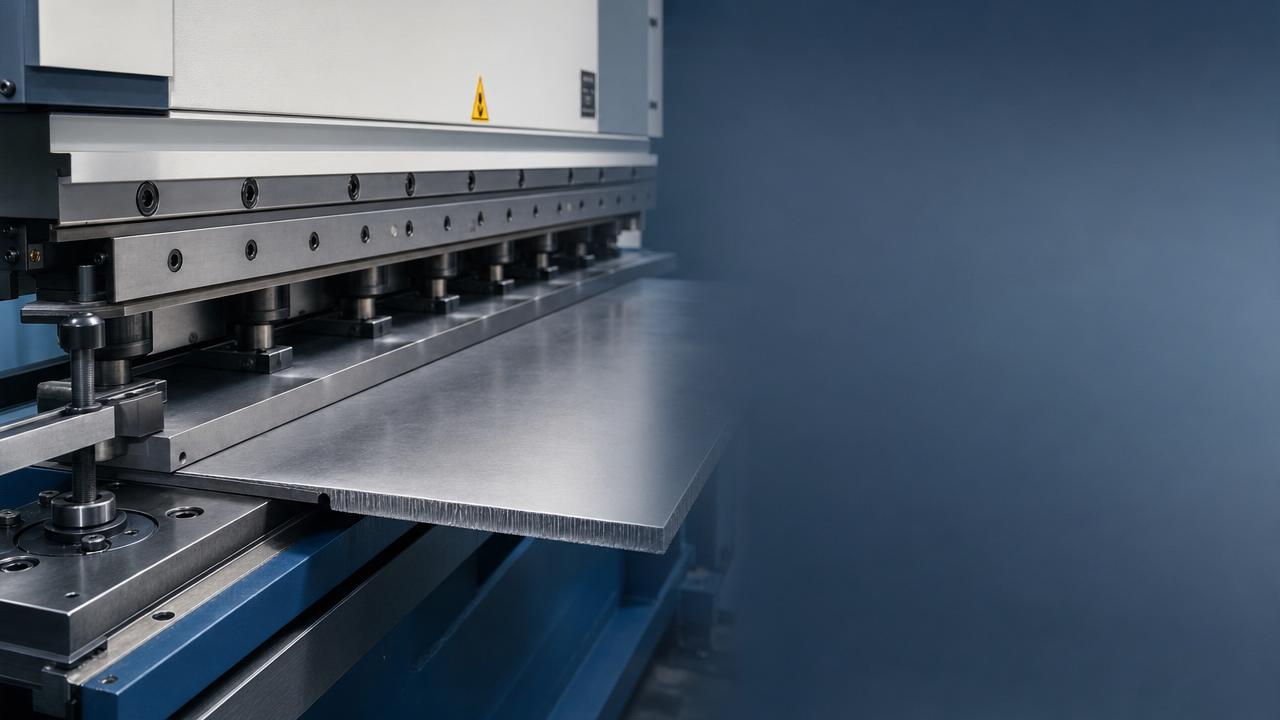
Common Guillotine Shear Problems: Burrs, Blade Wear, and Inaccurate Cuts Explained
When a Guillotine Shear starts producing burrs, uneven edges, or inaccurate cuts, quick diagnosis matters.
Small cutting defects often signal a deeper issue inside the machine.
Blade wear, poor clearance, loose guides, and hydraulic instability can all reduce cut quality.
If these problems are ignored, scrap increases, downstream fitting becomes harder, and production efficiency drops.
This guide explains the most common Guillotine Shear problems, their root causes, and practical correction steps.
The goal is simple: restore stable, accurate cutting with less downtime and fewer repeated service calls.
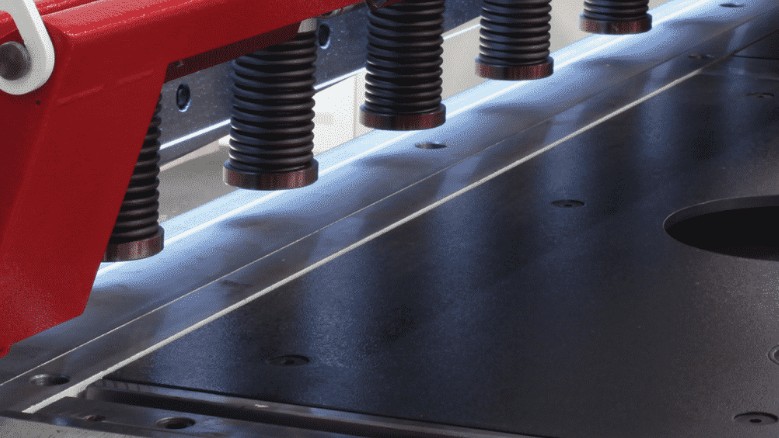
Why Guillotine Shear Cutting Quality Changes Over Time
A Guillotine Shear rarely loses accuracy for only one reason.
In most cases, several small changes build up gradually.
From recent service trends, the first warning sign is usually edge quality.
Operators may report burrs, twist, rough fractures, or sheet movement during cutting.
A more obvious signal is size inconsistency between repeated cuts.
That usually means the problem has already moved beyond the blade edge itself.
In real workshop conditions, cutting quality depends on five linked factors.
- Blade sharpness and blade geometry
- Correct blade clearance for material thickness
- Hold-down pressure and sheet stability
- Frame, guide, and backgauge condition
- Hydraulic and control system consistency
Once one factor shifts, the Guillotine Shear starts showing defects that look similar but come from different causes.
Problem 1: Burrs on the Cut Edge
Burrs are one of the most common Guillotine Shear complaints.
They increase rework time and create trouble for welding, bending, and assembly.
In sheet metal lines, burrs also raise safety risks during manual handling.
Typical causes of burr formation
- Blade edges are worn, chipped, or rounded
- Blade clearance is too large for the plate thickness
- The material is harder than the current setup allows
- The sheet moves because hold-down force is uneven
- Blade alignment is uneven across the cutting length
How to confirm the root cause
Start by checking whether burr height is consistent along the full cut.
If burrs appear on only one side, alignment or localized wear is likely.
If burrs appear across the whole edge, clearance or general blade wear is the better suspect.
Compare the defect on thin plate and thicker stock before changing settings.
Practical fixes
- Inspect upper and lower blades for edge rounding or micro-chipping.
- Reset blade clearance according to actual material thickness and grade.
- Check hold-down cylinders and springs for equal pressure response.
- Verify blade parallelism with a feeler gauge across the full length.
- Run test cuts and record burr height after every adjustment.
In many cases, burrs return because the blade was sharpened, but the clearance was never corrected.
Problem 2: Blade Wear and Short Service Life
Blade wear is normal, but rapid wear is not.
If a Guillotine Shear needs frequent blade rotation or grinding, setup conditions should be reviewed.
The blade is often blamed first, even when the machine condition is the real cause.
What accelerates blade wear
- Excessive clearance causing edge impact instead of clean shearing
- Misalignment between upper and lower blades
- Repeated cutting of high-strength material without parameter changes
- Loose gibs or worn guide rails creating unstable blade motion
- Contamination, poor lubrication, or poor maintenance intervals
Blade inspection should focus on wear pattern, not only wear amount.
Uneven wear tells you more than a simple sharp or dull judgment.
For example, heavier wear near one end often points to skewed loading or alignment drift.
This maintenance logic also applies to other metal processing equipment.
For instance, an CNC Face milling machine depends heavily on guide rigidity, perpendicularity, and stable feed control.
When the guide rails are hardened and key structures remain rigid, long-term accuracy is easier to maintain.
The same principle matters in a Guillotine Shear: mechanical stability protects cutting quality and tool life.
Ways to extend blade life
- Match clearance to each material group, not one default setting.
- Rotate or regrind blades before severe edge damage spreads.
- Inspect guides, gibs, and slide surfaces during every blade service.
- Keep hydraulic motion smooth and free from shock loading.
- Store maintenance records by material type and cutting hours.
Problem 3: Inaccurate Cuts and Size Deviation
Inaccurate cuts create immediate production disruption.
Even a small size error can affect fit-up, welding gaps, and final assembly speed.
With a Guillotine Shear, dimensional problems are often linked to positioning systems rather than cutting force alone.
Common reasons for inaccurate cuts
- Backgauge positioning error or repeatability loss
- Loose stop fingers or bent gauge components
- Sheet slipping because hold-down action starts too late
- Frame deflection under load
- Control calibration drift after long service periods
What to check first
Begin with the simplest measurement path.
Cut several pieces at the same programmed length and compare actual values.
If variation is random, mechanical looseness or slippage is more likely.
If variation is consistent, offset calibration may be wrong.
This distinction helps avoid replacing parts that are still in good condition.
Corrective actions that usually work
- Check backgauge lead screws, rails, and servo response.
- Inspect stop surfaces for wear, impact damage, or looseness.
- Confirm hold-down timing relative to blade descent.
- Measure frame and guide play under working load.
- Recalibrate control parameters and verify repeatability with trial cuts.
Problem 4: Twisting, Bowing, or Rough Fracture Surfaces
Not every bad cut appears as a burr.
Some Guillotine Shear problems show up as part deformation after the cut.
Sheets may twist, narrow strips may bow, or the fracture zone may look unusually rough.
These signs usually point to a mismatch between material condition and machine setup.
Thin sheets and narrow offcuts are especially sensitive.
- Too much clearance can enlarge the fracture zone
- Poor support can let the sheet flex during cutting
- Dull blades increase pulling and distortion forces
- Worn hold-down pads may fail to control thinner stock
A practical response is to review material-specific cutting recipes.
One setup for all sheet types is convenient, but rarely accurate.
A Fast Troubleshooting Sequence for Guillotine Shear Service
When time is limited, a structured sequence saves effort.
It also prevents jumping too quickly to blade replacement.
- Identify the defect clearly: burr, size error, twist, or rough edge.
- Check recent changes in material thickness, grade, and production batch.
- Inspect blade condition, mounting, and clearance setting.
- Verify hold-down action, backgauge repeatability, and guide stability.
- Run controlled test cuts and compare results after each correction.
This method makes troubleshooting more consistent across different service teams.
It also creates better maintenance records for future recurring Guillotine Shear problems.
Preventive Maintenance That Reduces Repeat Failures
Good repair work solves today’s fault.
Good preventive maintenance keeps the Guillotine Shear stable next month as well.
This is where many service plans become too general.
The best approach is to tie inspections to actual defect history.
- Track blade life by material type, not calendar date alone
- Schedule clearance verification after every blade rotation
- Inspect guide wear before it affects blade movement
- Test backgauge repeatability at defined production intervals
- Monitor hydraulic pressure stability during actual cutting loads
Suppliers with strong manufacturing experience usually support this process more effectively.
Wuxi Armada International Trade Co., Ltd provides mechanical equipment built around stable quality, practical design, and long-term service support.
Its product range covers shearing machines, bending machines, rolling machines, welding equipment, CNC cutting systems, and more.
Production and design are organized in line with ISO9001 and EU CE standards, which supports dependable field performance.
Final Takeaway
Most Guillotine Shear defects can be solved faster when symptoms are linked to mechanical causes.
Burrs usually point to blade wear, clearance error, or unstable holding.
Inaccurate cuts often come from backgauge drift, slippage, or looseness in moving parts.
Short blade life is frequently a sign of setup mismatch rather than poor blade material.
A disciplined inspection routine, accurate clearance control, and stable machine geometry make the biggest difference.
That also means less scrap, better edge quality, and more predictable production output.
If recurring Guillotine Shear problems continue, review the entire cutting system step by step instead of treating each defect in isolation.