
— —
How Steel Plate Punching Marking Equipment Improves Beam and Connection Plate Production
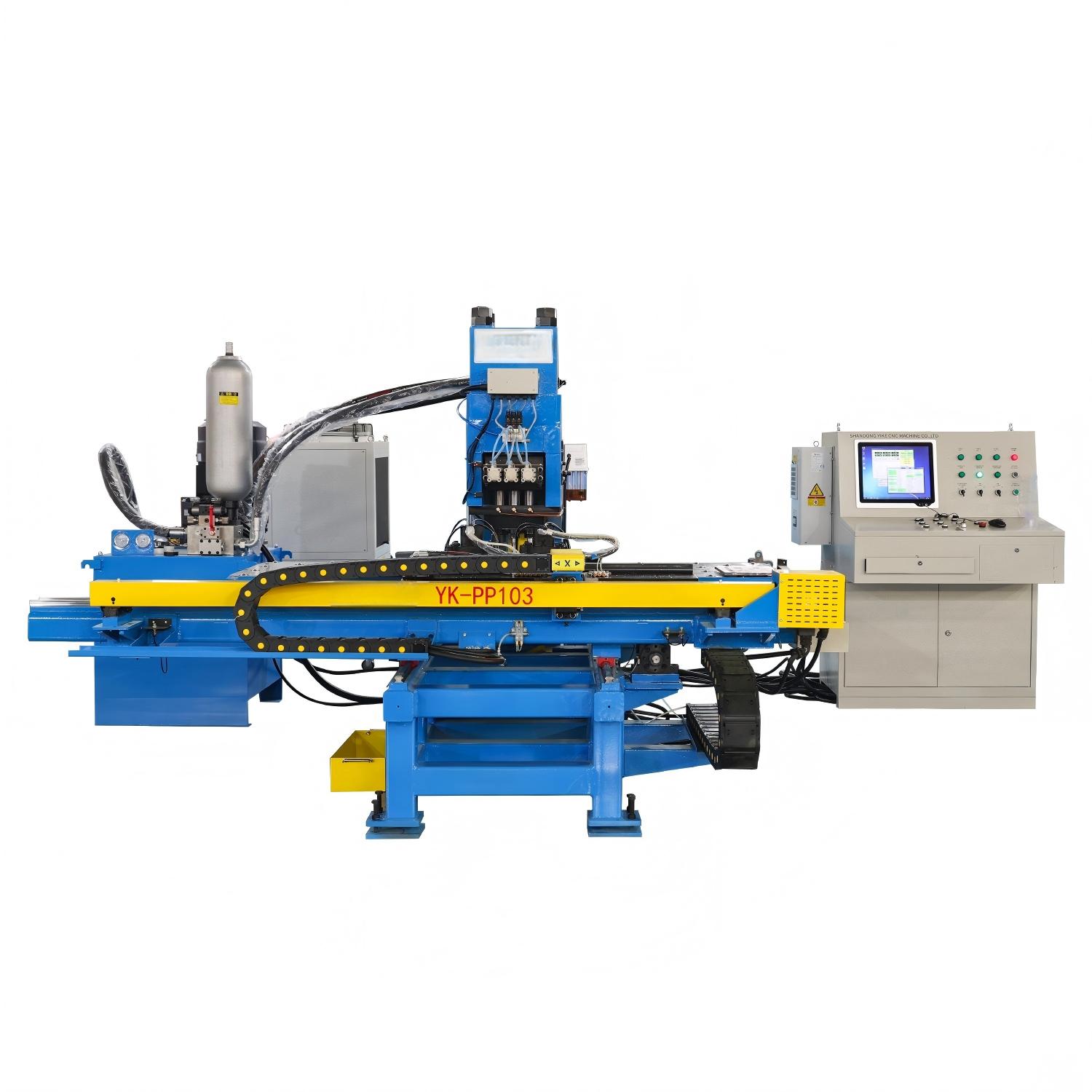
How Steel Plate Punching Marking Equipment Improves Beam and Connection Plate Production
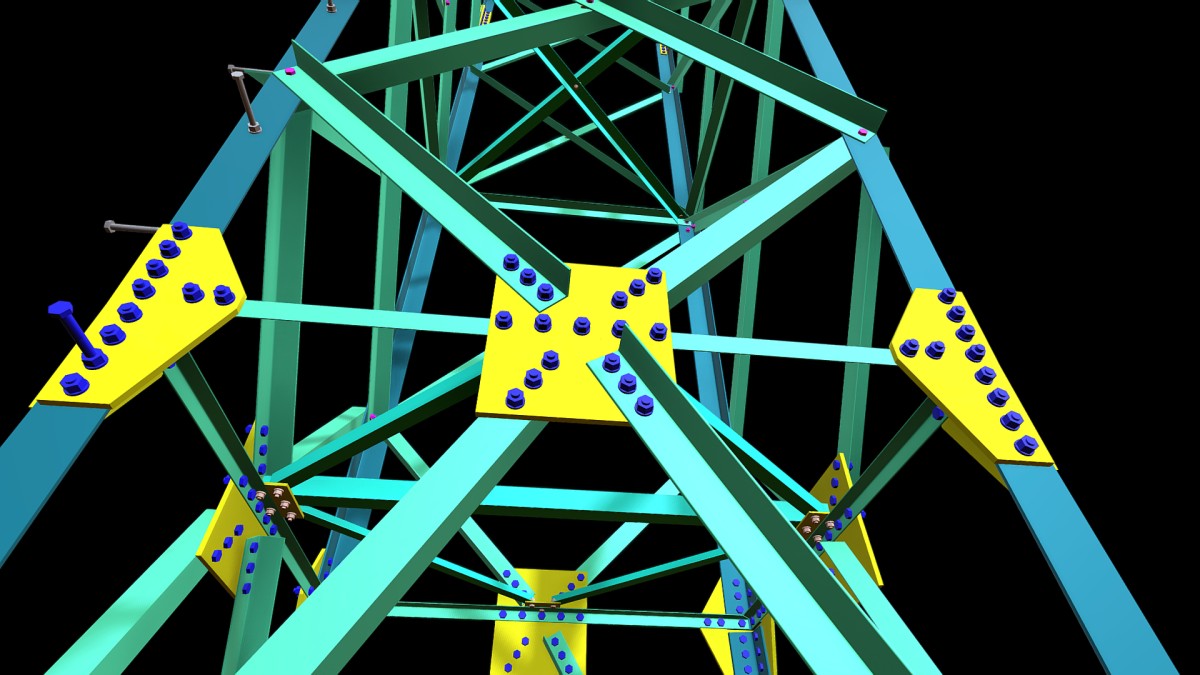
For beam and connection plate manufacturers, speed, accuracy, and traceability directly affect project costs and delivery performance.
Steel plate punching marking equipment helps streamline production by combining precise hole processing and clear part identification in one efficient workflow.
For factories facing tighter schedules, this matters more than ever.
Projects now demand faster release cycles, fewer assembly errors, and better control from raw plate to final structure.
That is where steel plate punching marking equipment becomes a practical production upgrade, not just another machine purchase.
It supports consistent hole location, readable identification marks, and cleaner workflow coordination across fabrication, sorting, and site installation.
In real operations, these gains reduce rework, improve part matching, and make output more predictable.
That combination is especially valuable in beam lines, steel structure workshops, and connection plate production with multiple part types.
Why traditional plate processing creates bottlenecks
Many workshops still separate punching, marking, checking, and sorting into different steps.
This looks manageable at low volume, but problems grow quickly when order complexity increases.
Manual layout can slow setup.
Separate marking creates another handling stage.
Part labels may become unclear after movement, stacking, or surface contamination.
When holes and marks do not align with production data, downstream fitting becomes harder.
Workers spend more time confirming parts, correcting mistakes, and searching for missing information.
For beam and connection plate production, that delay often spreads across the entire fabrication schedule.
Steel plate punching marking equipment addresses this by bringing critical steps into one coordinated process.
How steel plate punching marking equipment improves production flow
The main value of steel plate punching marking equipment is workflow integration.
Instead of treating holes and part identification as separate tasks, the system links them through one digital sequence.
That change improves production in several practical ways.
1. Faster throughput with less handling
Integrated punching and marking reduce unnecessary transfer between machines or stations.
Parts move through the line with fewer pauses.
Operators also spend less time repositioning plates and checking whether every step was completed.
2. Better hole accuracy for stable assembly
Accurate hole location matters in beam joints, splice plates, stiffeners, and base-related components.
Steel plate punching marking equipment uses programmed positioning, which reduces manual layout variation.
This helps maintain fit-up quality and lowers the chance of drilling correction later.
3. Stronger traceability from workshop to site
Clear part marks make it easier to match components with drawings, batches, and installation sequences.
That is especially useful in large steel structure projects with many similar plates.
When identification is reliable, sorting and packing become much more controlled.
4. Lower dependence on manual skill consistency
Labor variability affects output in nearly every fabrication shop.
With steel plate punching marking equipment, key steps rely more on program control than repeated manual judgment.
That supports more stable quality across shifts and product batches.
Where the equipment delivers the most value
Not every plate operation has the same priority.
The strongest return usually appears in applications with frequent repetition, strict positioning, or large project volumes.
- Connection plates for steel buildings and workshops
- Beam splice plates with tight assembly tolerances
- Support plates, gusset plates, and stiffener-related components
- Bridge and infrastructure steel parts requiring traceable identification
- Mixed-order fabrication where part sorting errors can delay shipment
In these scenarios, steel plate punching marking equipment improves scheduling discipline as much as machining efficiency.
It helps production teams keep information attached to each part throughout the process.
Key decision points before selecting a solution
Choosing steel plate punching marking equipment should start with production reality, not brochure language.
A useful evaluation usually includes the following points.
- Plate size range and thickness mix in daily orders
- Required hole quantity, spacing accuracy, and mark readability
- Expected output per shift and future expansion plans
- Data compatibility with design files and shop floor programs
- Maintenance support, spare parts access, and operator training
More advanced buyers also review how the equipment fits upstream and downstream operations.
For example, plate preparation, deburring, beam assembly, and end processing should work as one connected system.
That broader view often leads to stronger long-term returns.
Building a more complete beam production line
Steel plate punching marking equipment creates value on its own, but the results improve further when paired with complementary processing equipment.
In beam or column manufacturing, end-face quality also affects fit-up, welding preparation, and final dimensional control.
A useful supporting option is the CNC Face milling machine.
It is designed for h beam, box beam, cross beam, and other metal structure face milling processes.
For beam or column structure manufacturers, it helps deliver high-precision processing with high efficiency and strong rigidity.
Its maximum processing face reaches 2500 x 2000, which suits larger structural components.
The numerical control system can precisely control tool path and feed rate.
Guide rail hardening helps maintain long-term accuracy, while safety interlocks and automatic lubrication support daily operation.
For factories planning a coordinated production upgrade, this kind of equipment works well alongside steel plate punching marking equipment.
What improvements to expect in actual business terms
Most investment decisions come down to measurable outcomes.
With steel plate punching marking equipment, the most common business improvements include:
- Shorter production cycles for beam and connection plate orders
- Lower rework caused by wrong hole position or unclear part identity
- Better delivery reliability during peak project periods
- Improved labor utilization in repetitive processing tasks
- Stronger process traceability for quality control and customer reporting
These results are not only technical advantages.
They directly support quoting confidence, production planning, and margin protection.
In a competitive fabrication market, that difference is meaningful.
A practical path to smarter fabrication
Steel plate punching marking equipment improves beam and connection plate production by reducing manual steps, tightening accuracy, and strengthening traceability.
It also helps factories respond to larger orders without letting process complexity take control.
For manufacturers seeking a more reliable and scalable operation, this equipment offers a direct and practical upgrade path.
Wuxi Armada International Trade Co., Ltd supplies mechanical equipment for modern metal fabrication, including beam line and structural processing solutions built around quality, stability, and service.
The next step is to evaluate your current plate flow, identify the biggest bottlenecks, and match the right steel plate punching marking equipment to your production goals.