
— —
Steel Plate Punching Marking vs Laser Processing: Which Fits Your Job Better?
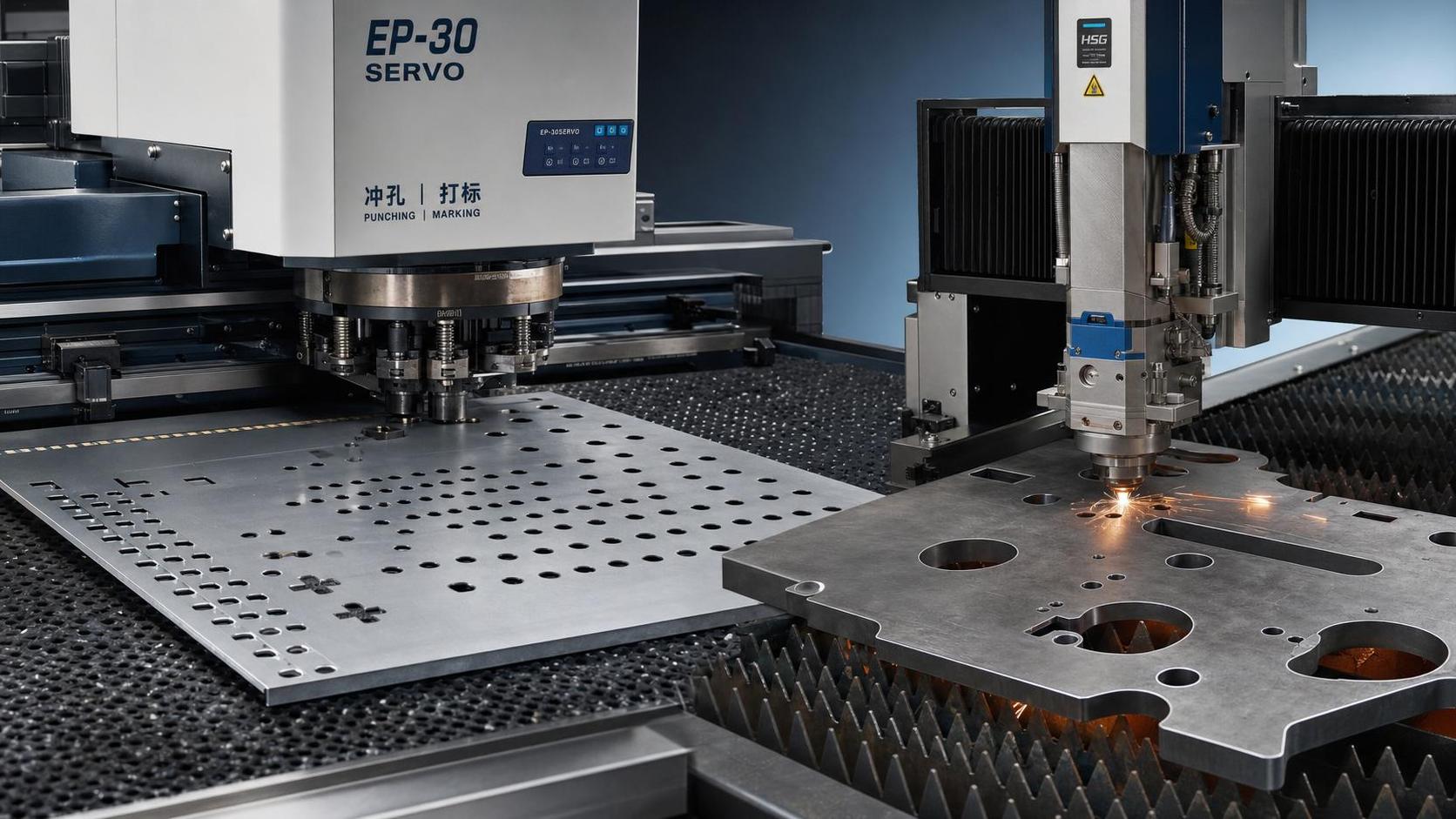
Steel Plate Punching Marking vs Laser Processing: Which Fits Your Job Better?
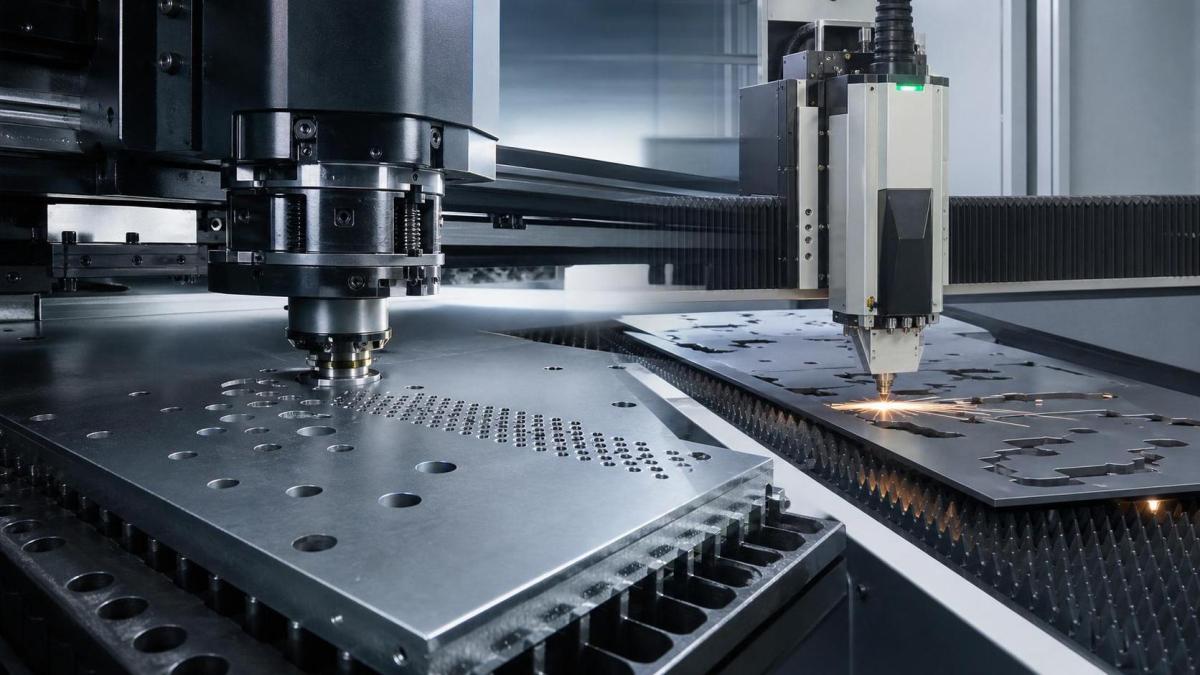
When comparing steel plate punching marking with laser processing, the real question is not which method is better overall.
It is which one matches your part design, delivery target, and production budget better.
For structural steel, bridge parts, machinery frames, and sheet metal work, both methods are common.
Yet they solve different shop-floor problems.
Steel plate punching marking is valued for speed, repeatability, and low running cost on standard hole patterns.
Laser processing stands out when part geometry is complex and edge quality matters.
A sound decision usually depends on five factors: material thickness, feature complexity, tolerance needs, throughput, and downstream handling.
What Steel Plate Punching Marking Does Best
Steel plate punching marking combines hole production and layout identification in one workflow.
That matters in fabrication lines where plates move quickly into drilling, welding, or assembly.
The process is especially practical for connection plates, gussets, base plates, and repetitive structural members.
If your job includes many repeated hole sizes, this method is hard to ignore.
- Fast cycle times on repeated hole layouts
- Clear physical marks for fit-up and traceability
- Stable output for medium and high-volume jobs
- Lower consumable cost in many standard applications
Another advantage is process discipline.
Punching and marking help operators align parts correctly before welding or bolting.
That can reduce handling errors later.
In projects where schedule pressure is high, fewer manual layout steps often mean fewer avoidable delays.
Where Laser Processing Has a Clear Edge
Laser processing is usually the stronger choice when part design is less predictable.
It handles intricate contours, small openings, and frequent drawing revisions with less setup limitation.
For prototype runs or mixed-batch production, this flexibility can outweigh the higher operating cost.
Edge condition is another reason buyers choose laser systems.
Many parts come off the table with cleaner profiles and less secondary finishing.
That becomes more important in visible components or precision assemblies.
- Complex shapes with tight nesting efficiency
- High dimensional consistency on thin and medium plates
- Faster adjustment for changing designs
- Better fit for low-volume, high-mix production
Still, laser processing is not automatically the best answer for every heavy-duty project.
On thicker plates or repetitive hole-heavy parts, steel plate punching marking can remain more economical.
Comparing the Real Decision Factors
Selection gets easier when you compare both methods against production reality, not marketing claims.
From a planning perspective, throughput is usually the first screening point.
If the line runs similar parts every day, steel plate punching marking usually creates better output stability.
If incoming jobs vary every week, laser processing may protect scheduling flexibility.
This also affects labor planning, fixture strategy, and machine utilization.
Cost, Risk, and Workflow Impact
Capital cost matters, but it should not be viewed alone.
The better question is total production cost per delivered part.
That includes power use, consumables, operator time, scrap risk, rework, and downstream fit-up.
Steel plate punching marking can reduce cost when hole patterns are standardized and marking removes manual layout work.
Laser processing can lower cost in a different way.
It may reduce tooling dependence, shorten changeover, and improve material nesting on irregular shapes.
Risk is another useful lens.
- Choose punching and marking when repeatability and assembly traceability are critical.
- Choose laser when revision frequency creates planning uncertainty.
- Review secondary operations before deciding, not after procurement.
A process that looks cheaper at the cutting stage can become expensive during welding, grinding, or inspection.
That is why workflow mapping should sit beside machine comparison.
How This Choice Connects to Downstream Fabrication
Cutting is only one stage in a metalworking project.
Many projects also require beveling, edge preparation, and weld-ready geometry.
That is where equipment coordination becomes important.
For example, container manufacturing, shipbuilding, and special vehicle production often involve square tubes, rectangular tubes, and round tubes.
In those environments, matching the cutting method with bevel preparation improves line balance.
A practical option is the CNC Square & Pipe Beveling Machine.
It supports carbon steel, stainless steel, and aluminum plates across a 6–80mm range.
Heavy-duty models extend to 6–400mm.
Processing speed reaches 0~1500mm/min, with bevel roughness around Ra3.2~6.3.
It can form inclined, straight, U, V, and K bevels in one operation.
Automatic clamping, edge detection, feed, and return movement help reduce manual intervention.
For teams comparing steel plate punching marking with laser processing, this matters because downstream readiness affects the full project economics.
A Practical Selection Framework
A useful decision process starts with part family analysis.
- List the top 20 parts by annual volume and margin impact.
- Separate repeat jobs from revision-heavy jobs.
- Measure how often marking supports assembly accuracy.
- Check edge quality requirements before welding or coating.
- Calculate cost using total workflow hours, not machine hours only.
If most work is repetitive structural processing, steel plate punching marking often delivers the stronger business case.
If product mix is diverse and design complexity is rising, laser processing may create more long-term flexibility.
Some plants also benefit from using both methods for different job categories.
That hybrid approach is often the most realistic one.
Final Takeaway
Steel plate punching marking is usually the better fit when you need fast, repeatable hole production and clear layout marks.
Laser processing is usually the better fit when geometry is complex and production needs greater flexibility.
The smartest decision comes from matching the process to your part mix, workflow, and downstream fabrication demands.
Before placing an order, review your current bottlenecks, compare real job data, and choose the method that improves the whole line, not just one machine.