
— —
How to Judge If One Drilling Machine Can Meet Export Order Needs
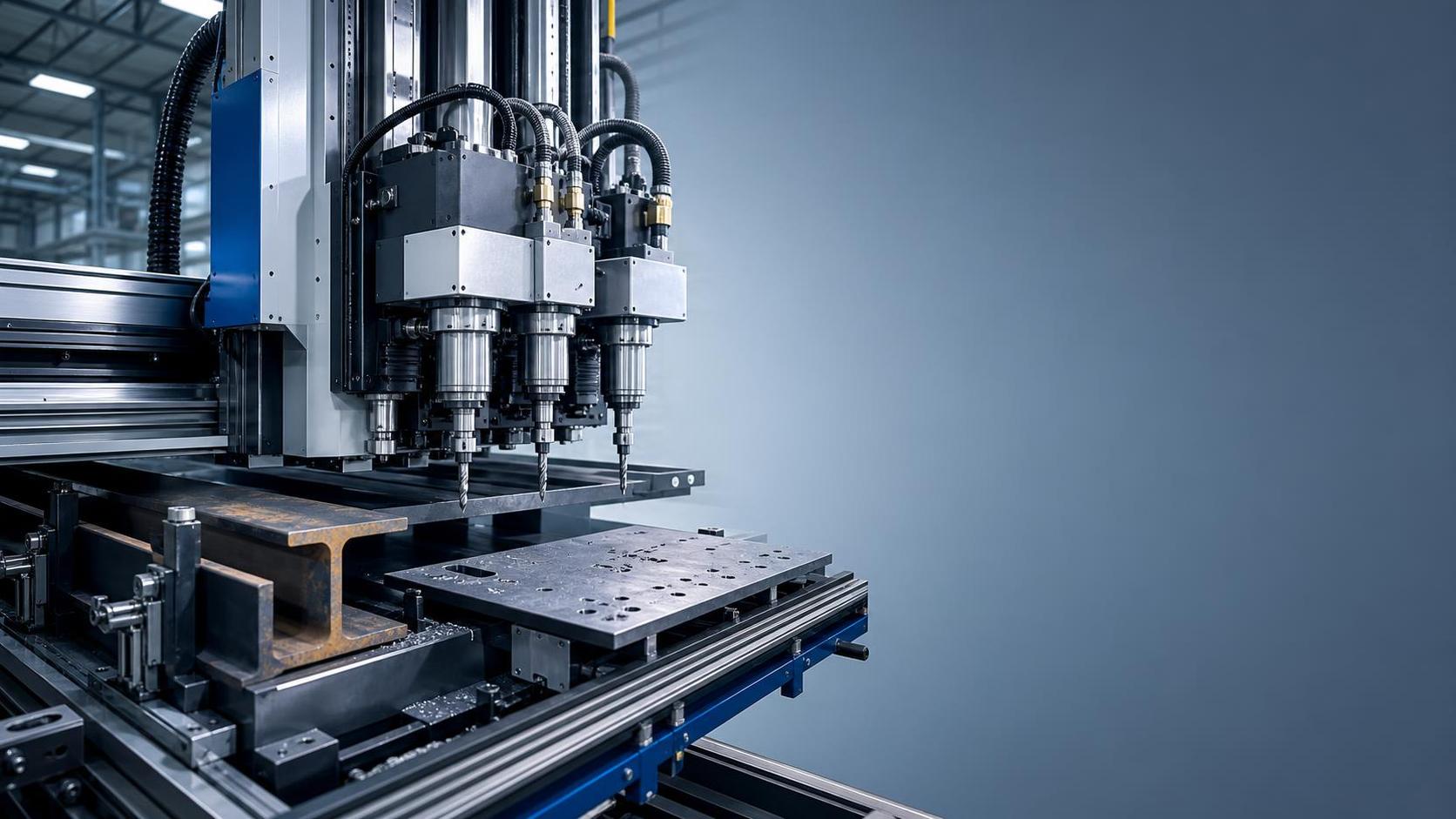
When evaluating equipment for overseas contracts, buyers often ask: Can a drilling machine process both H beam and sheet metal? The short answer is: sometimes, but not always well enough for export production. A single machine may cover both materials if the order mix is stable, thickness ranges are compatible, and accuracy expectations are clearly defined.
For most exporters and fabrication businesses, the real question is not whether one drilling machine can technically touch both workpieces. The practical question is whether it can do so efficiently, consistently, and at a cost that protects delivery dates and profit margins across different order types.
In metal fabrication, export orders often involve stricter documentation, tighter lead times, and more varied part requirements than domestic jobs. That means machine selection should be based on material type, drilling range, clamping method, automation level, tolerance control, and changeover time rather than on a broad catalog claim alone.
What Buyers Really Want to Know Before Choosing One Drilling Machine
The core search intent behind “Can a drilling machine process both H beam and sheet metal?” is commercial and practical. Buyers want to know whether one machine can support mixed production without creating bottlenecks, quality risks, or hidden operating costs.
Most target readers are factory owners, purchasing managers, project managers, and export-focused production decision makers. They are less interested in theory and more concerned with machine versatility, capacity limits, order suitability, investment return, and the risk of machine mismatch after purchase.
The most helpful content for these readers is a judgment framework. They need clear criteria for deciding whether one drilling machine is sufficient, when a combined solution makes sense, and when separate machines will actually be the lower-risk and more profitable choice.
Because of that, this article focuses on decision points, production scenarios, and risk control. General descriptions of drilling technology matter far less than explaining how to evaluate machine suitability for export order requirements in real workshop conditions.
Can One Drilling Machine Process Both H Beam and Sheet Metal?
Yes, one drilling machine can sometimes process both H beam and sheet metal, but only under specific conditions. This depends on machine structure, spindle capability, fixture design, feeding system, workpiece dimensions, and the level of automation required for each product category.
H beam drilling and sheet metal drilling are not identical tasks. H beams involve structural sections, multi-face positioning, larger profiles, and often hole patterns for steel construction. Sheet metal requires different support methods, flatter surfaces, thinner materials, and in many cases higher flexibility for varying layouts.
A machine designed mainly for steel sections may be strong enough for H beam work yet inefficient for sheets because of loading style, positioning speed, and material support. A machine designed for plates or sheet metal may offer good flat-work handling but struggle with beam geometry and heavy structural sections.
That is why the correct answer is conditional. One drilling machine can meet both needs only if the machine is purpose-built or modular enough to handle both material categories without sacrificing output, accuracy, or operational stability.
Start With the Actual Export Order Mix, Not the Machine Brochure
The first step is to review your real order structure. Many companies make the mistake of buying based on maximum machine claims instead of comparing those claims with their recurring export jobs, material sizes, hole diameters, and batch patterns.
If 80 percent of your export work is H beam fabrication and only a small amount involves simple sheet metal drilling, one heavy-duty beam drilling machine with optional plate fixtures may be enough. But if the business regularly alternates between structural steel and varied sheet parts, that same machine may become inefficient.
Order mix also affects changeover pressure. A machine that can drill both materials in theory may still waste valuable production time if operators need frequent fixture changes, manual repositioning, or separate programming logic between beam and sheet jobs.
Export businesses should analyze at least six months of production data before deciding. Look at thickness range, section sizes, hole quantity per part, repeat frequency, tolerance expectations, and promised delivery times. This gives a more reliable basis than catalog versatility language.
Material Compatibility Is the First Technical Filter
If you want to know whether one drilling machine can process both H beam and sheet metal, start by checking material compatibility. This includes not only steel type, but also thickness, profile shape, rigidity during drilling, and surface support requirements.
H beams are structural members with flanges and webs. They demand stable clamping, accurate position referencing, and enough machine rigidity to keep hole positions consistent across long or heavy sections. The machine must also accommodate beam dimensions without unstable manual handling.
Sheet metal presents a different challenge. Thin or medium-thickness plates may deform, vibrate, or shift if the support table, vacuum system, or clamp arrangement is not suitable. In many cases, plate drilling requires better flatness control and more flexible hole programming than structural beam work.
So the key question is whether the machine can physically support both formats with reliable positioning. If support, clamping, and feeding are compromised for either material, production quality will suffer even if spindle power appears sufficient.
Machine Structure Matters More Than Advertised Versatility
Many buyers focus first on spindle power, but the machine frame and workpiece handling design are often more important. A true dual-purpose drilling solution needs a structure that supports both heavy profiles and flat workpieces without unstable setup conditions.
For H beam processing, the machine should provide secure referencing for flanges and webs, along with enough travel and clearance for large sections. For sheet metal, it should allow flat placement, convenient nesting or positioning, and repeatable hole location across broader surfaces.
If a machine uses attachments to extend into a second application area, buyers should ask whether those attachments are built for production use or only occasional auxiliary work. A machine that is technically capable of both tasks may still underperform if the secondary mode is awkward.
In export manufacturing, awkward setup quickly becomes expensive. Poor ergonomics, unstable fixtures, and time-consuming adjustment can reduce daily output far more than buyers expect during the purchasing stage.
Precision Requirements Should Be Judged by End Use, Not by Catalog Tolerance
A machine may drill holes in both H beam and sheet metal, but that does not automatically mean it meets the precision level required by export customers. The acceptable tolerance depends on the final application of the parts, not just on machine specifications.
Structural steel applications often prioritize reliable hole position, spacing consistency, and assembly fit on site. Sheet metal parts may have tighter expectations if they connect to downstream forming, welding, or assembly operations. In some export sectors, misalignment creates immediate rejection risk.
Buyers should review not only nominal positioning accuracy, but also repeatability under real production conditions. Ask how the machine performs after long cycles, with different thicknesses, and during frequent material changes. A good test is more useful than a polished brochure statement.
It is also important to consider burr control and hole quality. If sheet metal parts need cleaner holes for secondary assembly or appearance standards, a machine optimized for structural sections may require extra deburring time, increasing labor cost and delivery risk.
Production Efficiency Often Determines Whether One Machine Is Truly Enough
The biggest mistake in this purchase decision is confusing capability with capacity. A machine may be able to process both H beam and sheet metal, yet still fail to meet export order needs because cycle time, changeover time, or material handling speed is too slow.
For export work, delivery reliability is often more important than theoretical flexibility. If one dual-purpose machine becomes the single bottleneck for mixed orders, the business may face delayed shipments, overtime labor, and reduced scheduling control during peak periods.
Ask practical questions. How long does it take to switch from beam processing to sheet processing? Can programs be changed quickly? Is loading manual or automated? How many parts per shift can realistically be completed for each material type?
If the machine spends too much time waiting for setup or repositioning, then one-machine investment savings may disappear. In many workshops, the cost of lost output over one year is far greater than the price gap between a versatile machine and a more specialized production arrangement.
Automation Level Is Critical for Export Consistency
Export customers usually expect consistency across batches, especially when parts are shipped for project installation, OEM assembly, or distributor resale. For that reason, automation level should be treated as a major decision factor rather than an optional upgrade.
A suitable machine for mixed drilling work should support reliable data input, stable positioning, and repeatable drilling sequences. CNC control, automatic measurement, servo feeding, and programmable clamping reduce operator dependence and improve repeatability across different orders.
This matters even more when the same machine is expected to process H beam and sheet metal. Without sufficient automation, every material switch increases the chance of setup error, offset issues, and inconsistent hole placement between batches.
For companies serving multiple overseas markets, automation also helps with documentation and process control. Better traceability, standardized programming, and lower operator variation are useful when quality requirements are audited or when customers request repeat production months later.
Evaluate Total Investment Cost, Not Just Purchase Price
Many buyers begin by asking whether one drilling machine can replace two machines and reduce capital spending. That is the right business question, but the answer must include operating cost, labor demand, maintenance exposure, and the effect on shipment reliability.
A single versatile machine may lower initial investment and save floor space. It may also simplify staffing if one operator can manage multiple order types. For smaller factories or growing exporters, this can be an efficient entry strategy.
However, concentration risk must be considered. If one machine handles both H beam and sheet metal and then stops for maintenance, two production streams are interrupted at the same time. For export businesses with contractual delivery obligations, that risk can be significant.
Also compare tooling cost, wear rates, setup labor, and downstream rework. Sometimes a lower-cost all-in-one machine creates hidden expenses through slower processing, more operator intervention, or additional deburring and inspection work.
When One Machine Is a Good Choice
One drilling machine is often a good choice when order volumes are moderate, product mix is relatively predictable, and both H beam and sheet metal jobs fall within a controlled dimensional range. In these cases, flexibility can support growth without over-investment.
It also makes sense when lead times are manageable, customers do not demand extremely tight tolerances across all product categories, and the machine supplier can demonstrate proven performance with similar mixed-use applications.
Another suitable scenario is a factory that mainly processes one material type but occasionally accepts the other. In that case, dual-purpose capability serves as a practical supplement rather than the sole basis of the production model.
For newer exporters or regional fabricators expanding into overseas markets, one well-selected machine can be a reasonable step if future order patterns are still developing and management wants to preserve cash flow.
When Separate Machines Are the Better Business Decision
Separate machines are usually the better option when both H beam and sheet metal volumes are high, order urgency is frequent, or quality requirements differ sharply between product groups. In these environments, specialization supports faster and more stable production.
If your workshop regularly changes between structural members and flat parts in the same shift, one machine may create congestion. That congestion can reduce planning flexibility and force jobs to wait even when the technical drilling process itself is not difficult.
Separate machines are also preferable when one product line has high margins or strict penalties for delay. In those cases, the cost of a shared bottleneck is too high, and dedicated capacity becomes a risk-control investment rather than excess spending.
For mature exporters with established order flow, dividing production by application often produces better long-term returns. It improves scheduling, lowers changeover loss, and makes preventive maintenance easier to manage.
Questions to Ask a Supplier Before Making the Decision
Before committing to a purchase, buyers should ask for evidence tied to real applications. Do not rely only on general product descriptions. Ask whether the machine has been used successfully for both H beam and sheet metal in actual production environments.
Request sample processing data for your material sizes, thicknesses, hole diameters, and tolerance expectations. If possible, provide your own drawings and ask for a trial or demonstration based on realistic export parts rather than generic sample pieces.
You should also ask about setup time, fixture switching, software compatibility, spare parts availability, after-sales support, and training requirements. A technically suitable machine can still become a poor purchase if service response is weak or operation is too complex.
For international buyers, supplier quality systems matter as well. A company that organizes production under ISO9001 standards and aligns with CE-related requirements usually provides stronger process discipline, documentation support, and more stable export cooperation.
Conclusion: Judge by Production Fit, Not by One-Size-Fits-All Claims
So, can a drilling machine process both H beam and sheet metal? Yes, but only when the machine’s structure, handling method, precision level, and throughput match the actual order profile. The right answer depends on production fit, not on a simple yes-or-no feature list.
For export-focused manufacturers, the safest approach is to evaluate mixed-material drilling through four filters: compatibility, efficiency, precision, and business risk. If one machine passes all four, it can be a cost-effective and practical solution. If not, separate capacity may protect delivery and profitability better.
In the end, a smart machine purchase is not about buying the most functions. It is about choosing equipment that can support real customer demand with stable quality, predictable output, and sustainable operating cost over time.