
— —
How to Avoid Quality Issues When Buying a Drilling Machine from China
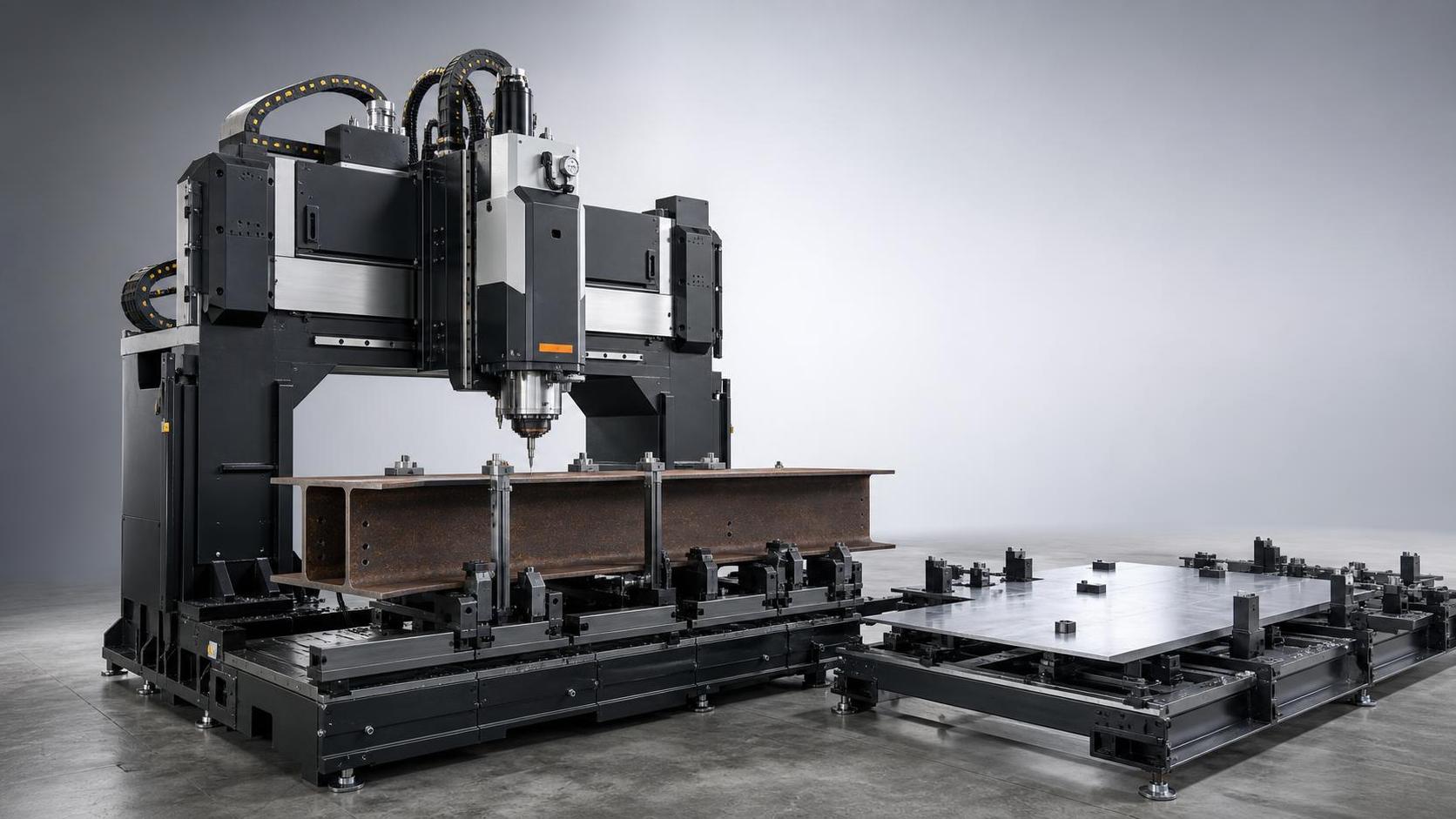
How to avoid quality issues when buying a drilling machine from China? Start by checking supplier certifications, machine specifications, production standards, and after-sales support before placing an order. In the manufacturing and metalworking industry, choosing the right Chinese drilling machine supplier can reduce risks, improve efficiency, and protect your investment. This guide will help you identify reliable manufacturers and avoid common purchasing mistakes.
For most buyers, the real question is not whether China can supply a good drilling machine. It can. The real issue is how to separate dependable manufacturers from trading companies or factories that cannot consistently meet your technical requirements.
The core search intent behind this topic is clear. Buyers want practical ways to reduce purchasing risk, avoid defects, and make sure the machine they receive performs as promised in daily production.
That means the most useful content is not a general overview of the Chinese machinery market. Readers need a working evaluation framework covering supplier screening, technical verification, inspection steps, contract terms, and after-sales support.
Why quality problems happen when sourcing drilling machines from China
Quality issues rarely come from one single mistake. They usually happen when buyers choose suppliers based mainly on price, without checking production capability, quality control procedures, or whether the machine is designed for the actual workload.
Another common problem is specification mismatch. A drilling machine may look similar on paper, but differences in spindle power, hole diameter capacity, structure rigidity, guideway quality, and control system can change performance dramatically.
Some buyers also assume that certification alone guarantees machine quality. In reality, certifications matter, but they do not replace factory audits, sample verification, or acceptance testing based on your own production standards.
Lead time pressure adds another risk. When delivery schedules are too aggressive, some suppliers may outsource parts, reduce inspection time, or use lower-grade components to keep the order moving.
Understanding these root causes helps buyers focus on prevention. If you want to know how to avoid quality issues when buying drilling machine from China, you need to control the process before production starts, not after the machine arrives.
Start with supplier qualification, not product photos
The first practical step is to verify whether the supplier is actually capable of building or managing the drilling machine you need. Product photos, catalog PDFs, and polished websites are useful, but they are not proof of manufacturing strength.
Ask whether the company is a manufacturer, an export trading company, or a hybrid supplier. There is nothing inherently wrong with a trading company, but you need to know who controls engineering, production scheduling, inspection, and spare parts support.
Check the supplier’s business history, export experience, and main product categories. A company that regularly supplies metalworking and fabrication equipment is usually more reliable than a seller listing dozens of unrelated industrial products.
It is also important to review certifications such as ISO9001 and relevant CE compliance where applicable. These documents do not guarantee perfection, but they indicate that the supplier has at least some structured quality and management processes.
Go further by asking for factory photos, workshop videos, equipment lists, testing procedures, and references from overseas customers. A reliable supplier should be able to show how machines are assembled, inspected, and prepared for shipment.
If the order value is significant, arrange a factory audit or appoint a third-party inspection company. This is one of the most effective ways to confirm whether the supplier’s actual operation matches its sales claims.
Match the machine specification to your real production needs
One of the biggest purchasing mistakes is buying a drilling machine that looks competitively priced but is underspecified for the job. This often leads to vibration, inaccurate holes, tool wear, low efficiency, and frequent maintenance.
Before requesting quotations, define your production scenario in detail. Include material type, material thickness, workpiece size, hole diameter range, tolerance requirements, daily operating hours, and whether the machine will run in batches or continuous production.
These details matter because the right drilling solution for structural steel fabrication is different from the right solution for general workshop use, sheet metal processing, or precision parts machining.
Ask suppliers to explain the machine configuration in practical terms. Focus on spindle motor power, spindle speed range, feed system, table size, column or frame rigidity, coolant system, accuracy level, and controller brand if CNC functions are included.
You should also review key purchased components. Bearings, electrical parts, hydraulic units, linear guides, inverters, and motors strongly affect long-term reliability. Machines built with established component brands usually offer more stable performance and easier maintenance.
A serious supplier should be able to recommend a suitable model based on your application instead of simply pushing the most expensive machine or the easiest one to sell.
Ask the right quality questions before you place the order
Many quality issues can be identified before production if buyers ask precise questions. Vague communication often produces vague results, especially when the machine has optional configurations or custom features.
Start by asking for a detailed technical proposal rather than a short quotation. The proposal should define machine model, standard configuration, optional accessories, accuracy standards, electrical specifications, control system, tooling scope, and installation requirements.
Then ask how the supplier controls quality during production. Important questions include how raw materials are checked, whether key parts are machined in-house or outsourced, how alignment is tested, and what trial run procedures are completed before shipment.
You should also ask what acceptance criteria will be used. For example, if hole position accuracy, repeatability, spindle runout, or table flatness matter to your process, those items should be listed and measured during final inspection.
Another useful step is requesting videos of similar machines under operation. Videos cannot replace inspection, but they can help confirm cycle stability, noise level, working envelope, and whether the machine appears properly assembled and tested.
The more specific your questions are, the harder it becomes for weak suppliers to hide behind generic sales language. This alone can help you avoid quality issues when buying a drilling machine from China.
Use samples, testing, and inspection to verify performance
Do not rely only on specifications and promises. Verification is what turns a quotation into a manageable purchasing decision. For standard machines, ask the supplier to perform test runs on material similar to your real workpieces.
If you are buying a CNC drilling machine or a machine with custom fixtures, request a trial process using your drawings or a close equivalent. This helps reveal problems in programming, clamping, rigidity, and actual machining accuracy.
For larger orders or more complex equipment, set up a pre-shipment inspection plan. This can be handled by your own engineers, by live remote inspection, or by a qualified third-party inspection agency in China.
Inspection should include visual checks, component verification, dimensional checks, no-load operation, load testing where practical, safety checks, and review of documentation such as manuals, electrical diagrams, packing lists, and maintenance instructions.
Factory acceptance testing is especially important for expensive or semi-custom machines. A proper FAT confirms that the supplier must prove performance before the machine leaves the factory instead of transferring all risk to the buyer.
When the machine is inspected against written standards, disputes become easier to resolve. Without agreed test items, buyers often discover too late that they and the supplier were using different definitions of acceptable quality.
Look closely at after-sales support and spare parts availability
A drilling machine is not only a product purchase. It is an operating asset that must continue performing after installation. Strong after-sales support is therefore a quality issue, not a separate service issue.
Before ordering, confirm what support is included. Ask about installation guidance, commissioning assistance, operator training, troubleshooting response time, warranty coverage, and whether online support is available in English.
Spare parts support is equally important. Even a well-built machine will eventually need consumables or replacement parts. Ask for a recommended spare parts list and confirm which components are standard international brands and which are custom-made.
If the machine uses branded electrical or control components, local sourcing may be easier in your country. If it uses proprietary parts only available from one supplier, your downtime risk becomes higher.
It is also wise to ask how quickly common spare parts can be shipped and whether the supplier keeps stock. A lower purchase price can become expensive if a simple component failure stops production for weeks.
Reliable suppliers treat service documentation seriously. Clear manuals, wiring diagrams, lubrication schedules, and parts breakdowns often indicate that the company understands long-term customer support, not just short-term sales.
Protect yourself with clear contracts and acceptance terms
Many buyers focus heavily on technical details but neglect contract structure. This is a mistake because unclear commercial terms can turn manageable quality problems into expensive disputes.
Your purchase contract should include the final machine specification, component list where relevant, inspection and acceptance standards, delivery scope, packaging requirements, lead time, warranty terms, and documentation obligations.
Payment terms should support quality control. For example, using staged payments linked to production progress or pre-shipment inspection can give buyers more leverage than paying too much upfront.
It is also important to define what happens if the machine fails acceptance tests. The contract should state whether the supplier must repair, replace, retest, or compensate, and within what time frame.
For export equipment, clarify shipping method, export packing, rust prevention, voltage and frequency requirements, and responsibilities for installation materials or commissioning support. Small omissions here often create large operational delays later.
Well-written contracts do not indicate distrust. They create alignment. In machinery sourcing, alignment is one of the best tools available to prevent misunderstandings that eventually show up as “quality problems.”
Do not choose on price alone
Price matters, but it should never be the only decision factor when buying industrial equipment. A very low quotation may reflect lighter machine construction, lower-grade components, reduced testing, weak service support, or hidden exclusions.
When comparing offers, calculate total ownership cost rather than invoice price alone. Include expected maintenance, tooling compatibility, downtime risk, service responsiveness, spare parts access, and machine life under your production conditions.
A machine that costs slightly more but runs reliably, drills accurately, and receives fast technical support will usually produce better business value than a cheaper machine that creates repeated production interruptions.
This is especially true for workshops where delivery commitments, labor utilization, and consistent output directly affect customer satisfaction and profit margins. Quality failures in equipment purchasing often become downstream business failures.
In practice, the best supplier is often not the cheapest and not the most expensive. It is the one that can clearly demonstrate manufacturing capability, transparent communication, suitable configuration, and dependable post-sale support.
A practical checklist for buyers
If you need a simple buying framework, use this checklist before confirming any order. First, verify the supplier’s real business type, export history, certifications, and production capability.
Second, define your technical needs clearly, including materials, thickness, hole size, tolerances, workload, and automation level. Third, request a complete technical proposal instead of relying on a short quote.
Fourth, review major components, quality control procedures, and testing methods. Fifth, arrange a trial run, FAT, or third-party pre-shipment inspection depending on order value and machine complexity.
Sixth, confirm warranty terms, service response, and spare parts availability. Seventh, write all critical specifications and acceptance standards into the purchase contract and align payment terms with inspection milestones.
Following these steps will significantly reduce uncertainty and help you avoid common sourcing mistakes that lead to poor machine performance, shipping disputes, or unexpected maintenance costs.
Conclusion
Buying a drilling machine from China can be a smart and cost-effective decision, but only when quality control begins before the purchase order is issued. The safest approach is structured evaluation, not blind trust and not price-driven selection.
If you want to avoid quality issues when buying drilling machine from China, focus on four essentials: qualified suppliers, application-matched specifications, verifiable inspection standards, and reliable after-sales support.
When these factors are checked carefully, Chinese machinery sourcing can deliver strong value, consistent production performance, and long-term return on investment. For industrial buyers, that is the standard that matters most.