
— —
New or Used Drilling and Milling Machine: Which Is the Better Investment
New or Used Drilling and Milling Machine: Which Is the Better Investment
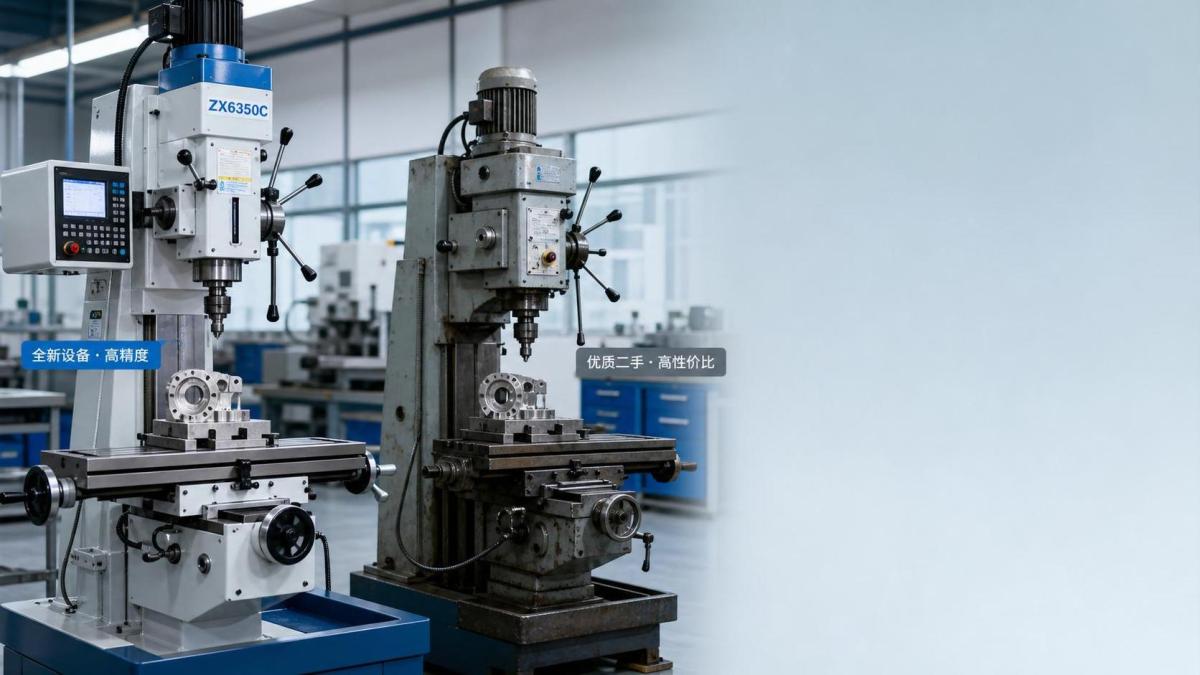
Choosing between a new or used drilling and milling machine affects cash flow, uptime, and long-term production cost.
The purchase price matters, but it is rarely the full financial picture.
A cheaper asset can become expensive through repairs, lower accuracy, and missed delivery dates.
A new machine may raise upfront spending, yet reduce risk across the full operating cycle.
In real procurement work, the better choice depends on workload, tolerance demands, compliance needs, and payback expectations.
This comparison breaks down the new versus used drilling and milling machine decision from a cost and control perspective.
Why This Decision Has Become More Sensitive
Manufacturing buyers now face tighter budgets and less room for equipment failure.
Lead times, labor cost, and energy use are under closer review than before.
That shifts attention from sticker price to total cost of ownership.
A drilling and milling machine supports hole making, surface machining, slotting, and precision finishing in many workshops.
If that machine stops, several downstream steps may stop with it.
This also means the investment decision should reflect production dependence, not only accounting classification.
When a New Drilling and Milling Machine Makes More Sense
A new drilling and milling machine is usually the safer choice for stable output and predictable budgeting.
It offers known service life, warranty support, and current safety configuration.
That lowers uncertainty in annual maintenance planning.
Main financial advantages
- Lower early repair risk and fewer unexpected replacement parts.
- Better machining consistency, which cuts scrap and rework cost.
- Improved energy efficiency on newer models in many configurations.
- Stronger compliance support for ISO, CE, and internal audit needs.
- Higher resale value if the machine is maintained properly.
A new drilling and milling machine is especially suitable for parts with strict tolerance or repeat batch work.
It also supports easier operator training because controls, manuals, and spare parts are easier to source.
When a Used Drilling and Milling Machine Can Be the Better Buy
A used drilling and milling machine can still be a smart investment under the right conditions.
The obvious benefit is lower capital outlay.
That can protect working capital during expansion, seasonal demand, or pilot production.
Best-fit use cases for used equipment
- Short-term projects with clear end dates.
- Backup capacity for overflow production.
- Workshops handling less demanding tolerance standards.
- Operations with strong in-house maintenance teams.
- Buyers who can inspect machine history and wear conditions carefully.
In these cases, a used drilling and milling machine may deliver faster payback than a new unit.
Still, the savings only hold if inspection is disciplined and the machine matches the workload.
The Hidden Costs Buyers Often Miss
The biggest mistake is comparing only purchase prices.
A drilling and milling machine affects cost far beyond the invoice amount.
Key hidden cost categories
- Downtime loss. One failure can delay several jobs and create overtime pressure.
- Accuracy drift. Worn spindles or guideways can increase scrap and customer complaints.
- Retrofit spending. Older controls, motors, or guards may need upgrades.
- Parts sourcing. Legacy models may require slow or expensive replacement components.
- Compliance exposure. Older equipment may fall short of current safety expectations.
These costs are not always visible during quotation review, but they shape the real return.
That is why lifecycle analysis matters more than headline discounts.
A Practical Cost Comparison Framework
A simple decision model can make the drilling and milling machine comparison much clearer.
Review each option over three to five years instead of one purchase cycle.
Use this table with actual shop data, including planned hours, scrap rate, and labor cost.
That turns a general buying debate into a measurable investment case.
What to Check Before Buying Either Option
The same review discipline should apply to every drilling and milling machine purchase.
A structured checklist reduces approval risk and prevents expensive surprises later.
- Verify machining range, spindle performance, and table travel against actual parts.
- Confirm tolerance requirements and repeatability needs for daily production.
- Check service support, spare parts lead time, and operator training availability.
- Review power requirements, foundation needs, and installation cost.
- Ask for inspection records, test reports, and maintenance history.
- Evaluate whether the machine supports future process upgrades.
For broader fabrication planning, related forming equipment may also affect budget priorities.
For example, a Profile bender can support pre-bending, coiling, and rounding in steel structure, elevator, and automotive work.
Equipment with hardened rolls, triple geared drive, hydraulic control, and digital displacement display can improve forming consistency in adjacent processes.
That matters when capital spending must serve several production bottlenecks, not just one machine category.
Supplier Reliability Changes the Investment Outcome
The value of a drilling and milling machine depends heavily on the supplier behind it.
A strong supplier reduces sourcing friction, technical confusion, and after-sales delays.
Wuxi Armada International Trade Co., Ltd has focused on mechanical equipment sales since 2012.
Its portfolio covers CNC cutting machines, milling machines, lathes, welding robots, laser cutting machines, and beam production equipment.
The company organizes production and design around ISO9001 quality system requirements and EU CE standards.
Products have been exported to Southeast Asia, Europe, the Americas, and Oceania.
That kind of experience can support clearer machine selection and steadier delivery expectations.
So, Which Drilling and Milling Machine Is the Better Investment?
For most production-critical environments, a new drilling and milling machine is the better long-term investment.
It offers better predictability, lower interruption risk, and easier compliance control.
A used drilling and milling machine works best when workload is lighter, budgets are constrained, and technical inspection is strong.
The right answer is not the lowest price.
It is the option that delivers the best mix of uptime, accuracy, compliance, and recoverable value.
Start with process demand, estimate full lifecycle cost, and compare suppliers with the same discipline as the machine itself.
That approach leads to a drilling and milling machine investment that supports both production targets and financial control.