
— —
2026 Drilling and Milling Machine Market Trends to Watch
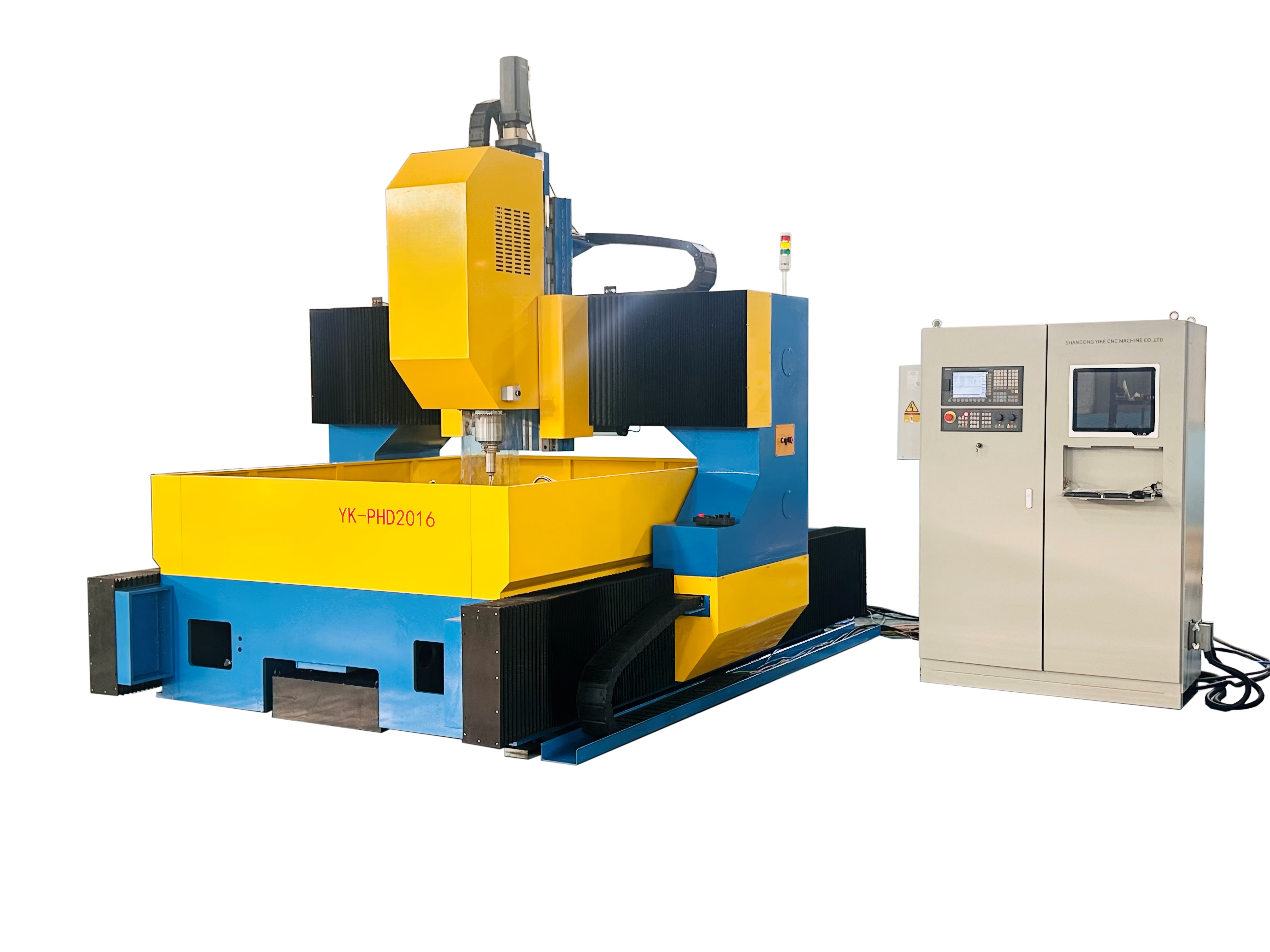
As 2026 approaches, the drilling and milling machine market is becoming more strategic for industrial investment. Buyers are no longer comparing machines only by price or spindle speed. They are looking at automation depth, process stability, energy use, compliance, and how well a machine fits broader production goals.
That shift matters across manufacturing and processing machinery, where tighter tolerances and shorter delivery cycles are now routine. A drilling and milling machine is no longer just a standalone asset. It is part of a workflow that affects throughput, labor planning, maintenance schedules, and long-term competitiveness.
Why the 2026 market deserves attention
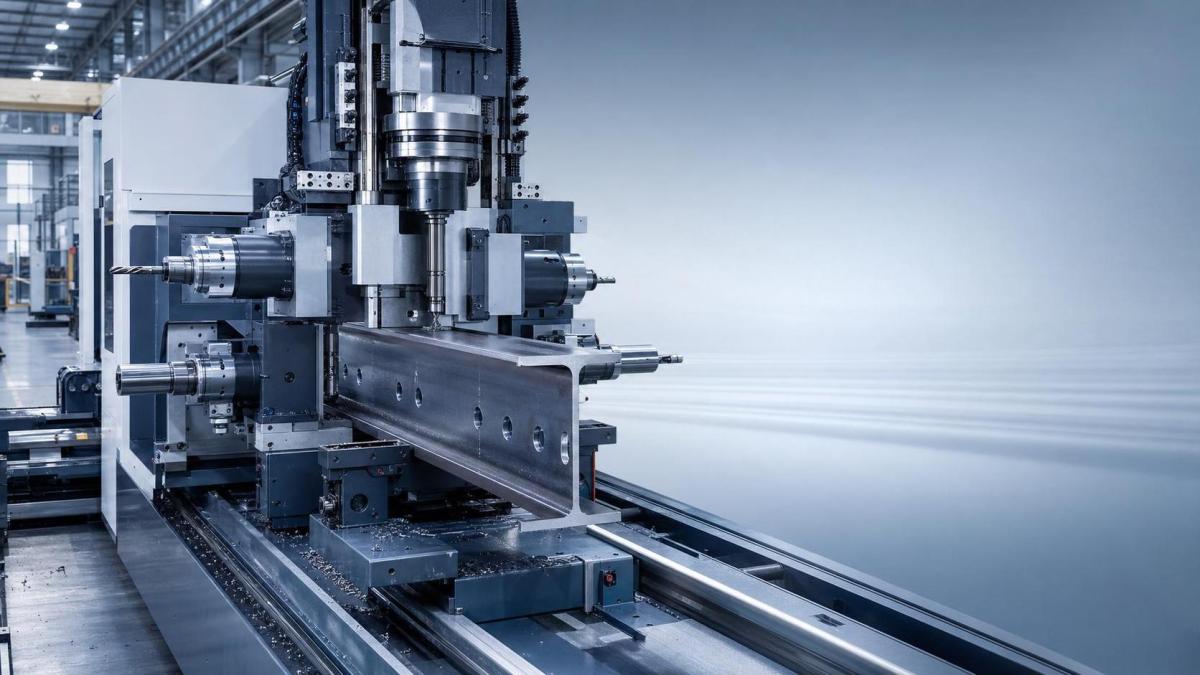
The market is moving because production environments are changing at the same time on several fronts. Precision expectations are higher. Skilled labor remains uneven across regions. Material waste is under closer review. Equipment must also adapt to more varied product mixes.
In this context, the drilling and milling machine sits at a critical point between rough fabrication and finished component quality. Whether used for metalworking, steel structure processing, equipment fabrication, or line integration, its performance influences downstream welding, assembly, and inspection results.
Another reason to watch 2026 closely is sourcing behavior. Companies are diversifying suppliers and comparing not only machine specifications, but also export experience, quality documentation, after-sales support, and compliance with ISO9001 and CE-related expectations.
What buyers now mean by drilling and milling machine value
The term drilling and milling machine covers a broad range of equipment. It may refer to compact workshop units, CNC machining centers, beam processing systems, or specialized machines built for large structural parts. The market conversation in 2026 is less about the label and more about usable production value.
In practical terms, value now includes four linked dimensions: accuracy over time, setup efficiency, process flexibility, and service life under sustained load. A machine that cuts cycle time but creates alignment issues later can quickly lose its apparent cost advantage.
This is why more procurement evaluations now involve manufacturing, technical, and operations teams at the same table. The right drilling and milling machine must perform in real production conditions, not only in a catalog comparison.
Key trends shaping demand in 2026
Smarter CNC integration
CNC capability is no longer a premium extra in many segments. Buyers increasingly expect easier programming, better motion control, repeatable positioning, and smoother data exchange with upstream design and planning systems.
For the drilling and milling machine market, this means stronger preference for platforms that reduce manual correction and support stable multi-axis coordination. Machines that shorten the gap between drawing input and shop-floor execution will continue gaining attention.
Higher demand for process consolidation
Production leaders want fewer handoffs between operations. When one machine can complete more work in a single pass, overall accuracy usually improves and handling time drops.
This is especially visible in structural steel processing. A useful example is the H beam 3D drilling machine, designed for drilling H-shaped steel, channel steel, and box-type beams. With three drilling surfaces and a 7+3 axis CNC layout, it allows holes on three sides to be processed after one pass through the equipment. For many fabrication lines, that kind of consolidation directly supports productivity and hole-position accuracy.
Quality standards becoming a sourcing filter
Machine quality is now judged beyond initial inspection. Buyers are asking how frames are welded, where structural reinforcement is applied, what spindle brands are used, how guide systems are selected, and whether control systems come from trusted suppliers.
That is one reason exporters with established process control are better positioned. Wuxi Armada International Trade Co., Ltd, established in 2012 in Wuxi, has built its product offering around mechanical equipment for fabrication and machining, with export reach across Southeast Asia, Europe, the Americas, and Oceania. Its emphasis on ISO9001-based production organization and EU CE standards reflects what the market is now screening for more consistently.
Flexible capacity for mixed workloads
Many factories are no longer running long, uniform batches all year. They are switching between projects, dimensions, and material profiles more often. A drilling and milling machine that handles variation without excessive setup time is becoming more valuable than one built only for a narrow ideal condition.
For example, equipment that supports broad workpiece ranges, multiple tool positions, and stable servo positioning is better aligned with mixed production. This matters in steel structure buildings, bridges, parking garages, and similar fabrication environments where product geometry changes from project to project.
Where these trends show up in daily operations
The impact of market trends becomes clearer when viewed by application scenario rather than abstract specification. Different operating contexts place different pressure on the drilling and milling machine selection process.
Usually, the strongest decisions come from linking machine features to production bottlenecks. A drilling and milling machine should be evaluated where it changes measurable outcomes, such as fewer repositioning steps, lower scrap, more stable hole placement, or reduced manual intervention.
What to examine before making a 2026 investment
Catalog specifications remain important, but they do not tell the whole story. A better evaluation framework looks at how a machine behaves over months of operation.
- Check whether the machine structure supports long-term rigidity, especially under high-speed drilling and repeated positioning.
- Review the control architecture carefully. Recognized systems, such as Siemens PLC platforms, often simplify support and integration.
- Look at feed design, guide systems, and screw transmission, because these affect repeatability more than headline motor power alone.
- Ask how cooling, chip removal, lubrication, and maintenance access are handled in normal production conditions.
- Match machine dimensions and workpiece ranges to real order patterns, not only to occasional maximum sizes.
A structural steel example shows why this matters. A model such as YK-BHD1250 combines three spindles, BT40 taper, spindle speeds up to 3000 r/min, feed speed up to 5000 mm/min, and support for web sizes from 150 to 1250 mm. Those numbers are useful only when they line up with actual beam profiles, throughput targets, and tolerance requirements.
The supplier side of the market is changing too
In 2026, machine selection is also a supplier selection exercise. Buyers increasingly want partners that understand whole production lines, not just individual machines. That is particularly relevant in manufacturing and processing machinery, where milling, cutting, welding, deburring, leveling, and beam processing often connect operationally.
Suppliers with a broader equipment portfolio can sometimes help create more coherent process plans. Wuxi Armada International Trade Co., Ltd operates in that wider equipment ecosystem, covering CNC cutting machines, milling machines, CNC machine tools, welding robots, laser cutting machines, H-beam production line equipment, plate processing machinery, and related systems. That kind of scope can be useful when one drilling and milling machine decision affects adjacent process steps.
More importantly, export experience often improves communication around packing, compliance, documentation, and installation coordination. These are not small details. They directly affect commissioning time and project risk.
How to turn market trends into a workable decision
The best next step is to turn broad market signals into a shortlist built around production reality. Start with part types, tolerance needs, annual volume, and whether demand is stable or project-based.
Then compare each drilling and milling machine option against three practical questions. Can it reduce handling steps? Can it maintain accuracy across the real workpiece range? Can the supplier support installation, service, and future scaling without friction?
A useful 2026 buying process is less about chasing the most advanced specification sheet and more about building a clear judgment standard. Once that standard is in place, it becomes easier to compare general-purpose machines, CNC systems, and specialized structural solutions on the same business terms.
That is where the market is heading. The drilling and milling machine with the best fit will usually be the one that improves process flow, holds quality consistently, and remains dependable after the initial purchase decision is over.