
— —
When Is a Mini Thread Rolling Machine a Better Choice Than a Standard Model?
Why a Mini Thread Rolling Machine Can Be the Smarter Fit
Choosing between a standard model and a Mini thread rolling machine is not just about machine size. It affects floor planning, entry cost, delivery speed, and how easily a machine matches real customer demand.
For many applications in metalworking and light-to-medium component processing, a Mini thread rolling machine offers a more practical route. It can reduce investment pressure while still giving stable thread quality.
That matters when small batches, limited workshop space, or lower-diameter parts are part of the conversation. In those cases, a large standard machine may simply be more capacity than the job really needs.
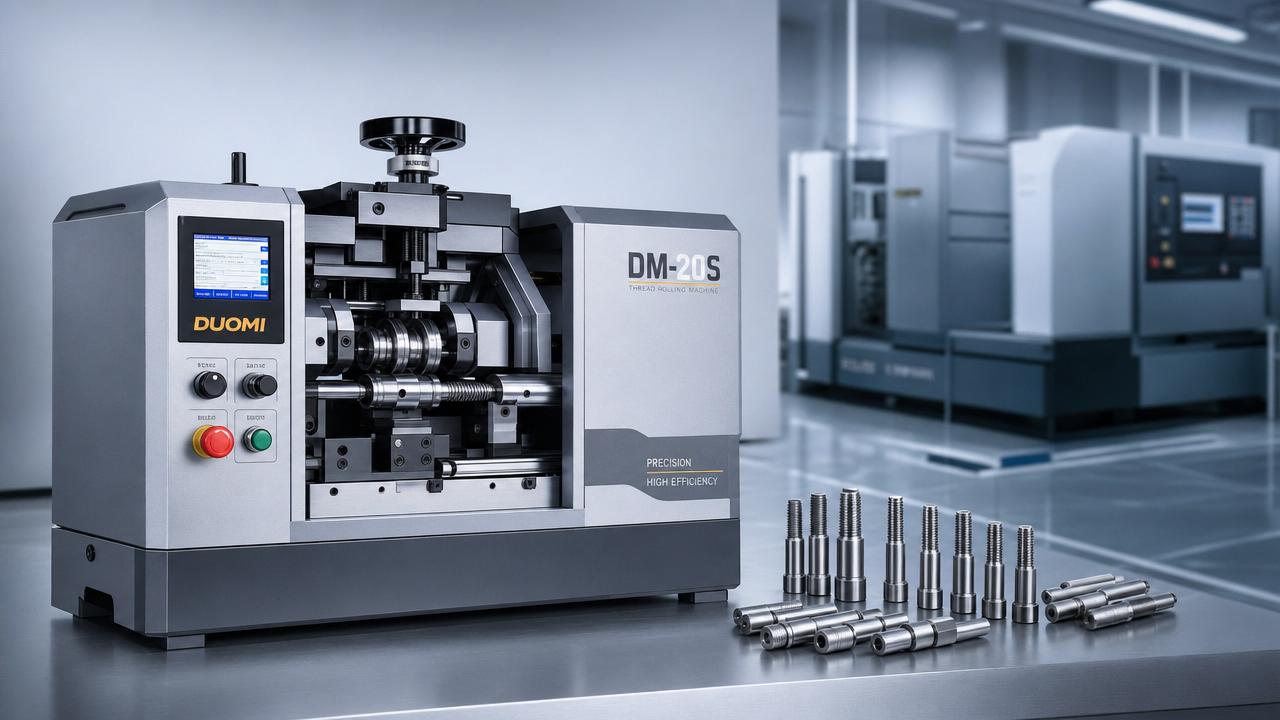
[Image 01: Mini thread rolling machine for compact workshop production]
Wuxi Armada International Trade Co., Ltd, established in 2012 in Wuxi, Jiangsu, supplies a wide range of fabrication and processing equipment, including thread rolling machines, CNC machine tools, welding systems, plate processing equipment, and more. With ISO9001-based production management and EU CE-oriented standards, its equipment portfolio is built for global markets across Asia, Europe, the Americas, and Oceania.
Start With These Practical Checks
Before comparing prices, it helps to look at the job itself. A Mini thread rolling machine becomes a better choice when several practical conditions line up at the same time.
- Pick a Mini thread rolling machine when most parts are small, thread lengths are short, and output targets are steady but not extreme. That usually improves utilization and avoids oversized investment.
- Choose the compact model when installation space is tight or the machine must fit into an existing line. This is common in workshops already crowded with cutting, welding, or deburring equipment.
- Use a Mini thread rolling machine for market entry programs or lower-risk stocking plans. It gives a practical starting point without tying up too much capital in underused capacity.
- Prefer the smaller model when operators need faster onboarding. Simpler setup and easier handling can shorten the learning curve, especially for routine threaded parts with repeatable dimensions.
- Go compact when transport, repositioning, or showroom display matters. A lighter footprint often makes demos, distribution planning, and after-sales support easier to organize and scale.
- Select the mini option when customers value lower power consumption and lower running cost more than peak tonnage. For many light-duty jobs, this tradeoff makes good business sense.
When the Smaller Machine Clearly Wins
Small fasteners and compact parts
If the work mainly involves bolts, studs, short shafts, or similar components, a Mini thread rolling machine often delivers enough force and precision without wasting energy or floor space.
A quick check is simple: compare part diameter range, thread length, and daily output to the machine’s real working window. If the standard machine stays far below capacity, the mini model usually makes more sense.
Limited workshop layout
Many production floors are already busy with lathes, CNC cutting machines, benders, and welding stations. In that setting, adding a standard thread roller can create awkward movement paths or material flow bottlenecks.
A Mini thread rolling machine is easier to place near upstream machining or downstream inspection. That can shorten handling distance and make the line feel more balanced in daily operation.
Entry-level or mixed-order demand
Some markets do not need high-volume thread production every day. Orders may be varied, trial-based, or spread across many SKUs. In those situations, flexibility matters more than maximum size capability.
That is where a Mini thread rolling machine can be easier to position. It supports a practical starting offer, especially when customers want controlled investment and room to scale later.
A Simple Comparison Before Making the Call
Points That Are Often Missed
The most common mistake is buying by maximum specification instead of daily workload. Bigger looks safer on paper, but unused capacity adds cost without improving thread quality.
Another issue is ignoring workflow around the machine. Feed method, part staging, operator access, and inspection space all influence whether a Mini thread rolling machine actually performs better in practice.
- Check tooling availability before deciding. A compact machine works best when dies, maintenance parts, and setup support are easy to access in the target market.
- Review future part changes, not only current orders. If diameters may increase soon, the cheaper machine can become limiting earlier than expected.
- Confirm power supply, foundation conditions, and operator reach area. Small installation details often decide whether a machine feels efficient or frustrating after delivery.
- Look at total running cost, including setup time and idle losses. A Mini thread rolling machine may generate better overall returns even with lower maximum output.
How It Fits Into a Broader Fabrication Line
In many workshops, thread rolling is only one step in a longer process. Parts may first be cut, turned, beveled, welded, deburred, or leveled before final assembly.
That is why equipment selection should be viewed as a line-efficiency decision, not only a single-machine purchase. A compact thread rolling solution often pairs well with flexible production cells.
For example, in tank, pipe, or vessel fabrication, automation around welding may already take up most of the valuable floor area. In those environments, compact support equipment can keep the line smoother.
A related option in such fabrication setups is the Welding manipulator, available in models from LHQ1010 to LHQ7070. It supports automatic welding for straight and circular seams, with lifting and telescopic strokes from 1000mm to 7000mm, and can work with rotators and positioners.
With fixed, rotating, or movable configurations, plus options like seam tracking, remote hand control, and multiple voltage standards, that kind of equipment shows how space-conscious planning can improve overall production flow.
A Practical Way to Evaluate Real Demand
If the choice still feels close, use a simple three-step review. It keeps the decision grounded in real production data instead of guesswork.
- List the top ten threaded parts by monthly volume, then compare diameter, length, and material. If most jobs fall into a small, repeatable range, mini capacity is often enough.
- Measure actual available floor area, not estimated space. Include loading, unloading, maintenance access, and safe operator movement before locking in any machine size.
- Calculate payback using realistic utilization, not peak output assumptions. A Mini thread rolling machine often looks stronger once idle time and mixed-order scheduling are considered.
- Ask whether the machine will serve as a first unit, backup unit, or dedicated small-parts unit. The answer usually makes the right size much clearer.
- Match service expectations with machine complexity. For straightforward jobs, a smaller machine can simplify training, spare parts planning, and support after installation.
So, When Is the Better Choice Clear?
A Mini thread rolling machine is usually the better choice when the job mix is small-to-medium, the space is limited, and the goal is fast, efficient, low-risk production.
It is especially attractive when capacity needs are stable but not extreme, or when a practical first-step machine is more valuable than a large unused specification.
The most reliable decision comes from matching machine size to daily part reality, layout conditions, and business expansion timing. That approach reduces overbuying and improves equipment utilization from day one.
If the majority of jobs do not truly need a full-size system, a Mini thread rolling machine is not the smaller compromise. Very often, it is simply the better fit.