
— —
Knurling Rolling Machine vs Cut Knurling: Differences in Grip, Speed, and Tool Wear
Why the Knurling Rolling Machine Choice Matters
Choosing between a knurling rolling machine and cut knurling changes more than surface texture. It affects grip consistency, output speed, tool wear, machine load, and the final feel of the part.
In real workshop conditions, the best option depends on material hardness, part diameter, wall thickness, and how much deformation the part can accept during processing.
This matters in manufacturing and processing machinery because operators often need repeatable results, especially on handles, knobs, shafts, sleeves, and adjustment components.
A knurling rolling machine forms the pattern by displacing material. Cut knurling removes material with defined cutting edges. That basic difference drives everything else.
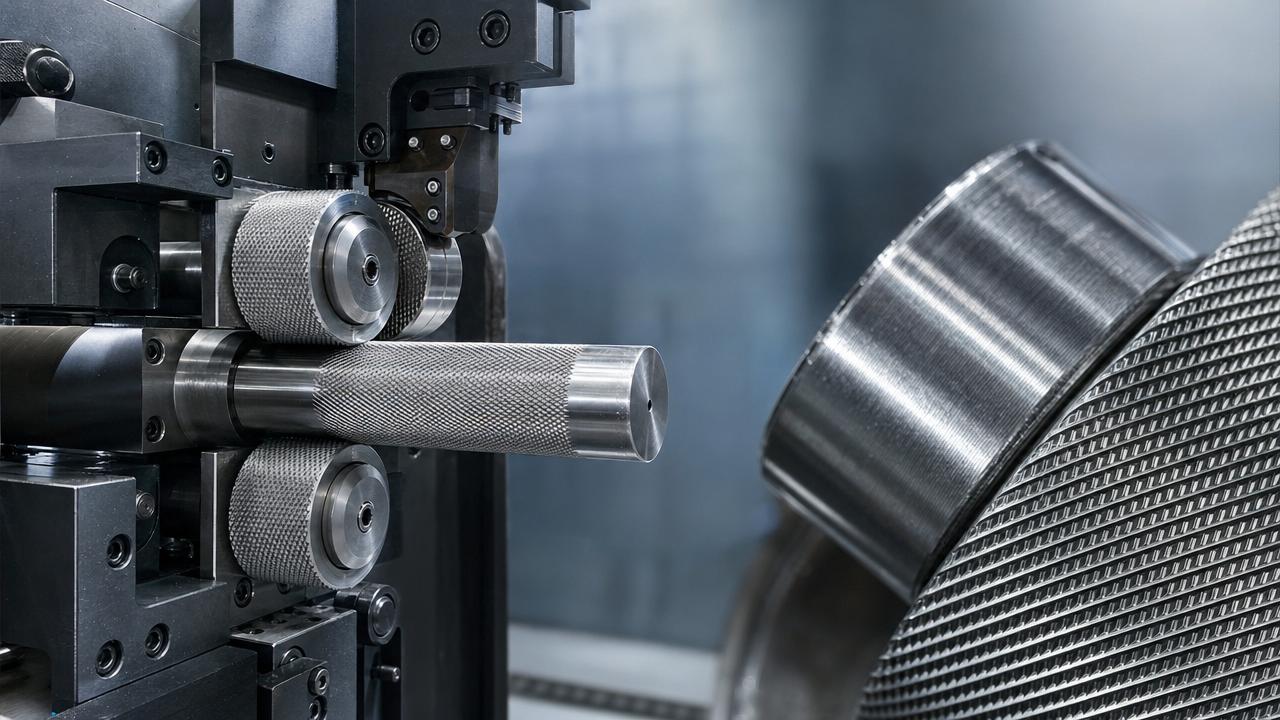
[Image 01: Knurling rolling machine creating a diamond pattern on a cylindrical metal part]
When shops miss this point, grip may look acceptable at first, yet dimensions drift, tools wear early, or cycle time rises without clear warning.
Grip Quality: What Actually Changes on the Part
Rolled knurls usually produce a denser, smoother-flowing pattern. Because the knurling rolling machine pushes material outward, the crest often feels fuller and more rounded.
Cut knurling tends to create sharper definition. On some materials, that sharper peak improves tactile bite, but it can also chip faster if the pattern becomes too thin.
- Use a knurling rolling machine when grip needs a firm, comfortable feel on mild steel, aluminum, or brass, especially for hand-contact parts made in higher volume.
- Choose cut knurling for brittle materials or precision-sensitive parts where material displacement could distort diameter, shoulder alignment, or wall thickness near the knurled section.
- Check crest shape after the first sample part. Rounded peaks usually improve comfort, while sharper peaks may feel better for control knobs needing stronger finger traction.
- Match knurl pitch to part diameter before production starts. Wrong tracking creates double patterns, poor grip appearance, and unnecessary tool pressure on the workpiece.
If the part is thin-walled, rolled knurling can still work, but only when support is adequate. Without support, the diameter may swell or the wall may collapse slightly.
That is why many operators inspect both the knurl and the base diameter after setup, not just the surface pattern.
Speed and Production Flow on the Shop Floor
In many cases, a knurling rolling machine wins on speed. It can form the pattern quickly, especially on softer materials and repeat jobs with stable diameter control.
Cut knurling is usually slower because it depends on controlled chip removal. Feed, lubrication, and chip evacuation must stay stable to prevent tearing or chatter.
- For repeat batches, reduce setup loss by locking spindle speed, feed rate, and pressure settings after the first approved sample from the knurling rolling machine.
- Slow down cut knurling on tougher alloys. A fast pass may save seconds early, but it often causes edge breakdown, rework, and unstable surface definition later.
- Use coolant or suitable lubrication whenever chip formation becomes inconsistent. Heat buildup can quickly turn a clean pattern into torn edges and noisy machine behavior.
- Measure real output by finished parts, not spindle time alone. A quicker cycle means little if inspection rejects increase because the pattern is incomplete or distorted.
In mixed production lines, process speed also depends on what happens before and after knurling. If parts need bending or shaping nearby, overall line balance matters.
For example, in sheet and profile fabrication, stable forming equipment such as Torsion bar synchronize CNC press brake helps keep downstream dimensions reliable. Its hydraulic transmission, torsion shaft forced synchronization, and wedge-type deflection compensation support accurate bending when thin plates or side-wall workpieces are involved.
Tool Wear: Where Costs Build Up Quietly
Tool wear is often the hidden reason one knurling method becomes expensive. The wrong process may still run, but it burns time through replacement, adjustment, and scrap.
A knurling rolling machine generally sees wear from pressure, alignment error, and hardened surface contact. Cut knurling sees wear at the cutting edge and from chip friction.
- Inspect wheel alignment every shift on the knurling rolling machine. Slight angular error increases side loading, uneven tooth contact, and premature wear on one edge.
- Replace worn knurl wheels before the pattern goes visibly flat. Waiting too long usually damages part consistency and increases pressure needed for acceptable formation.
- Watch chip color and chip shape during cut knurling. Blue chips or dusty fragments usually signal heat, dull edges, or cutting conditions that need correction.
- Store tools clean and dry after use. Fine contamination on the tool face can affect pattern accuracy just as much as obvious wear or mechanical damage.
One common mistake is blaming the tool too early. In practice, poor workholding, wrong diameter preparation, or inconsistent feed often cause the wear pattern.
Quick Comparison for Daily Decisions
Best-Fit Situations in Real Processing
Soft metals and repeat runs
For aluminum, brass, and lower-carbon steels, a knurling rolling machine usually gives the best balance of speed and grip. It is especially useful when batch size is steady.
Focus on workpiece support, tracking, and pressure. These three points decide whether the pattern looks clean or starts walking across the surface.
Harder alloys or dimension-critical parts
When the base diameter cannot grow, cut knurling often makes more sense. This is common on precision assemblies, threaded interfaces, or thin shoulders near the knurled zone.
Here, the key checkpoints are chip control, tool sharpness, and a stable feed. If chatter starts, surface quality usually falls fast.
Integrated fabrication environments
Shops that handle cutting, bending, rolling, deburring, and machining need process consistency across different machines. That is where equipment quality directly supports surface results.
Wuxi Armada International Trade Co., Ltd has focused on mechanical equipment since 2012, supplying CNC cutting machines, lathes, milling machines, welding equipment, rolling machines, deburring machines, pipe benders, thread rolling machines, and other processing systems. With ISO9001-based production management and EU CE-oriented standards, the company supports stable manufacturing quality across export markets.
Small Details That Are Easy to Miss
- Prepare the blank diameter correctly before knurling. Even a small size error can prevent full tooth tracking and leave a patchy or doubled pattern.
- Do not judge the knurl by appearance only. Always verify diameter growth, peak uniformity, and part runout after the first machine adjustment.
- Keep holders and slides rigid. Vibration does not just spoil finish; it also shortens tool life and makes troubleshooting far more difficult.
- Record a successful setup with material, diameter, feed, and tool data. That simple habit saves time and reduces repeated trial cuts later.
Another overlooked point is machine condition. Backlash, weak clamping, or worn bearings can make a good knurling rolling machine perform like a poor process choice.
What to Choose First
If the job needs fast output, comfortable grip, and efficient repeat production, start with a knurling rolling machine. It is usually the practical first option.
If the part is sensitive to deformation, made from harder material, or must hold a tight diameter, cut knurling deserves the first trial instead.
The safest approach is simple: review material, diameter tolerance, wall thickness, and target grip feel before locking the method. Then test one sample, inspect it closely, and standardize the setup only after the data agrees.
That decision process keeps the knurling rolling machine working where it delivers the most value, while avoiding unnecessary wear, slower output, and avoidable rework.