
— —
Automatic Drilling Tapping Machine Applications for Metal Parts with Tight Tolerances
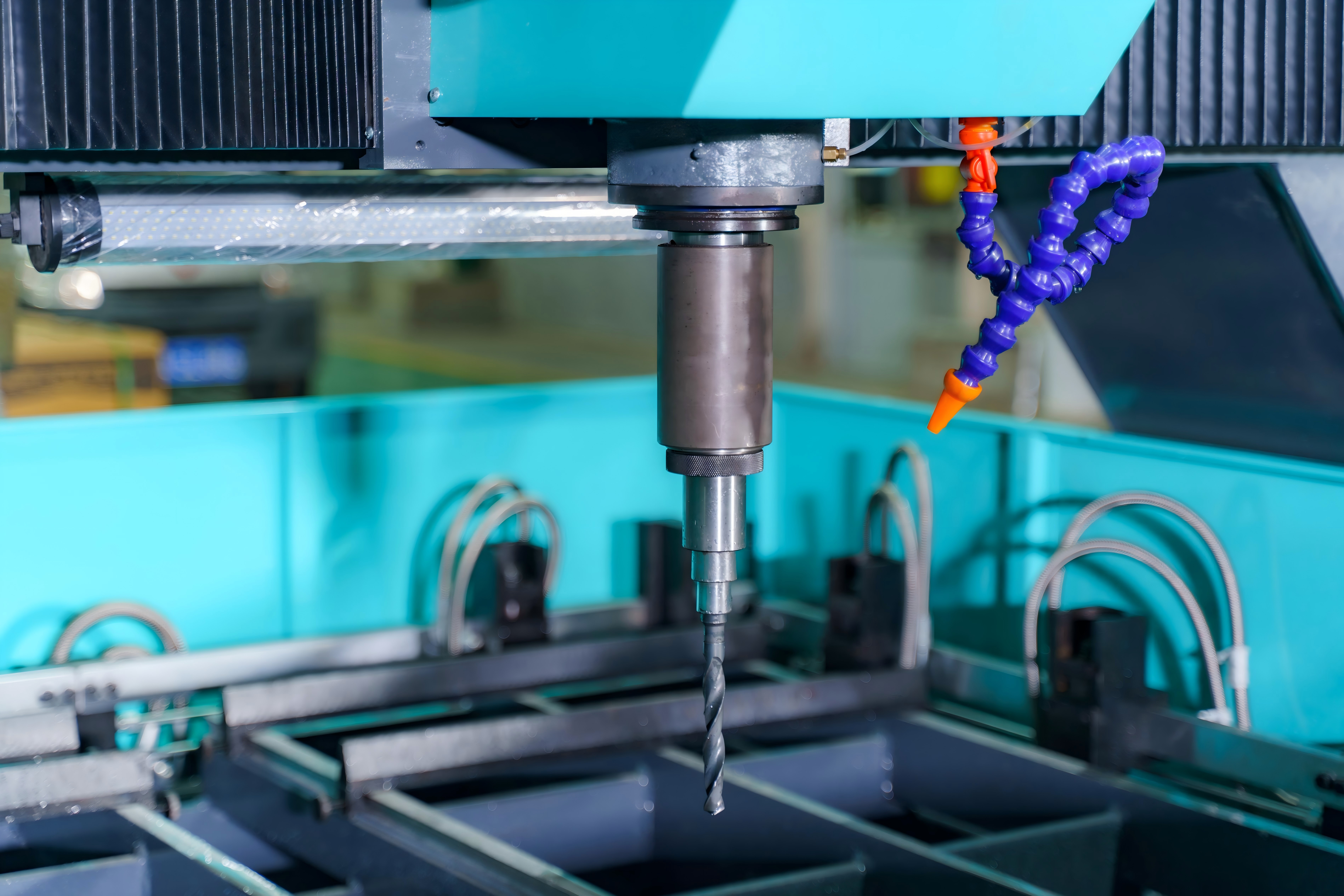
Where tight tolerances change the machining choice
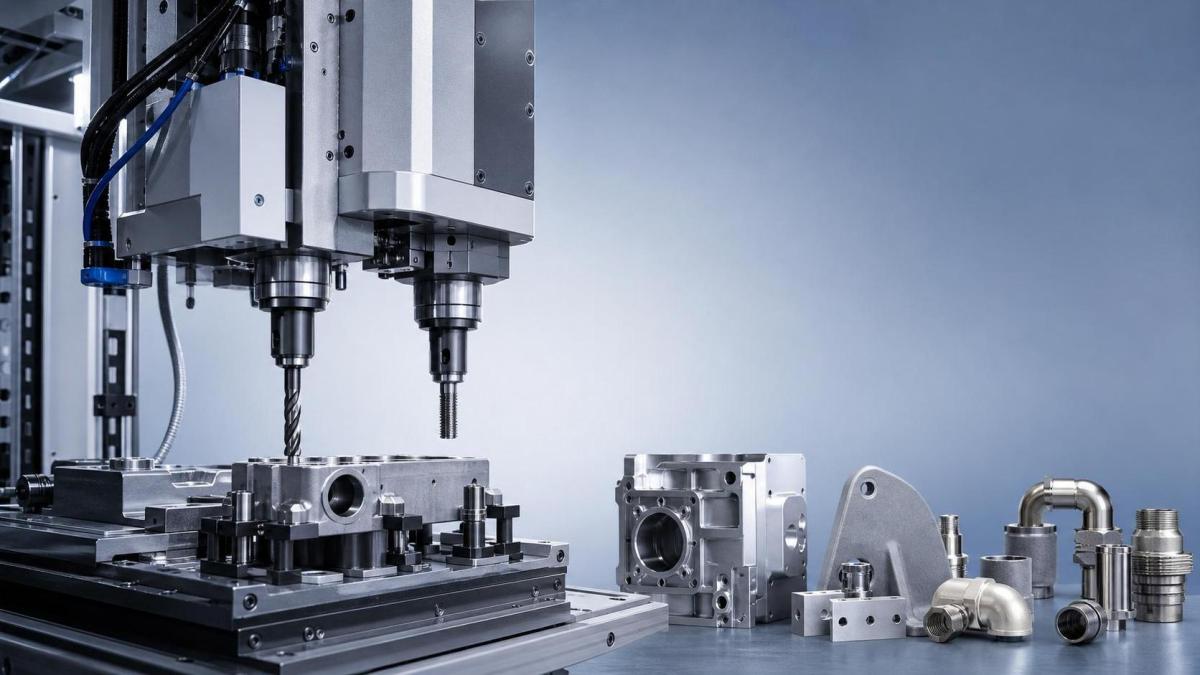
When metal parts require stable hole position, clean threads, and repeatable cycle times, the value of an automatic drilling tapping machine becomes very practical.
The issue is not only speed. It is process consistency across batches, shifts, materials, and part geometries that would otherwise expose manual variation.
In daily metalworking, the same tolerance target can behave differently on plate brackets, motor housings, tube connectors, or structural fittings.
That is why automatic drilling tapping machine applications should be judged by working conditions, not by one headline specification.
A workshop handling mixed production usually wants fewer setup errors, predictable thread depth, and cleaner handoff to welding, assembly, or inspection.
Wuxi Armada International Trade Co., Ltd has long worked around this broader production logic.
Its equipment portfolio spans CNC cutting, welding, milling, lathes, deburring, bending, and other fabrication stages shaped by ISO9001 and CE-oriented control.
That background matters because drilling and tapping quality rarely depends on one machine alone.
It usually depends on how upstream cutting, fixturing, and downstream finishing interact with the tolerance requirement.
Actual applications vary more than the drawing suggests
An automatic drilling tapping machine may look suitable on paper whenever a part has many holes and threaded positions.
In practice, the right decision depends on material hardness, wall thickness, burr sensitivity, part clamping stability, and required thread integrity.
Thin stainless panels need different process control from thick carbon steel bases.
Aluminum cast housings may cut easily, yet chip evacuation and thread pull-out risk become more important than raw spindle speed.
The more common judgment method is to map where tolerance loss happens first.
Sometimes it starts with hole position drift. In other cases, it starts with tap wear, heat buildup, or unstable workholding.
This is why automatic drilling tapping machine selection should connect process stability with the real production route.
Flat plates and brackets often prioritize hole pattern consistency
For flat metal parts, the main challenge is often cumulative positioning error across multiple holes in one setup.
Here, an automatic drilling tapping machine helps by keeping feed, sequence, and tapping depth repeatable across long runs.
This matters when brackets move directly into assembly fixtures, where even small variation causes alignment difficulty or rework.
Housings and machined bodies need thread quality, not just fast cycles
On housings, covers, and machine bodies, threaded holes often support sealing, fastening, or maintenance access.
In these applications, thread profile quality and perpendicularity can be more critical than output per hour.
A fast cycle with unstable thread engagement is expensive once leak paths or field loosening appear later.
Tube-related components add another layer of process judgment
When holes and threads sit on tubular parts, the drilling and tapping step is affected by roundness, wall thickness variation, and loading rhythm.
In such lines, upstream tube preparation can decide whether the automatic drilling tapping machine performs smoothly or keeps stopping for correction.
That is also where complementary equipment becomes relevant.
For example, precise tube cutting before hole making may be supported by Pipe cnc fiber laser cutting machine, especially for profiles requiring stable length, edge quality, and repeatable downstream positioning.
Different scenarios do not ask for the same machine behavior
A useful comparison is not simply small parts versus large parts.
The better comparison is where each application puts pressure on the process.
This kind of comparison helps explain why one automatic drilling tapping machine may perform very well in one cell and only adequately in another.
Where production lines gain the most from automation
The strongest gains usually appear where manual repetition already hides small but costly defects.
Examples include tapping depth drift, inconsistent hole center distance, or rework caused by operator fatigue on long batches.
An automatic drilling tapping machine is especially effective when parts return in recurring series rather than one-off prototypes.
That does not mean custom work is unsuitable.
It means flexible fixturing and quick programming become part of the machine decision instead of optional extras.
Workshops serving export-oriented fabrication also tend to value this consistency more.
When parts move across regions and standards, stable process control reduces later disputes over thread quality, assembly fit, and dimensional repeatability.
That aligns with the kind of quality discipline seen in equipment supply systems shaped by ISO9001 and CE expectations.
Common misjudgments before installation
One frequent mistake is choosing by spindle power and travel only.
That misses the practical limits caused by fixture design, coolant access, tapping torque control, and chip evacuation path.
Another mistake is treating similar materials as identical applications.
Carbon steel brackets and stainless enclosures may share nominal dimensions while behaving very differently under drilling and tapping loads.
It is also common to underestimate maintenance impact.
If tap replacement, lubrication control, and alignment checks are not planned, the automatic drilling tapping machine can lose its consistency advantage over time.
- Do not judge only by purchase cost when thread quality failures create assembly delays.
- Do not copy settings from one product family to another without chip and wall-thickness verification.
- Do not ignore upstream cut quality if hole position references come from earlier fabrication steps.
- Do not overlook operator interface and training when batch changes are frequent.
How to match the machine to the actual workload
A workable selection process starts with the part family, not the catalog page.
List the real hole diameters, thread types, material grades, annual volume, and tolerance-sensitive surfaces.
Then check where variation currently appears.
If scrap comes from misalignment, focus on workholding and positioning logic.
If defects come from damaged threads, focus on tapping stability, lubrication, and tool monitoring.
If the issue is throughput, examine loading method and cycle balance across the full line.
This broader view often reveals whether the automatic drilling tapping machine should stand alone or fit inside a linked cell.
In some tube and profile lines, upstream cutting precision strongly affects downstream tapping results.
A system such as the CNC-6024 format in a tube laser stage can support that stability with ±0.01mm positioning accuracy, 20-240mm round or square range, and automated feeding logic.
Used this way, the added equipment is not a sales add-on.
It is a process link that can reduce reference error before drilling and tapping even begins.
A practical next step for tighter metal part control
The best automatic drilling tapping machine applications are usually found where tolerance demands, batch rhythm, and part geometry are reviewed together.
That review should include current defect sources, fixture repeatability, tool management, and the influence of upstream cutting or forming.
For tight-tolerance metal parts, the machine decision becomes much clearer once those conditions are mapped by actual production scenario.
The next useful move is to sort parts by geometry and thread risk, compare cycle targets with setup time, and confirm which process limits are truly driving cost.
That approach gives the automatic drilling tapping machine a defined role inside the fabrication line, instead of expecting one machine to solve every precision problem by itself.