
— —
What to Check Before Working With a Drilling Machine Manufacturer on OEM Projects
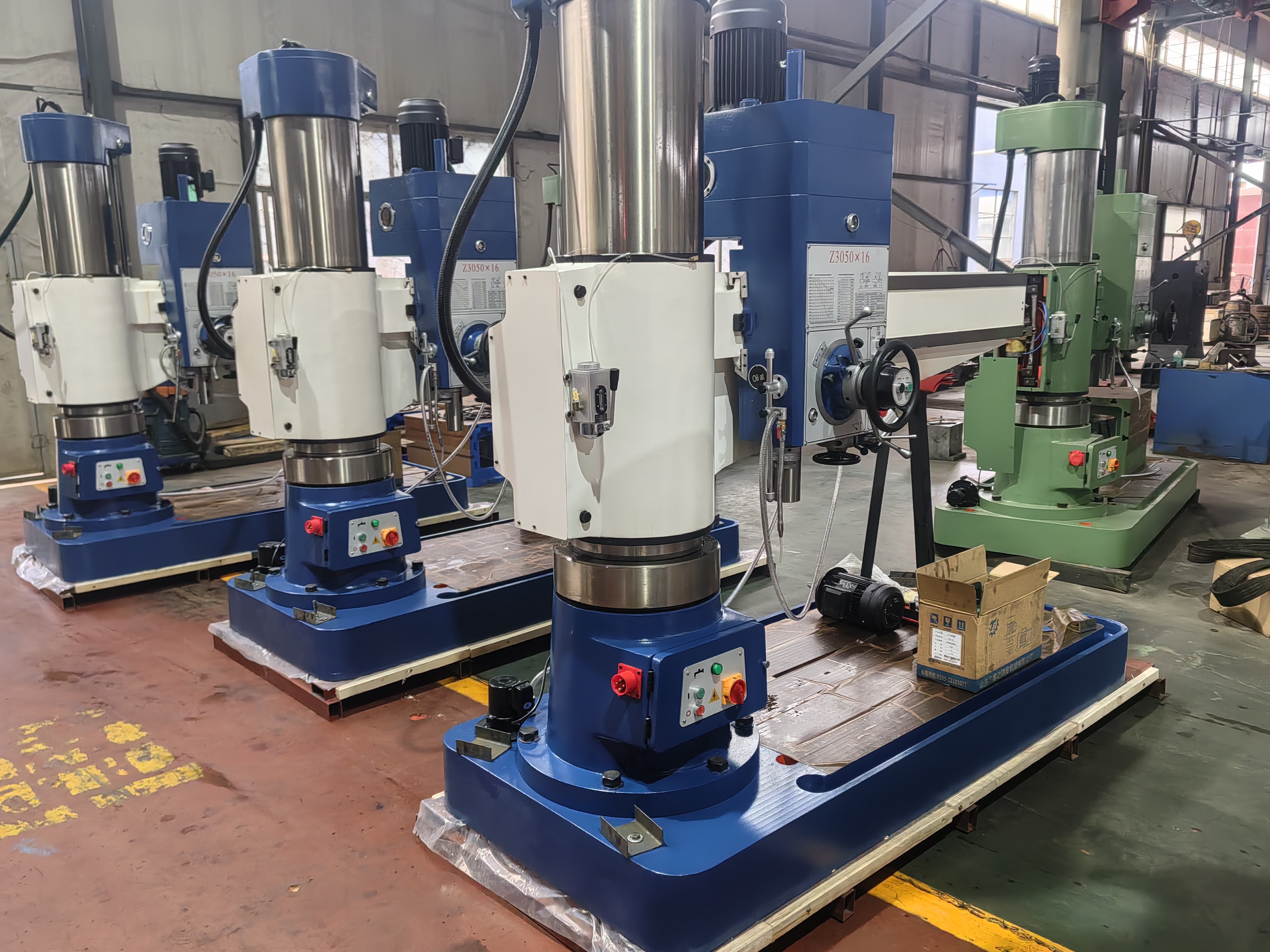
What to Check Before Working With a Drilling Machine Manufacturer on OEM Projects
Before an OEM project starts, supplier selection shapes cost, quality, and delivery from day one.
That is why choosing a reliable drilling machine manufacturer is not only a purchasing task.
It is a business decision that affects factory output, customer claims, and long-term sourcing stability.
In practical evaluation, buyers often compare price first.
However, the better signal is whether the drilling machine manufacturer can meet technical, compliance, and service expectations under real project pressure.
A strong OEM partner should support custom specifications, maintain repeatable quality, and keep communication clear across the whole project cycle.
This also means checking more than a catalog.
You need evidence of engineering depth, process control, export experience, and after-sales response.
Start With Real Manufacturing Capability
The first checkpoint is actual production strength.
A drilling machine manufacturer should show more than sample photos and general promises.
Ask what machines they use internally, how they control tolerances, and which steps are completed in-house.
If key processes depend heavily on subcontractors, delivery and quality risks usually rise.
You should also confirm whether the supplier handles related metalworking systems.
That often reflects broader process knowledge and better OEM coordination.
For example, companies active in welding, CNC cutting, lathes, milling, and sheet metal machinery usually understand upstream and downstream integration better.
That matters when your drilling equipment must fit into a larger production line.
What to verify on capability
- Factory location and production scale
- Core machining and assembly resources
- Fixture design and tooling support
- Electrical and control system integration ability
- Testing process before shipment
- Capacity during peak order periods
A capable drilling machine manufacturer can explain these points quickly and with specific proof.
Review OEM Engineering and Customization Experience
OEM work is rarely standard.
Even when the machine frame looks familiar, details often change.
Motor brands, spindle speed, control language, voltage, guarding, and branding may all need adjustment.
This is where an experienced drilling machine manufacturer separates itself from a simple trader.
Ask for previous OEM cases that match your project type.
Look for documented change control, drawing confirmation, and prototype validation.
The best suppliers can tell you where customization tends to fail and how they prevent those issues early.
Useful questions during evaluation
- How many OEM drilling machine projects were completed in the last two years?
- What parts of the design can be customized without affecting lead time badly?
- How are engineering revisions recorded and approved?
- Can they provide pre-shipment run tests for your exact configuration?
- Who owns the drawings and custom tooling after the project closes?
Clear answers reduce hidden cost later.
This becomes even more important when the machine must serve several material types or production conditions.
In related plate processing work, some buyers also compare complementary equipment such as Heavy Edge Milling Machine solutions.
That kind of machine supports steel plate milling for carbon steel, stainless steel, and aluminum plates.
It can handle 6–80mm thickness with micron-level accuracy and adjustable bevel angles from 0 degrees to 90 degrees.
The point is not product overlap.
It is whether the supplier understands precision machining across connected fabrication processes.
Check Quality Systems, Certifications, and Traceability
Quality claims should be easy to verify.
A dependable drilling machine manufacturer should work with documented inspection standards, not only operator experience.
ISO9001 is a useful baseline.
For many international projects, CE compliance also matters.
Still, certificates alone are not enough.
You need to understand how those standards appear in daily production.
Look for these quality controls
- Incoming material inspection records
- In-process dimensional checks
- Electrical safety verification
- Final machine performance testing
- Serial number traceability for shipped units
- Corrective action records for previous defects
A disciplined drilling machine manufacturer will share inspection sheets, not just say quality is stable.
That is especially important if your market demands local compliance reviews or customer audits.
Assess Delivery Reliability and Supply Chain Resilience
A technically strong supplier can still become a poor OEM partner if delivery is unstable.
Late delivery affects installation, customer commitments, and cash flow.
So ask how the drilling machine manufacturer manages procurement, scheduling, and final shipment.
More importantly, ask what happens when one critical component is delayed.
This is where experienced exporters usually perform better.
They tend to understand customs timing, packaging standards, and spare parts preparation for overseas clients.
Suppliers serving Southeast Asia, Europe, the Americas, and Oceania often have stronger shipping discipline.
Delivery risk signals
- Lead times change each time you ask
- No visible production planning system
- Key parts come from a single weak supplier
- Packaging details are undefined late in the process
- No standard timeline for FAT or inspection booking
A reliable drilling machine manufacturer should give a realistic schedule, not an attractive one.
Look Beyond Price and Model Total Cost
Low purchase price can hide high operating cost.
A smart OEM review compares the full cost picture.
That includes maintenance frequency, part replacement, setup time, training needs, and production downtime.
The right drilling machine manufacturer should help estimate these factors early.
If they avoid operating data, be careful.
Transparent suppliers usually discuss motor efficiency, wear parts, standard components, and service intervals with no hesitation.
In adjacent fabrication equipment, automation features like automatic clamping, edge detection, feed and return movement, and adjustable cutter head angles often lower labor cost over time.
The same logic applies when reviewing a drilling machine manufacturer for OEM supply.
Confirm Communication, Service, and Post-Sales Support
Many OEM problems are not technical at first.
They start with unclear communication.
A good drilling machine manufacturer should answer quickly, confirm details in writing, and summarize open items clearly.
This sounds simple, but it prevents many production mistakes.
Post-sales support matters just as much.
Ask whether installation guidance, remote troubleshooting, spare parts supply, and warranty handling are standardized.
If your machines go abroad, service responsiveness becomes part of the commercial risk review.
A simple support checklist
- Response time for technical questions
- Availability of English manuals and drawings
- Remote commissioning capability
- Spare parts lead time
- Warranty scope and exclusions
- Named contact person for escalation
A drilling machine manufacturer with strong service habits usually creates fewer surprises after shipment.
Use a Structured Final Evaluation Before Approval
Once the shortlist is ready, bring the decision into a simple scoring framework.
This keeps supplier comparison objective.
Score each drilling machine manufacturer on capability, OEM experience, quality control, delivery, cost, and service.
Then add comments for major risks and mitigation actions.
That final step helps when management asks why one supplier should move forward.
The right drilling machine manufacturer should make your OEM program easier to scale, not harder to manage.
When a supplier shows real manufacturing depth, stable quality systems, export discipline, and honest service, the decision becomes clearer.
Use these checks before signing.
It is one of the simplest ways to reduce sourcing risk and protect project results from the beginning.