
— —
Can One Thread Rolling Die Support Both Prototypes and Mass Orders?
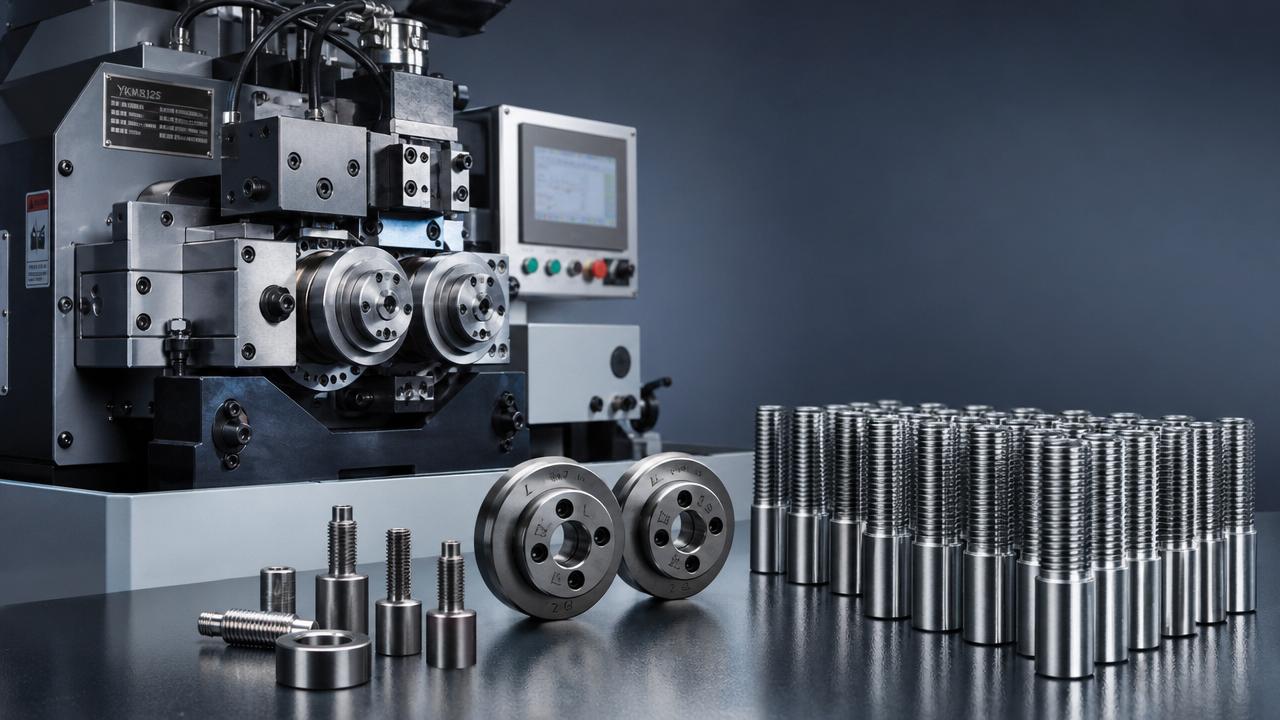
Can one thread rolling die handle both custom prototype and bulk export orders? For manufacturers balancing fast sample validation with scalable production, the answer depends on die design, material durability, thread accuracy, and machine compatibility. In the manufacturing and processing machinery industry, choosing the right thread rolling die can reduce changeover time, control costs, and ensure consistent quality from prototype development to high-volume international shipments.
For buyers of thread rolling machines and tooling, the question is not only whether one die can work in both stages, but under what conditions it should. Prototype jobs often require flexibility, short lead times, and quick engineering adjustments. Bulk export orders demand stable cycle performance, repeatable dimensions, and predictable die life across hundreds or thousands of parts.
In practical factory operations, one die can sometimes support both custom prototype and bulk export orders, but only when the thread form, workpiece material, batch size, tolerance target, and machine setup remain within a controlled range. If those variables shift too far, using one universal die may increase wear, raise scrap rates, or slow delivery.
For overseas buyers, contract manufacturers, and equipment distributors, this topic is especially relevant because tooling decisions affect quotation accuracy, sampling speed, export consistency, and after-sales stability. A wrong die strategy may save money in the first 5 days but create delays over the next 5 weeks.
Wuxi Armada International Trade Co., Ltd, based in Wuxi, Jiangsu Province, supplies a broad range of manufacturing and processing machinery, including thread rolling machines, CNC machine tools, laser cutting systems, welding equipment, plate processing machines, and related industrial solutions. With export experience across Southeast Asia, Europe, North and South America, and Oceania, the company understands that buyers need practical tooling recommendations, not generic claims.
When One Thread Rolling Die Can Cover Both Prototype and Mass Production
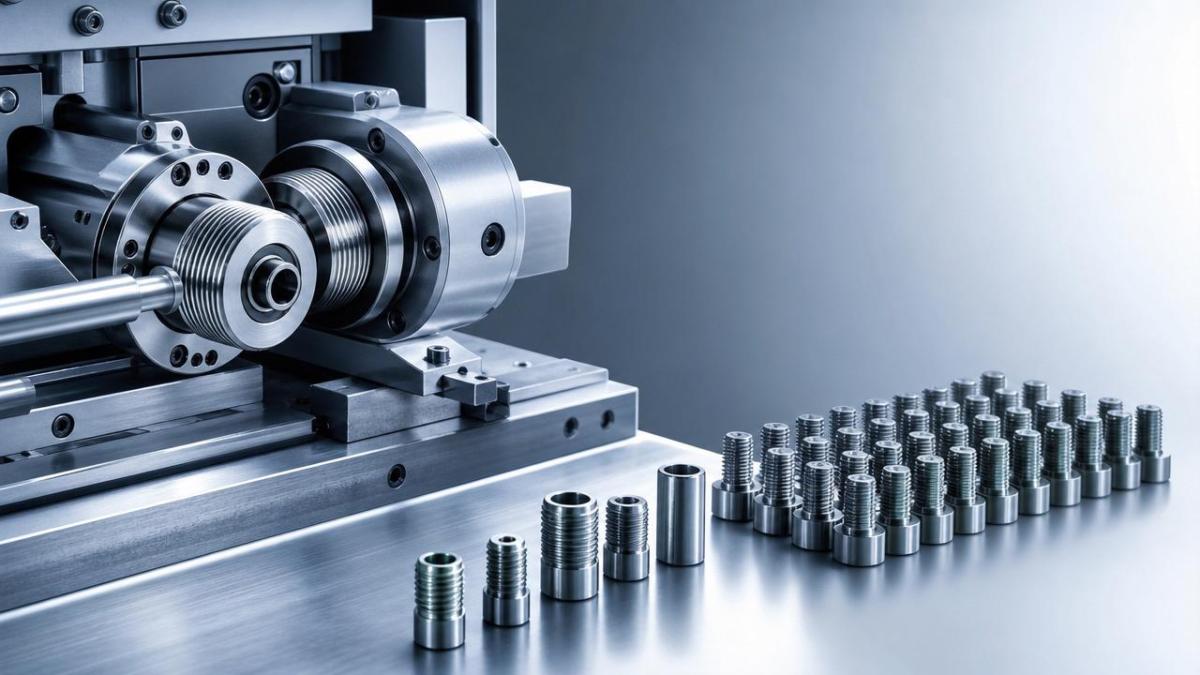
The short answer to “Can one thread rolling die handle both custom prototype and bulk export orders?” is yes, but only in selected operating windows. If the prototype is already close to final production geometry, uses the same material grade, and requires no major thread redesign, one die set may serve both phases efficiently.
This is most realistic when the thread specification is standardized, such as common metric or inch threads, and when part diameter variation stays within a narrow band like ±0.05 mm to ±0.10 mm before rolling. Stable blanks make die reuse far more practical.
Typical conditions that support dual-use dies
A shared die strategy works best in 4 common situations: low-to-medium volume ramp-up, repeat prototype revisions with the same thread profile, export orders that follow approved samples, and production lines where the thread rolling machine has repeatable setup control.
- Prototype quantity below 50 to 200 pieces
- Bulk order size from 1,000 to 20,000 pieces with unchanged thread design
- Workpiece material hardness kept in a narrow range, such as 18 HRC to 28 HRC
- Thread tolerance requirement aligned between sample stage and production stage
If those conditions are met, a well-made die can reduce duplicate tooling costs and shorten changeover time by 20 to 40 minutes per run, depending on machine type, operator skill, and die mounting method.
Why die material and hardness matter
Die material determines whether a prototype die can survive transition into bulk production. For small trial lots, some shops accept shorter die life. For export orders, especially those requiring dimensional consistency over multiple cartons or containers, the die must maintain profile stability after repeated rolling cycles.
In many industrial applications, buyers evaluate die life not by an abstract claim but by output interval. A die that performs well for 300 pieces during sampling may not remain economical at 10,000 pieces. Surface wear, edge rounding, pitch deviation, and root profile deterioration become visible over time.
What changes between prototype and export production
Prototype work emphasizes adjustment speed. Operators may tweak feed, pressure, rolling time, and blank diameter across several test pieces. Export production focuses on locked parameters, traceability, and lower variation across shifts, often over 8-hour to 12-hour production windows.
This shift means the same die must tolerate not only thread forming loads but also process repetition. If machine alignment, lubrication, and part preparation are controlled, one die may bridge both stages. If not, separate dies are usually safer.
The following comparison helps buyers judge whether a single die approach is realistic for their project.
The key conclusion is clear: one thread rolling die can handle both custom prototype and bulk export orders when the process is stable and the approved sample closely matches final production. If prototype work still involves active redesign, a dedicated production die is usually the better investment.
Key Technical Factors Buyers Should Review Before Choosing a Shared Die Strategy
A successful shared-die decision depends on more than price. Buyers should assess at least 5 technical dimensions: thread geometry, workpiece material, die hardness, machine compatibility, and inspection method. Ignoring even 1 of these can turn a cost-saving plan into a rework problem.
1. Thread geometry and profile complexity
Standard straight threads are easier to manage with one die than custom profiles, special lead requirements, or unusual flank angles. If a prototype includes repeated design changes in pitch, crest shape, or thread length, the die may need recutting or replacement before mass production starts.
For export buyers, the safest path is to confirm 3 details early: thread standard, final mating requirement, and acceptable gauge criteria. Once those are fixed, the die can be designed around a stable target instead of a moving one.
2. Workpiece material grade and hardness range
Thread rolling performance changes significantly between low-carbon steel, medium-carbon steel, stainless steel, aluminum alloys, and some nonferrous materials. A die that forms mild steel samples well may show accelerated wear when moved to harder material for export production.
As a practical rule, if hardness variation exceeds about 5 HRC across supply lots, die life and thread finish can become less predictable. This matters even more when parts are sourced from different mills or subcontractors for export schedules.
3. Machine compatibility and setup repeatability
Even a strong die performs poorly on an unstable machine. Buyers should confirm rolling machine type, die mounting standard, spindle or slide condition, lubrication system, and operator control repeatability. A mismatch between die design and machine setup often causes premature wear faster than expected load alone.
In many workshops, setup repeatability within 0.02 mm to 0.05 mm at critical contact points is a useful benchmark. If the machine cannot maintain that level consistently, one die may struggle to support both sample and bulk work without dimensional drift.
4. Surface finish and export inspection expectations
Prototype approval may focus on assembly fit, but bulk export orders often add stricter visual and dimensional checks. Thread surface finish, burr level, pitch consistency, and thread lead quality must remain stable from the first carton to the last pallet.
If the export customer requires first article approval plus in-process checks every 500 to 1,000 pieces, die wear patterns need to be predictable. That makes material selection and preventive maintenance central to the decision.
The table below summarizes the main screening criteria for buyers evaluating whether one thread rolling die can handle both custom prototype and bulk export orders.
For most B2B buyers, a shared die strategy is strongest when technical inputs are fixed before sampling starts. The more uncertainty remains in material, tolerance, or machine condition, the more likely separate dies will reduce overall risk.
Cost, Lead Time, and Production Planning Considerations
Tooling decisions influence much more than unit price. They affect sample approval speed, batch scheduling, export delivery reliability, and maintenance planning. A die that seems economical at first can become expensive if it increases downtime or causes shipment delays.
Shared die advantages for controlled programs
When a project is stable, one die can reduce duplicate tooling expense, shorten setup learning time, and simplify spare management. This is especially useful for buyers launching a new product line and moving from 20 test pieces to 2,000 regular parts within 2 to 6 weeks.
- Lower initial tooling investment
- Faster transition from sample approval to serial production
- Simpler operator familiarization
- Less storage and tracking of multiple die versions
When separate dies may save more in the long run
Separate dies often make sense when prototype development is still fluid, when export quantities exceed a high output threshold, or when buyers need one die reserved as a master reference. In some factories, keeping a sample die untouched helps resolve later disputes over thread fit or appearance.
If projected annual volume is above 50,000 to 100,000 parts, a production-optimized die can often justify itself through better wear resistance, longer service intervals, and lower scrap. The cost of an extra die is small compared with interrupted export schedules.
Lead time planning for export-oriented buyers
Buyers should plan in 3 stages: tooling confirmation, sample validation, and production release. A typical schedule may include 7 to 15 days for die preparation or adjustment, 3 to 7 days for sample testing, and 2 to 4 weeks for the first export batch, depending on machine availability and part complexity.
Companies serving international markets should also account for spare die planning. Even if one die handles both custom prototype and bulk export orders, keeping a backup or refurbishment plan is wise when shipping deadlines are fixed.
How to Reduce Risk When Using One Die for Two Different Order Types
The best results come from process control, not optimism. If a buyer wants one die to cover both sampling and serial production, risk should be managed through clear checkpoints, operator discipline, and realistic maintenance intervals.
A practical 5-step implementation method
- Confirm final thread standard, mating requirement, and acceptance gauge before die cutting.
- Match die design to the actual thread rolling machine, not only the drawing.
- Run a controlled prototype batch and record machine settings, lubrication, and blank dimensions.
- Inspect wear after the first 50, 100, and 300 pieces to estimate production stability.
- Approve release to bulk export only after dimensions and surface quality remain stable.
This 5-step method helps buyers avoid the common mistake of treating prototype approval as proof of long-run capability. A die that passes 20 pieces is not automatically ready for 20,000 pieces.
Common mistakes in international purchasing
One frequent mistake is focusing only on die price while ignoring machine condition and blank preparation. Another is changing raw material suppliers after sample approval. A third is skipping in-process inspection because the first 10 pieces looked acceptable.
These issues can be costly in export business, where replacement shipments may take 2 to 6 weeks and freight costs may exceed the original tooling savings. For this reason, many professional buyers evaluate total process risk, not only tooling cost.
Inspection and maintenance suggestions
During production, check thread dimensions at defined intervals, such as every 300 to 500 pieces for stable materials, or more often for harder alloys. Monitor lubrication condition, die surface wear, and machine alignment. If abnormal noise or heat appears, pause production before defects multiply.
For buyers sourcing complete machinery solutions, working with a supplier that understands both machines and tooling is helpful. Wuxi Armada International Trade Co., Ltd offers thread rolling machines alongside a wider portfolio of CNC equipment, welding systems, plate processing machinery, and export-oriented industrial support. That broader machinery background helps align tooling advice with real production conditions rather than isolated die theory.
What B2B Buyers Should Ask Suppliers Before Placing an Order
Before committing to a die or machine package, buyers should ask suppliers direct technical questions. The goal is to understand whether one thread rolling die can handle both custom prototype and bulk export orders in their exact production environment, not just in general terms.
Recommended supplier questions
- Is the proposed die designed for sampling only, or for prototype-to-production transition?
- What workpiece materials and hardness ranges are suitable?
- What machine models or setup conditions are required for stable performance?
- How should die wear be inspected during runs of 1,000, 5,000, or 10,000 pieces?
- What spare tooling or regrinding plan is recommended for export schedules?
These questions improve quotation clarity and reduce misunderstanding later. They are particularly useful when the buyer is comparing suppliers across countries and needs a realistic basis for technical evaluation.
A single thread rolling die can be a practical solution for both prototypes and mass orders when thread design is stable, material variation is controlled, and the machine setup is repeatable. It is not a universal answer for every project, but in the right operating range it can shorten development time, reduce tooling duplication, and support smoother export production.
For manufacturers, distributors, and project buyers in the manufacturing and processing machinery sector, the best decision comes from matching die capability to production reality. If you are evaluating thread rolling machines, tooling options, or integrated metalworking equipment for domestic or international orders, Wuxi Armada International Trade Co., Ltd can help you review application details and identify a practical solution path.
Contact us today to discuss your thread rolling requirements, request a tailored machinery recommendation, or get more details on prototype support and bulk export production solutions.