
— —
When Does a Single Thread Rolling Die Make Business Sense?
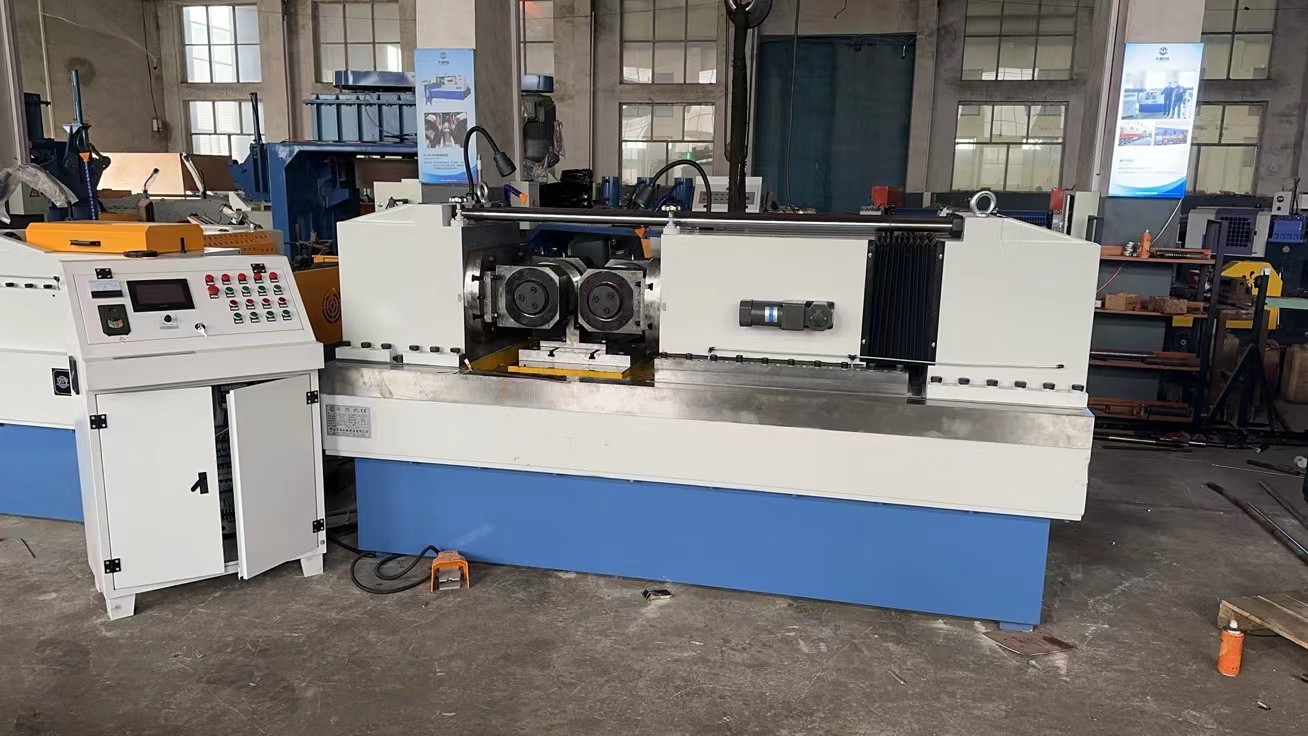
For manufacturers balancing flexibility, cost, and delivery speed, a key question is: Can one thread rolling die handle both custom prototype and bulk export orders? In today’s competitive metalworking market, choosing the right thread rolling solution can directly affect production efficiency, part consistency, and long-term return on investment. Understanding when a single thread rolling die makes business sense helps buyers make smarter equipment decisions.
In thread rolling operations, the answer is rarely a simple yes or no. A single die can be the right commercial choice in some production environments, but in others it creates avoidable downtime, quality variation, or delivery risk. Buyers in manufacturing and processing machinery need to evaluate volume, material range, tolerance expectations, export schedules, and changeover frequency before deciding on a one-die strategy.
For companies sourcing thread rolling machines and related equipment, the issue is especially relevant when orders move between low-volume prototypes and repeat export batches. Wuxi Armada International Trade Co., Ltd supplies a broad range of mechanical equipment, including thread rolling machines, CNC machine tools, welding systems, plate processing equipment, and other metalworking solutions for customers in Southeast Asia, Europe, the Americas, and Oceania. In such global supply chains, tooling decisions must support both flexibility and stable output.
This article explains when a single thread rolling die is practical, when it becomes risky, and how to assess the trade-offs using real purchasing logic. It also addresses the long-tail buyer question directly: Can one thread rolling die handle both custom prototype and bulk export orders? The answer depends on 4 core factors: part similarity, order volume, quality tolerance, and total changeover cost.
Why the One-Die Question Matters in Modern Thread Rolling
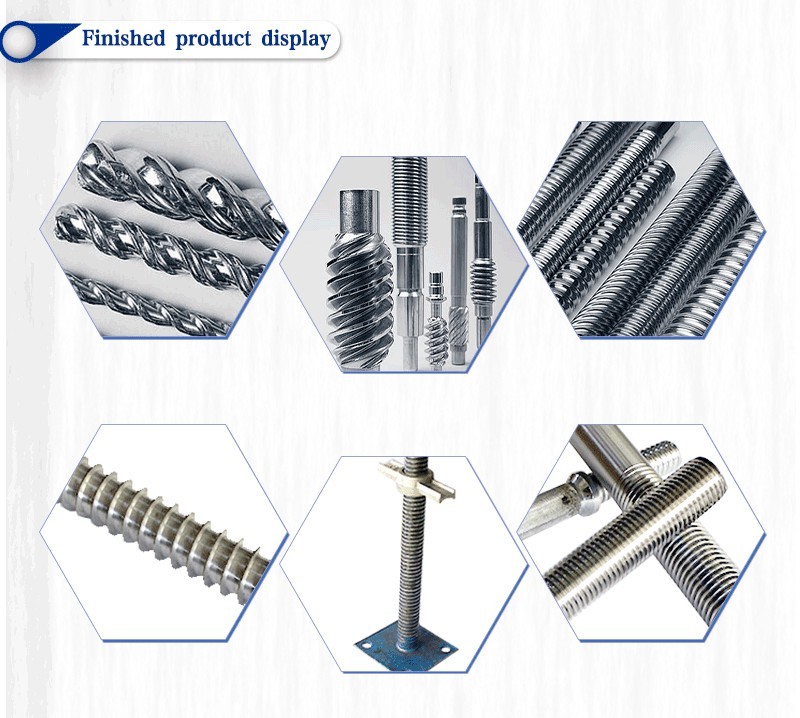
Thread rolling is valued because it forms threads by cold working rather than cutting, which often improves surface finish, thread strength, and material utilization. In many standard applications, one properly selected die set can run hundreds or thousands of parts with stable repeatability. However, production economics change quickly when prototype jobs require frequent adjustment or when export orders demand long uninterrupted runs.
A buyer asking, Can one thread rolling die handle both custom prototype and bulk export orders? is usually trying to reduce tooling investment without sacrificing delivery performance. That goal makes sense, especially for small and mid-sized manufacturers that process multiple SKUs each month. Yet a tool that performs well for 20 trial parts may not be the most efficient option for 20,000 export components.
The business drivers behind a single-die strategy
Most companies consider a single die approach for 3 reasons. First, it lowers initial tooling cost. Second, it simplifies spare parts management. Third, it reduces setup complexity for operators. These are valid advantages when product families share similar thread forms, diameters, and materials.
In practice, the one-die strategy works best when the part variation is narrow. For example, if the same machine is rolling carbon steel fasteners within a diameter range of about 8 mm to 12 mm and the thread specification remains consistent, the commercial case is much stronger than in mixed production involving stainless steel, different pitch requirements, and several shoulder geometries.
Where buyers often underestimate risk
The main risk is assuming that “compatible” is the same as “optimal.” A die may technically form more than one part type, but cycle stability, wear rate, and finished thread quality can still vary. That matters when export customers expect batch-to-batch consistency over 2 to 6 weeks of scheduled production.
Another risk is hidden downtime. If operators spend 15 to 30 minutes per switch adjusting alignment, pressure, or feed position, the savings from using one die can disappear over a month of mixed production. For a workshop running 3 to 5 changeovers per day, tooling flexibility must be measured against labor time and machine availability, not just purchase price.
Key signs a single die may be suitable
- Prototype and bulk parts share the same thread standard and close diameter range.
- Material hardness stays within a narrow production window.
- Dimensional tolerance requirements are moderate rather than highly critical.
- Monthly order mix remains below about 3 to 4 major thread variants.
- Setup staff have experience in die adjustment and process verification.
The table below shows how a single die strategy compares with a dedicated multi-die setup in typical metalworking scenarios.
The key takeaway is that one die makes the most sense when production complexity is low and process control is strong. Once SKU diversity, export volume, or tolerance pressure increases, a dedicated tooling strategy usually protects delivery and quality more effectively.
Can One Thread Rolling Die Handle Both Custom Prototype and Bulk Export Orders?
This question should be answered from both an engineering and purchasing perspective. Technically, yes, one die can sometimes support both phases. Commercially, it only makes sense when the prototype is not a one-off geometry and when export production remains within the die’s stable forming window. The more the prototype differs from the final mass-production part, the weaker the one-die business case becomes.
A practical rule is to divide demand into 3 levels. Low volume may be under 500 pieces per order. Mid volume may range from 500 to 5,000 pieces. High volume export often exceeds 5,000 or 10,000 pieces, depending on the part and machine capacity. A single die is often efficient in the first level, sometimes acceptable in the second, and much more conditional in the third.
When the answer is yes
The answer is yes if the prototype is designed as a validation step for the same part family that will later move into production. In that case, one die can support process proving, sample approval, and early export preparation without requiring duplicate tooling. This is especially useful when lead time is short, such as 7 to 15 days for a pilot order followed by a larger shipment window.
It is also a good fit when thread standards are common, such as metric threads with standard pitch profiles, and when the material is predictable, such as mild steel or medium carbon steel in a controlled hardness range. Under these conditions, the same die may deliver acceptable performance from first article through medium-scale batch production.
When the answer is no
The answer is usually no when prototypes are highly customized and export orders require sustained high-volume output. If the prototype involves dimensional revisions, special shoulder positions, non-standard pitch, or difficult materials such as higher hardness stainless steel, one die may create too many variables. The result can be shortened die life, more scrap, and requalification delays.
It is also a poor choice if export customers need strict consistency across several shipments. For example, if parts are dispatched in 3 containers over 6 weeks, a worn die that was first used in prototype development may no longer hold the same process condition by the final batch. In that case, separate production tooling is often the safer option.
4 questions procurement teams should ask
- How different is the prototype geometry from the production part?
- What is the expected cumulative quantity over 30, 60, and 90 days?
- How tight are the thread and concentricity tolerances?
- What is the cost of one hour of lost machine time during changeover or rework?
The matrix below helps buyers judge whether a shared die strategy is commercially sound.
This comparison shows that the one-die concept is strongest when prototype and production are closely aligned. Once volume or complexity rises, the safer strategy is usually to separate development tooling from production tooling.
Selection Standards for Buyers of Thread Rolling Equipment and Tooling
Choosing whether to standardize on one die is not only a tooling issue. It is also a machine matching issue. Buyers should evaluate the thread rolling machine, die compatibility, operator skill, inspection method, and maintenance plan as one system. In B2B procurement, a lower tooling budget can quickly become expensive if the machine cannot maintain stable pressure or alignment through long runs.
5 evaluation points before placing an order
- Thread specification range: confirm diameter, pitch, and part length limits.
- Material scope: carbon steel, alloy steel, stainless steel, or non-ferrous parts.
- Expected daily output: for example 300, 3,000, or 30,000 pieces.
- Inspection interval: every 50 pieces, every 200 pieces, or by batch lot.
- Tool life target: define planned replacement before quality drops.
These factors determine whether shared tooling will remain predictable. If a plant processes only 1 or 2 thread families per shift, one die may be efficient. If the plant alternates across 6 or more part types, dedicated tooling often improves throughput and traceability.
How machine supply and process support affect the decision
A capable supplier adds value by helping customers match machine capacity to product mix. Wuxi Armada International Trade Co., Ltd works in the broader field of manufacturing and processing machinery, supplying not only thread rolling machines but also CNC machine tools, cutting systems, welding equipment, plate handling machinery, and other production equipment. That broader equipment perspective matters because buyers often build complete process lines, not isolated tooling decisions.
For export-oriented customers, supply chain readiness also matters. Machines and related equipment are expected to be organized under recognized quality and compliance frameworks such as ISO9001 management practice and EU CE-oriented design requirements where applicable. That does not replace application testing, but it supports more consistent procurement and commissioning workflows.
Common buying mistakes
- Choosing a die based only on unit price instead of total batch cost.
- Ignoring maintenance frequency over 1 to 3 months of mixed production.
- Skipping sample verification before approving export quantity.
- Using prototype-worn tooling for long export runs without inspection controls.
In many workshops, the right answer is not “one die forever” but “one die for launch, then scale with dedicated tooling when volume justifies it.” That phased approach reduces initial cost while protecting quality once demand becomes more stable.
Implementation, Maintenance, and Risk Control for Mixed Order Production
Even if a single die is selected, success depends on process discipline. Mixed production involving prototypes and export batches requires tighter documentation than many buyers expect. A workable plan normally includes 3 stages: sample validation, batch monitoring, and preventive maintenance. Without these controls, the same die can deliver very different outcomes from one order to the next.
A practical 5-step workflow
- Confirm part drawing, material grade, and thread standard before setup.
- Run 10 to 30 sample pieces and record dimensions and surface results.
- Approve setup conditions and define in-process inspection frequency.
- Track die wear during production and stop before drift affects acceptance.
- Review batch data before the next prototype or export order is released.
This workflow is particularly useful when customers ask, Can one thread rolling die handle both custom prototype and bulk export orders? The answer improves significantly when each transition is documented. A shop that measures wear, setup time, and scrap rate over 30 to 60 days can make a far better tooling decision than one relying on assumptions.
Maintenance intervals and replacement logic
Maintenance frequency depends on material, output, and die condition. In general shop practice, visual checks may be done every shift, dimensional checks every batch, and a deeper wear review after a defined quantity threshold. For some standard applications, that threshold may be every 2,000 to 5,000 pieces. For harder materials or tighter tolerance work, checks may need to be more frequent.
Replacement decisions should be based on measurable process change, not just visible damage. If thread form begins trending toward the tolerance limit, if rolling pressure increases, or if surface finish degrades, continued use of one shared die can become a false economy. The cost of rework, delayed shipment, or claim handling is often far higher than the cost of planned tooling change.
Risk control checklist for export production
- Keep prototype records separate from mass-production acceptance records.
- Reserve inspection samples from the first, middle, and last production stage.
- Plan at least 1 backup die when shipping deadlines are fixed.
- Verify packaging and corrosion protection for international transport cycles.
For manufacturers serving overseas customers, delivery reliability is as important as machine capability. Tooling decisions should therefore support the full production chain, from sample approval to final shipment readiness.
Who Should Choose a Single Die, and Who Should Scale Beyond It?
A single thread rolling die makes the most business sense for companies in 3 situations: product development with controlled variation, low-to-medium volume manufacturing, and workshops prioritizing faster startup over maximum specialization. It can also be suitable for distributors or contract manufacturers testing market demand before investing in multiple dedicated tools.
By contrast, companies should scale beyond one die when they run export-focused volume, multiple thread standards, or demanding customer specifications. If a plant has regular orders across several regions and ships to Europe, North America, Southeast Asia, or Oceania on fixed schedules, tooling redundancy and specialization usually improve predictability.
Best-fit buyer profiles
- Small and mid-sized metalworking shops with limited SKU variation.
- OEM suppliers validating a new threaded part before scale-up.
- Factories that need short lead time and moderate monthly output.
- Export manufacturers that can separate prototype and production inspection clearly.
The final decision should connect tooling strategy to order structure, machine capability, and quality responsibility. If the same die supports both flexibility and repeatability, it is a strong asset. If it introduces uncertainty at the exact point where volumes rise, it should be replaced by a more segmented tooling plan.
For buyers evaluating thread rolling machines, die compatibility, and broader metalworking equipment, the most practical approach is to define your part range, output target, and export quality requirements before purchasing. Wuxi Armada International Trade Co., Ltd offers a wide portfolio of manufacturing and processing machinery, backed by experience in supplying equipment to international markets and supporting customers with solution-oriented selection. If you are deciding whether one die is enough for your prototype and bulk orders, contact us today to discuss your application, get a tailored equipment recommendation, and learn more about the right thread rolling solution for your production plan.