
— —
Custom Pipe Welding for Complex Layouts: What to Check First
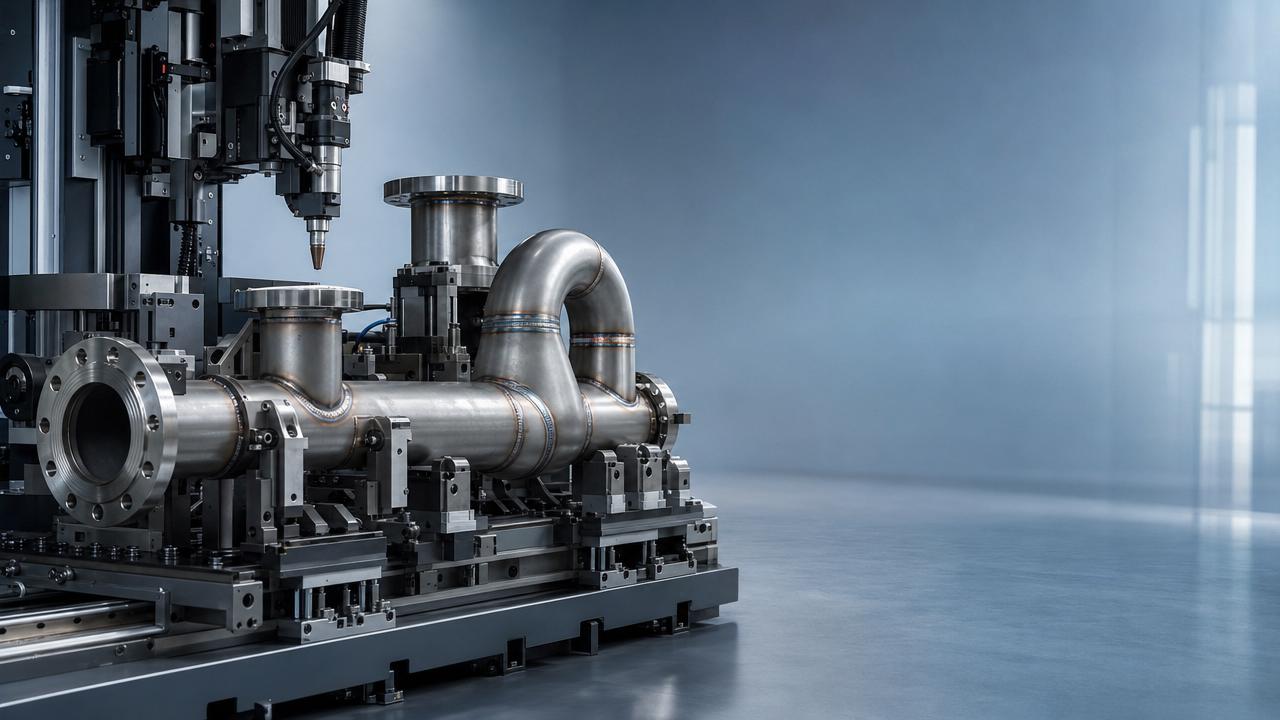
Why custom pipe welding decisions start before setup
Custom pipe welding for complex layouts is rarely difficult because of the weld alone.
Problems usually begin earlier, when material, fit-up, access, and sequence are treated as routine.
In fabrication shops handling mixed projects, one layout may involve standard carbon steel spools.
The next may combine stainless, reducers, tees, elbows, and tight installation clearances.
That is why custom pipe welding cannot be judged by diameter alone.
The first checks should confirm base metal, wall thickness, groove type, and joint reachability.
They should also confirm whether the weld sequence supports assembly without distortion or repair.
For companies with broad mechanical equipment experience, this early review matters across many export projects.
Wuxi Armada International Trade Co., Ltd has worked with automatic welding equipment and related machinery since 2012.
That background reflects a practical reality in manufacturing.
Layouts differ, standards differ, and a workable custom pipe welding plan must reflect both.
In actual layouts, the first judgment is not always the same
Different layout conditions change the priority of each inspection point.
A straight pipe run with repeated butt joints allows a stable process window.
A skid-mounted line with flanges, branch connections, and offsets does not.
In the second case, custom pipe welding depends more on positioning accuracy and torch travel space.
Wall thickness also changes the logic.
Thin-wall pipe raises the risk of burn-through and alignment movement during tacking.
Thicker sections shift attention toward heat input, groove preparation, and fill consistency.
Material choice adds another layer.
Carbon steel may tolerate a wider setup range than duplex stainless or copper-nickel alloy.
When mixed materials or low temperature steel are involved, custom pipe welding planning becomes more restrictive.
The point is not to make preparation slower.
It is to avoid treating visually similar jobs as technically identical ones.
A quick comparison helps prevent the wrong setup
Tight branch layouts need better fit-up than wide-open spools
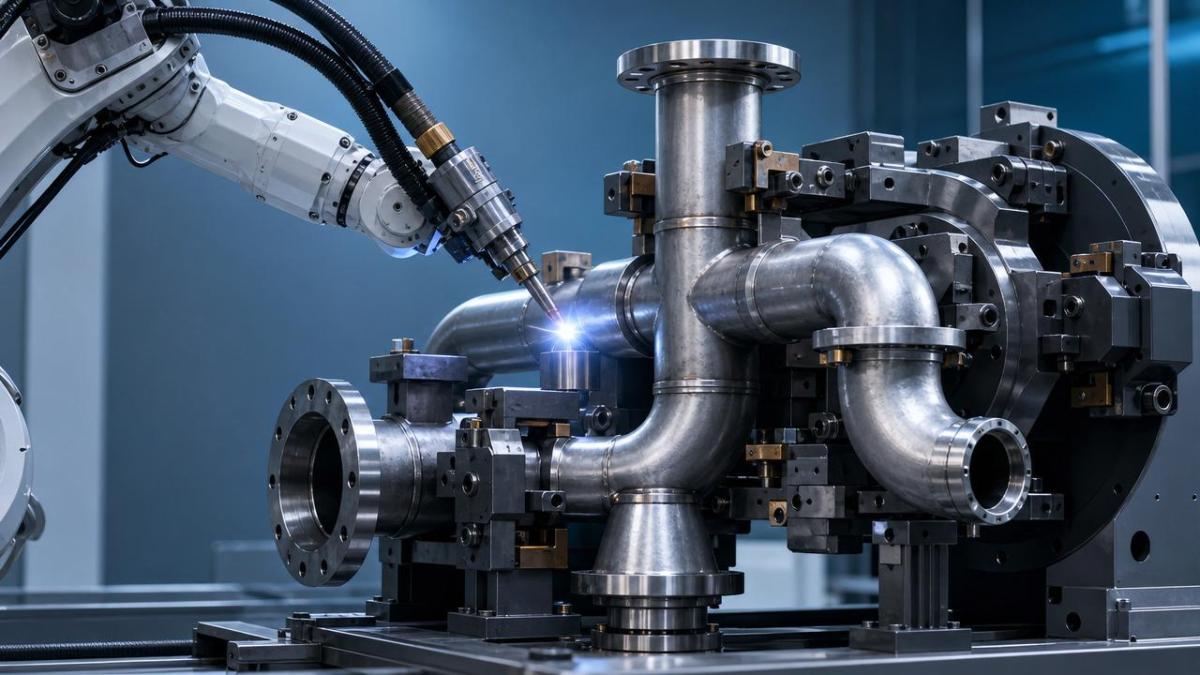
One of the most demanding custom pipe welding situations appears in crowded layouts.
Tees, elbows, and reducers compress the working envelope and reduce correction space.
In these cases, the first question is simple.
Can the joint be welded in a stable position without forcing awkward torch movement?
If the answer is uncertain, tack quality and groove accuracy become critical.
Small fit-up errors can shift root gap, alter penetration, or create local stress concentration.
This matters even more when the assembly includes several connected joints.
An early error at one elbow can move flange orientation farther down the spool.
A practical response is to lock the sequence before final welding starts.
Check which joints should be completed first, which should stay adjustable, and where heat accumulation may pull the line out.
For this kind of pipeline processing, automated stations can help when they support varied joint types.
A system such as PPCW16 heavy duty Chuck Pipe Welding Station fits this context because it handles pipe-to-pipe, flange, tee, reducer, and elbow butt welding within one workflow.
That does not remove the need for judgment.
It simply makes the judgment easier to execute consistently.
Large diameter and heavier wall jobs shift attention to stability
Another common custom pipe welding scenario involves larger diameters and longer workpieces.
These jobs often look straightforward because access seems better.
In practice, stability becomes the real issue.
A long section rotating under inadequate support can shift centerline during welding.
That affects bead shape, arc length, and final concentricity.
The first checks here are mechanical as much as metallurgical.
Look at clamping method, drive torque, center height adjustment, and travel stroke.
When pipe diameters range from 25 to 426 and wall thickness runs from 3 to 20 mm, one station may cover many jobs.
Even so, layout complexity still decides whether the process is truly efficient.
More open layouts usually benefit from higher deposition processes after root control is secured.
That is where custom pipe welding often moves from TIG root work to MAG or SAW filling.
If the equipment supports process switching without repeated handling, throughput improves without sacrificing consistency.
What usually matters most on heavier jobs
- Whether the support and chuck hold alignment during full rotation.
- Whether groove design matches the planned root, fill, and cap sequence.
- Whether heat input is controlled across long seams and repeated passes.
- Whether handling space allows safe loading of 0.5 to 6 m workpieces.
When materials change, custom pipe welding parameters cannot stay generic
Material-driven variation is often underestimated in complex fabrication.
A shop may run carbon steel in the morning and stainless or duplex later the same day.
The layout may look similar, but the welding window is not.
Custom pipe welding on stainless steel tends to place tighter demands on cleanliness and heat tint control.
Low temperature steel can shift the focus toward procedure compliance and toughness retention.
Copper-nickel alloy and duplex stainless usually require closer attention to filler compatibility and thermal balance.
This is where experience with broader mechanical processing becomes useful.
Companies serving Southeast Asia, Europe, the Americas, and Oceania often see wider standard expectations.
ISO9001 discipline and CE-oriented manufacturing practices help because they make procedure control repeatable.
For complex export or code-sensitive work, custom pipe welding should be reviewed together with qualification requirements.
That includes groove form, welding process route, operator handling limits, and inspection access after assembly.
Common misjudgments usually come from treating similar jobs as equal
In actual production, the biggest mistakes are often small assumptions.
A branch spool may be scheduled like a straight spool because the diameter matches.
A material change may be ignored because the groove looks unchanged.
A station may be selected by maximum size alone, without checking reach and motion range.
These shortcuts create avoidable rework in custom pipe welding.
- Looking only at pipe diameter, while ignoring wall thickness and groove complexity.
- Comparing equipment by headline output, while missing handling and positioning constraints.
- Focusing on immediate welding speed, while overlooking fit-up time and correction time.
- Assuming one process setup can cover all materials without quality trade-offs.
- Checking purchase cost first, while delaying maintenance, safety, and compliance review.
The better approach is to compare the whole job path.
That means loading, clamping, welding, adjustment, inspection, and later maintenance access.
A more reliable way to match equipment and layout conditions
When the goal is repeatable custom pipe welding, equipment selection should follow the layout logic.
If the project mix includes varied groove forms and combined joints, process flexibility matters more than a single peak speed figure.
If the work includes frequent diameter changes, adjustment range and operator control become more valuable.
If productivity depends on prefabrication flow, stable rotation, track travel, and coordinated parameter control need to work together.
That is why some workshops prefer stations combining TIG, MAG, and SAW options with PLC-based parameter management.
The second mention is enough here: PPCW16 heavy duty Chuck Pipe Welding Station is relevant when one clamping setup must cover multiple joint forms and maintain consistent welding position.
Its value is not just automation.
It is the ability to fit complex fabrication routines without turning every new spool into a manual workaround.
Before moving forward, confirm these points
A strong custom pipe welding result usually comes from disciplined early checking, not last-minute correction.
If a layout is complex, start by separating joint types, material demands, and access limits.
Then compare those conditions against process capability, handling range, and inspection needs.
That approach makes it easier to define realistic parameters, reduce distortion risk, and keep assembly predictable from the first weld onward.