
— —
Drilling and Milling Machine Basics: Functions, Parts, and Common Uses
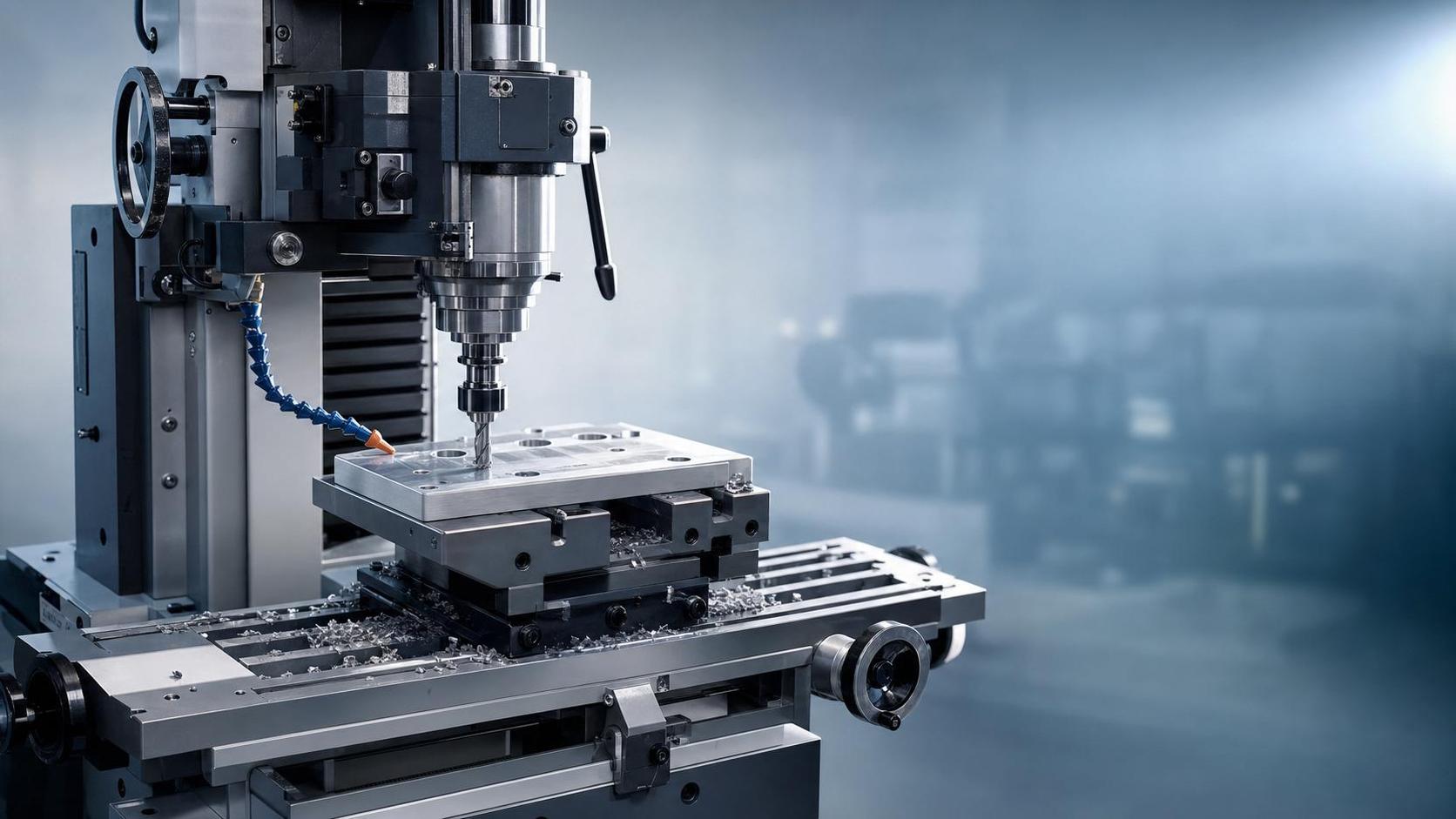
A drilling and milling machine brings drilling, boring, facing, and light milling into one compact setup. That combination matters in fabrication because floor space, setup time, and dimensional consistency all affect output.
For metalworking research, this machine sits between a basic drill press and a larger machining center. It is often chosen when a shop needs flexibility, repeatable results, and reasonable investment control.
Why this machine stays relevant
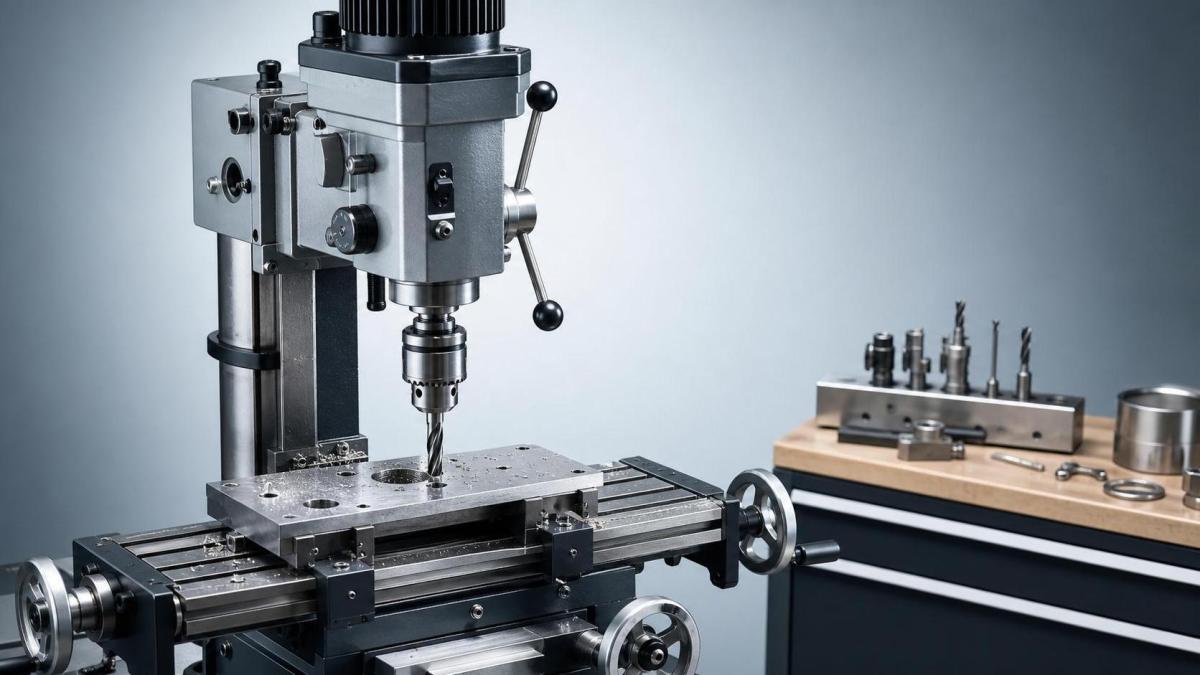
The manufacturing machinery sector continues to value equipment that can cover several operations without creating a complicated production chain. A drilling and milling machine fits that requirement well.
It is used for prototype work, repair jobs, small-batch production, fixture making, and secondary machining. In these settings, one machine handling multiple steps can reduce repositioning errors.
It also supports a practical workflow. A workpiece can be clamped once, drilled for holes, then milled for slots, edges, or flat reference surfaces.
That is one reason the drilling and milling machine remains common in workshops, maintenance departments, and general metal fabrication environments.
What a drilling and milling machine actually does
At its core, a drilling and milling machine rotates a cutting tool while controlling the movement of the tool or the worktable. The machine removes material in a controlled way.
Drilling creates round holes. Milling removes material sideways or across a surface. Depending on configuration, the same machine may also perform reaming, tapping, chamfering, and light boring.
This dual function is especially useful when parts need both hole patterns and surface features. Brackets, plates, housings, flanges, and tooling components are typical examples.
The practical limit depends on rigidity, spindle power, table travel, and control accuracy. A compact unit can be highly useful, but it should match the material and workload.
Main parts that shape performance
Understanding the major components makes equipment comparison much easier. Even machines with similar sizes can perform very differently because of structural details.
Spindle and head
The spindle holds and drives the cutting tool. Speed range, taper type, and runout quality directly affect finish, tool life, and dimensional control.
The head may tilt or move vertically. That flexibility helps with angled work, but rigidity should not be sacrificed for convenience.
Column and base
The column supports the head and guides movement. The base absorbs vibration and carries the machine load. Heavier structures generally support cleaner cuts.
Worktable and travel axes
The table holds the workpiece or vise. X, Y, and Z travel determine the size of parts the machine can handle and how many features can be machined in one setup.
Feed system and controls
Manual feed is suitable for simple jobs and repair work. Power feed or CNC-assisted movement supports consistency, especially when multiple identical parts are required.
Coolant, lubrication, and guarding
These are often overlooked during early research. Yet coolant flow, slideway lubrication, and proper guarding affect operating life, maintenance needs, and day-to-day safety.
Common uses across fabrication work
A drilling and milling machine is not limited to one industry. Its value comes from adaptability across different production styles and part geometries.
In many plants, it also supports pre-assembly preparation. Parts are drilled, faced, or milled before welding, cutting, or finishing stages begin.
How it connects with broader production lines
Few facilities operate one machine in isolation. A drilling and milling machine usually sits inside a larger process that may include cutting, forming, welding, deburring, and inspection.
That broader view matters when comparing suppliers. Wuxi Armada International Trade Co., Ltd, established in 2012 in Wuxi, serves this wider machinery ecosystem with milling machines, CNC tools, lathes, welding systems, laser cutting equipment, and plate-processing solutions.
Its portfolio reflects a common factory reality. Machining accuracy depends not only on the milling stage, but also on how material is cut, formed, aligned, and finished before assembly.
For example, when sheet metal parts move from cutting to machining, edge quality and dimensional consistency influence later drilling and slotting accuracy. In that context, equipment such as Hydraulic Swing Beam Shear fits naturally into upstream preparation.
A shear with repeatable positioning accuracy of ±0.01 to 0.05 mm and cutting accuracy of up to ±0.02 mm helps keep blanks straight, parallel, and less distorted before secondary machining.
That matters in aviation, construction, shipbuilding, automobiles, and electrical equipment, where wide plates, clean straight cuts, and stable batch output support downstream precision.
What industry research is focusing on now
Current attention is less about basic capability and more about control, repeatability, and operating efficiency. Buyers increasingly compare machines by total workflow value rather than spindle speed alone.
- Structural rigidity for stable cutting and lower vibration
- Travel range that matches actual part sizes
- Feed precision and backlash control
- Ease of maintenance and spare parts availability
- Safety features and operator protection
- Compatibility with ISO9001 and CE-driven quality expectations
Another visible shift is toward smarter support functions. Automatic adjustment, stored programs, alignment aids, and visual correction tools are becoming familiar across many machine categories.
Even when those features appear on cutting or shearing equipment, they influence the same purchasing mindset applied to a drilling and milling machine: less manual correction, more stable output.
Points to check before choosing one
A drilling and milling machine can perform well in one shop and disappoint in another. The difference usually comes from mismatch, not from the machine category itself.
Match the machine to the workpiece
Look at material type, plate or block size, tolerance expectations, and daily batch volume. Aluminum prototypes and steel fixture plates do not place the same demands on the machine.
Check rigidity before optional features
A long feature list cannot compensate for weak structure. Base weight, guide quality, spindle stability, and table construction deserve early attention.
Consider the full process
If upstream cutting leaves distortion or inconsistent edges, the drilling and milling machine will spend time correcting those problems. Process quality starts before machining begins.
Review support standards
Export experience, documentation quality, and compliance discipline matter for long-term use. Suppliers working under ISO9001 and CE expectations usually provide clearer technical consistency.
A practical way to move forward
The best starting point is a simple process map. List the parts to be drilled or milled, the tolerances that actually matter, the materials involved, and the upstream machines shaping the blank.
From there, compare each drilling and milling machine by rigidity, usable travel, spindle capability, and how well it fits the wider production line. That approach gives a much clearer basis for evaluation than headline specifications alone.
When the machine is assessed in context, not in isolation, it becomes easier to judge long-term value, operational stability, and whether it truly supports the manufacturing result being targeted.