
— —
How to Maintain a CNC Drilling Punching Marking Machine for Stable Daily Operation
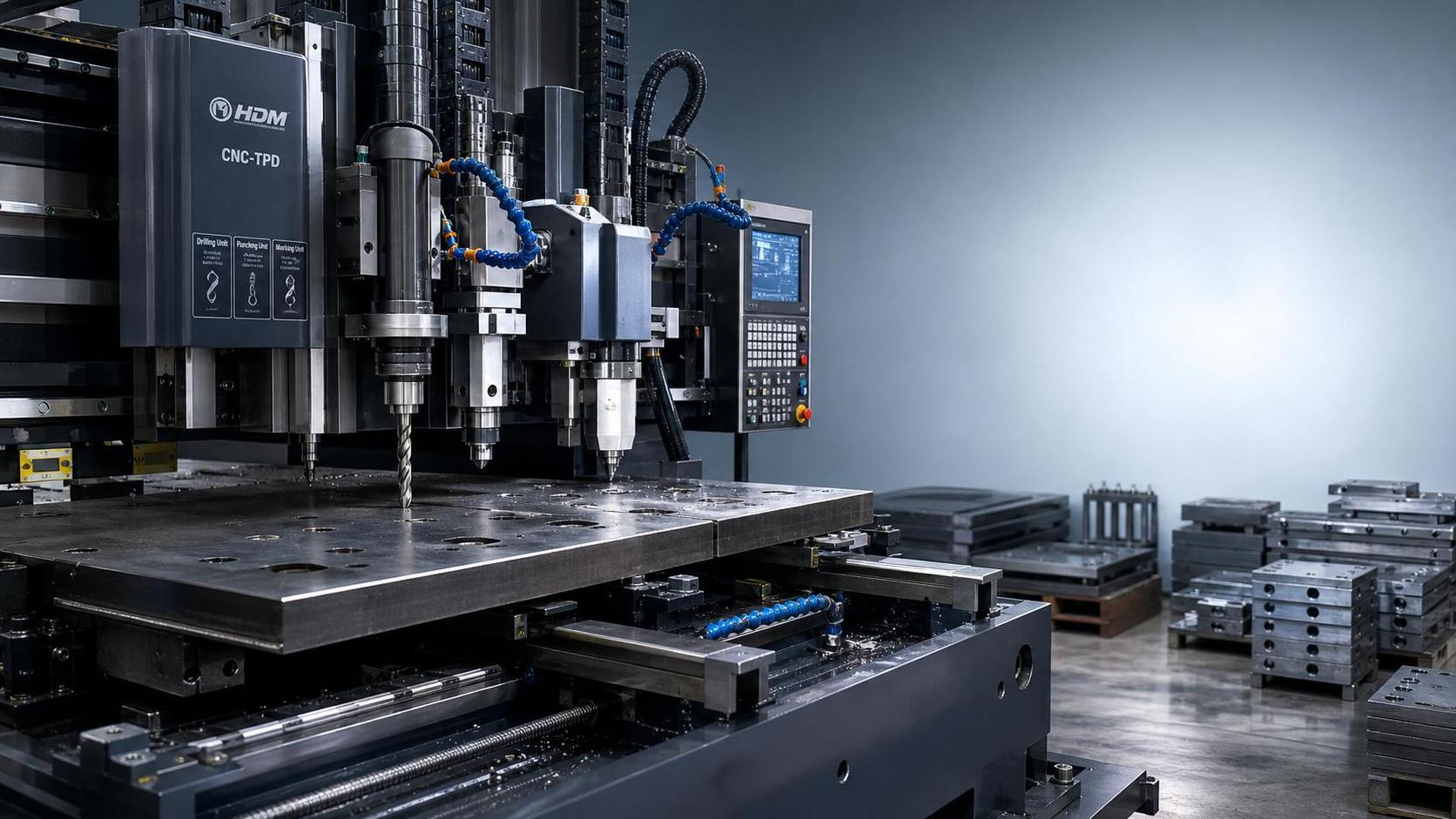
Stable operation starts with how the machine is actually used
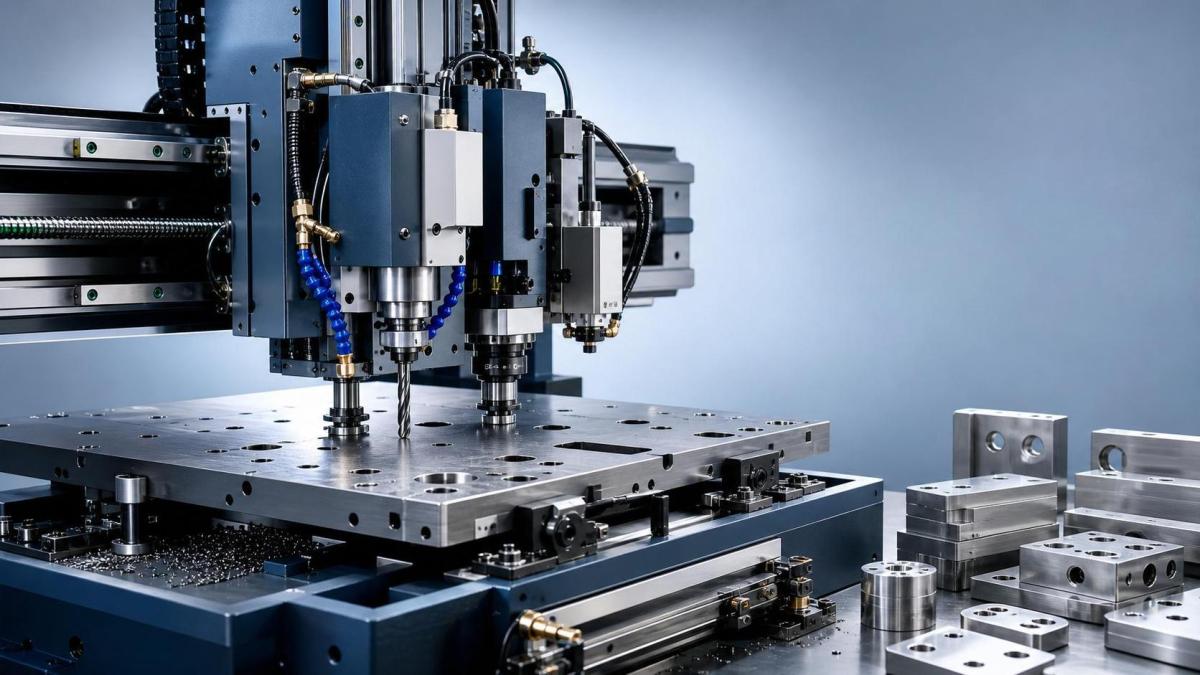
A CNC Drilling Punching Marking Machine rarely fails without warning.
In daily production, small changes appear first.
Hole accuracy drifts, marking depth varies, or vibration increases during repeated cycles.
That is why maintenance should follow operating conditions, not only the calendar.
A CNC Drilling Punching Marking Machine working one shift on light sections faces different stress than one running continuously on thick plates.
The maintenance logic changes with workload, material consistency, ambient dust, and programming complexity.
In practical service work, stable operation comes from disciplined inspection, quick response to minor faults, and steady control of wear points.
This matters even more for companies serving broad fabrication needs.
Wuxi Armada International Trade Co., Ltd supplies multiple categories of metalworking equipment to different regions.
That background makes one point clear.
Reliable machines are usually supported by maintenance routines that match real production habits, quality standards, and site conditions.
Different production scenes create different maintenance pressure
Not every CNC Drilling Punching Marking Machine ages in the same way.
A line processing structural steel members often suffers from chip accumulation and tool heat.
A workshop handling varied small batches usually sees more program switching and more fixture adjustments.
When the machine serves export-oriented fabrication, tolerance control and traceable inspection also become more important.
In those cases, maintenance is not only about avoiding shutdown.
It also protects dimensional consistency, punching quality, and legible marking results.
A useful judgment method is to connect faults with the production rhythm.
If errors rise after long continuous shifts, thermal expansion, lubrication decline, and spindle loading deserve attention.
If problems appear after frequent job changes, then origin calibration, clamping repeatability, and operator input become the first checkpoints.
When heavy sections run all day
High-load applications push the drilling unit, punching station, and feed system harder.
Here, the CNC Drilling Punching Marking Machine needs stricter lubrication control and more frequent debris removal.
Guide rails, ball screws, hydraulic components, and spindle bearings should be checked before visible damage develops.
The common mistake is to judge machine condition only by whether it still runs.
Stable output matters more than simple start-up success.
When mixed batches change programs often
Flexible production creates a different risk profile.
The machine may not run at maximum load, but setup errors become more likely.
Position references, sensor feedback, clamping surfaces, and marking head alignment should be reviewed more often.
In this scene, clean data entry and repeatable zero-point checks prevent many service calls.
What deserves daily attention before faults become visible
Daily maintenance should stay short, specific, and measurable.
Long checklists often get ignored.
A better approach is to focus on components that affect machining quality first.
- Remove chips around drilling, punching, and marking areas before they alter positioning.
- Confirm lubrication points are active and oil lines are not blocked.
- Inspect drill bits, punches, and marking pins for uneven wear or chipping.
- Check hydraulic pressure stability during repeated punching cycles.
- Listen for bearing noise, servo hesitation, or abnormal feed resistance.
- Verify emergency stops, sensors, and cable connections remain reliable.
These checks are simple, but they directly affect hole spacing, burr level, and marking readability.
For a CNC Drilling Punching Marking Machine, a small lubrication failure can quickly turn into alignment loss or tool damage.
The same symptom can mean different problems
This is where many maintenance decisions go wrong.
A poor hole finish does not always mean the drill bit is worn.
It may come from spindle runout, unstable clamping, weak coolant flow, or feed mismatch.
Likewise, shallow marking may result from head wear, but also from material scale, pressure variation, or wrong parameter recall.
The table below helps separate common scenes.
This kind of diagnosis saves time because it links symptoms to operating context.
Electrical checks and hydraulic checks should not be treated equally
On many sites, electrical and hydraulic systems are inspected with the same routine.
That usually misses the real risk.
Electrical problems often appear as intermittent faults first.
Sensor interruption, loose terminals, encoder signal noise, and unstable servo response may come and go.
Hydraulic issues are different.
They often reveal themselves through slower action, pressure fluctuation, oil temperature rise, or incomplete punching force.
For a CNC Drilling Punching Marking Machine, both systems affect precision, but not in the same rhythm.
Electrical inspection should prioritize signal stability and cabinet cleanliness.
Hydraulic inspection should prioritize leakage, pressure repeatability, filter condition, and oil contamination.
Where environmental dust is heavy, those intervals should be shortened.
Related fabrication equipment often reveals a better maintenance standard
In workshops handling several metalforming processes, comparing maintenance logic across machines is useful.
For example, pipe bending equipment and drilling lines share a common lesson.
Repeatability depends on mechanical rigidity, clean control feedback, and disciplined tooling care.
That is why equipment such as NC hydraulic pipe bending machine is often evaluated not only by output speed.
Its PLC control, servo-managed rotation, touch-screen diagnostics, and durable die material point to a broader maintenance idea.
Stable machining comes from systems that are easy to inspect, easy to reset accurately, and resistant to long-term wear.
That perspective applies directly to a CNC Drilling Punching Marking Machine when selecting inspection points and service intervals.
What sites often misjudge before downtime becomes expensive
One common misjudgment is trusting nominal machine parameters while ignoring the actual workpiece mix.
Different steel grades, coatings, and thicknesses change wear speed significantly.
Another mistake is treating similar jobs as identical.
Bridge parts, structural members, and fabricated support components may all require drilling and marking.
Yet their tolerance priorities and production rhythms are often different.
There is also a cost mistake.
Some teams delay tool replacement to reduce short-term expense.
That frequently increases scrap, rework, and spindle stress instead.
- Do not judge health only by whether alarms are absent.
- Do not separate maintenance records from production records.
- Do not ignore environmental factors such as dust, temperature, and vibration.
- Do not assume all recurring faults come from operator input.
A practical maintenance rhythm for stable daily operation
A useful routine balances daily checks with deeper weekly confirmation.
Each level should answer a different question.
Daily work asks whether the CNC Drilling Punching Marking Machine can keep producing accurately today.
Weekly work asks whether hidden drift is building inside the system.
Monthly work asks whether wear trends require parts planning or process adjustment.
In real use, the best next step is to map maintenance to three things.
- Actual workload, including shift length and material thickness range.
- Quality risks, especially hole position, punch edge condition, and marking legibility.
- Support conditions, including spare tools, trained service response, and record discipline.
When those three are clear, maintenance stops being reactive.
It becomes part of production control.
That is the most reliable way to keep a CNC Drilling Punching Marking Machine ready for steady, accurate, and efficient daily operation.