
— —
How Do Buyers Judge Die Flexibility Before Scaling Orders?
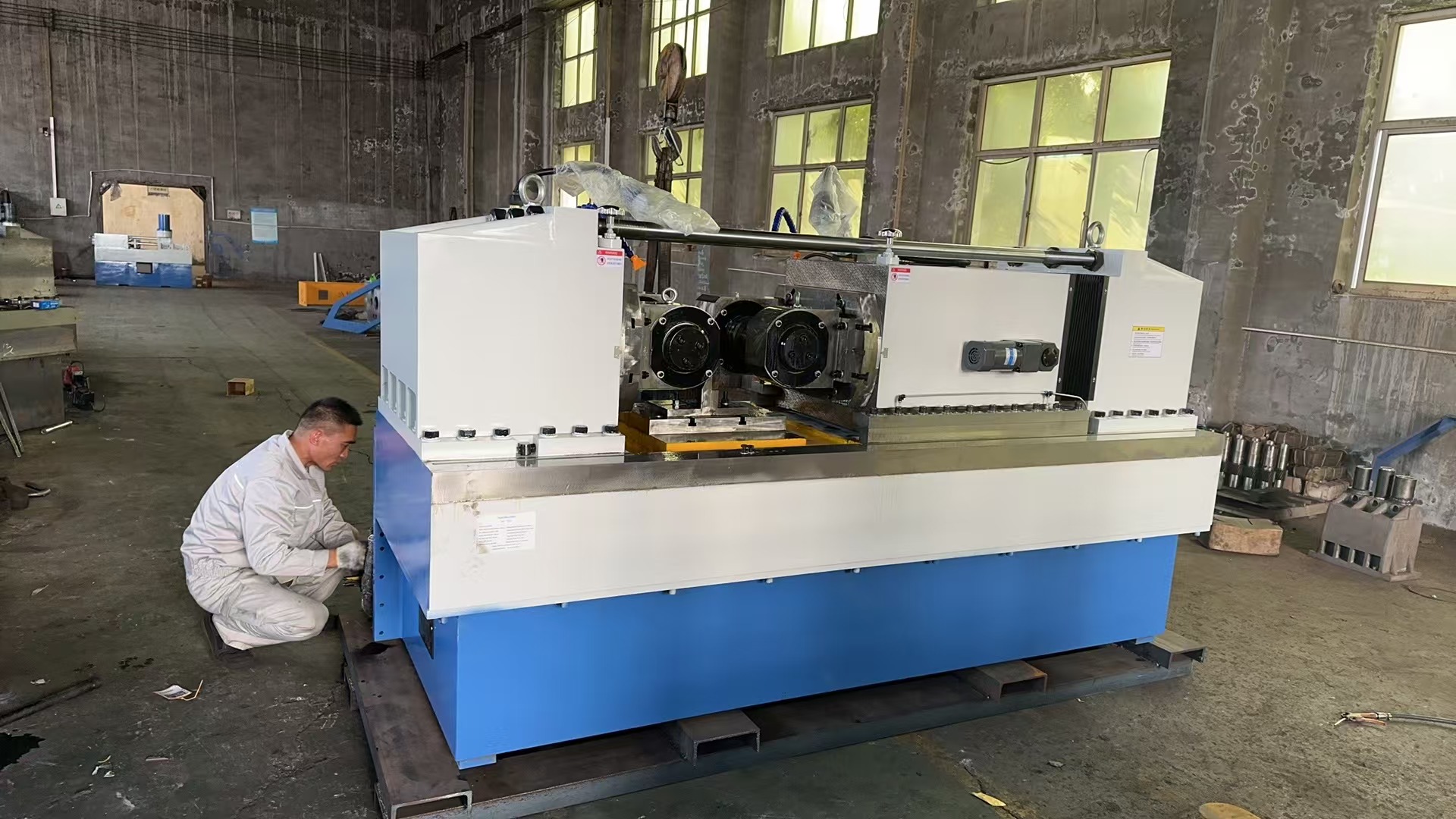
Before committing to larger volumes, buyers often ask: Can one thread rolling die handle both custom prototype and bulk export orders? For manufacturers in the machinery sector, die flexibility directly affects cost, lead time, consistency, and long-term scalability. Understanding how to evaluate tooling adaptability helps reduce risk and ensures production can smoothly transition from trial runs to stable, high-volume delivery.
This question is especially important when a project starts with 50 to 300 sample parts and later expands to monthly demand of 10,000 pieces or more. In thread rolling, the die is not just a consumable tool. It determines profile accuracy, surface finish, cycle stability, and whether scale-up will require a second tooling investment.
For importers, OEM buyers, and industrial distributors, die flexibility also affects export planning. A die that performs well in a prototype workshop may fail under 2-shift or 3-shift production. That is why buyers should judge tooling not only by initial price, but by adaptability across materials, tolerances, maintenance intervals, and batch size changes.
Wuxi Armada International Trade Co., Ltd, based in Wuxi, Jiangsu Province, has supplied a broad range of metalworking and machinery equipment since 2012, including thread rolling machines, CNC machine tools, laser cutting systems, bending equipment, and related production solutions. In cross-border equipment sourcing, this experience matters because buyers often need practical answers on whether one die can support pilot runs, customization, and bulk export consistency under ISO9001-oriented production control and CE-aligned requirements.
What Die Flexibility Really Means in Thread Rolling
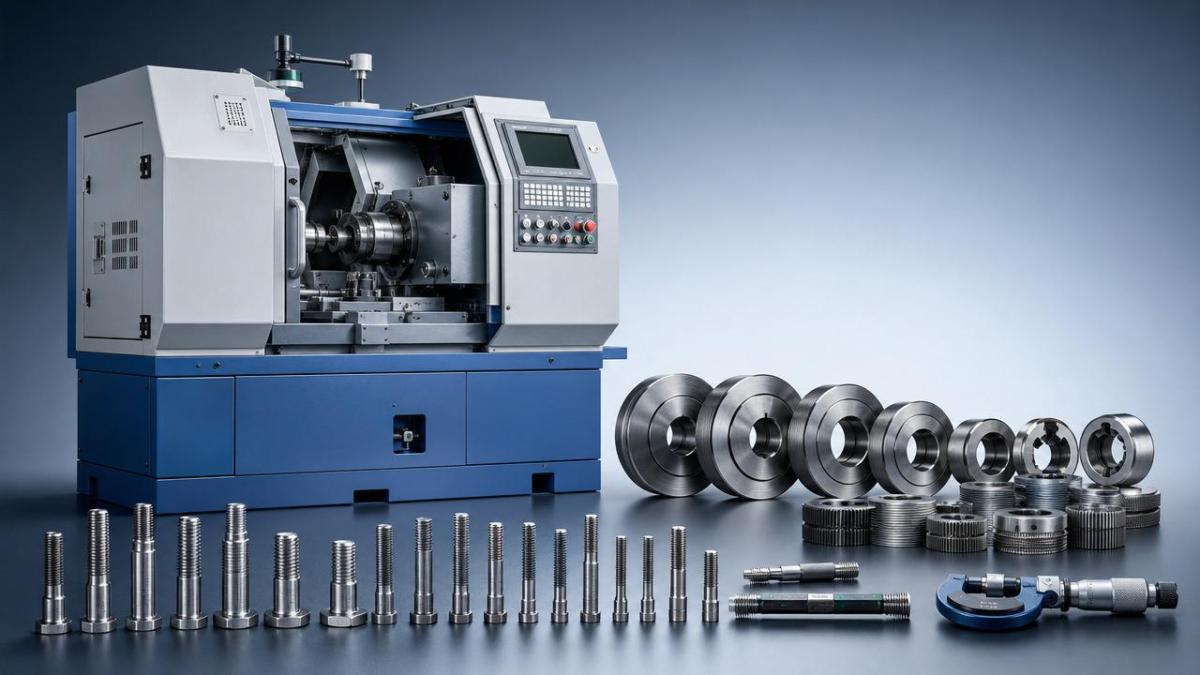
When buyers ask, Can one thread rolling die handle both custom prototype and bulk export orders?, they are really asking about four things: geometric compatibility, material adaptability, wear resistance, and repeatability. A flexible die should move from low-volume validation to stable production without causing thread profile drift, excessive adjustment time, or premature replacement.
In practical terms, die flexibility is judged by whether the same tooling can support different order stages with only minor setup changes. For example, a die used for 200 prototype fasteners should ideally remain suitable when production rises to 20,000 or 50,000 parts, provided the material grade, thread standard, and blank dimensions stay within defined limits.
The 4 Core Dimensions Buyers Should Check
- Thread standard coverage: metric, UNC, UNF, trapezoidal, or custom profiles.
- Material range: low-carbon steel, medium-carbon steel, stainless steel, alloy steel, or non-ferrous materials.
- Production durability: expected die life across 5,000, 20,000, or 100,000 cycles.
- Adjustment tolerance: ability to maintain pitch and flank consistency after repeated setup changes.
A die may appear flexible because it can roll multiple diameters, but if profile precision drops beyond acceptable tolerance after 8 to 12 hours of continuous production, it is not truly scale-ready. Buyers should distinguish between short-run usability and industrial production suitability.
Prototype Success Does Not Automatically Mean Export Readiness
A prototype order often allows slower speed, more operator attention, and higher inspection frequency. Bulk export orders are different. They require stable machine-die matching, predictable wear rate, and lower variation across multiple batches. If a die only performs well under manual fine-tuning, scaling will expose its limitations quickly.
For that reason, buyers should ask for trial data under near-production conditions, not only under laboratory or single-shift conditions. A 30-minute sample run is useful, but a 4-hour to 8-hour sustained test reveals much more about heat build-up, material flow, and edge wear.
Typical signs of a scalable die
- Stable thread form after repeated runs and reinstallation.
- Acceptable tool wear pattern rather than localized chipping.
- Low setup correction demand, ideally within 1 to 3 adjustment cycles.
- Surface finish consistency across the first batch and later batches.
How Buyers Can Evaluate One Die for Both Prototype and Bulk Orders
The best way to answer Can one thread rolling die handle both custom prototype and bulk export orders? is to use a structured evaluation process. Buyers should combine drawing review, material confirmation, trial conditions, and lifecycle estimates instead of relying on a simple yes-or-no reply from a supplier.
The table below shows a practical decision framework for industrial buyers comparing die flexibility before placing larger orders.
This comparison shows that the same die can often support both stages, but only when the surrounding conditions are controlled. Die flexibility depends as much on process discipline as on die design itself.
Review Drawing Complexity First
Custom prototype parts often include unusual head forms, thread runout positions, or special shoulder transitions. If the thread specification is standard but the preform geometry changes, one die may still work. If the thread profile itself changes, such as switching from standard metric to a custom flank angle, separate dies are usually more realistic.
As a rule, buyers should separate customization into 2 categories: blank-related customization and thread-profile customization. The first may still suit a flexible die. The second usually requires dedicated tooling.
Check Material and Hardness Window
Material is one of the biggest factors in whether one thread rolling die can handle both custom prototype and bulk export orders. A die performing well on low-carbon steel may show accelerated wear on stainless steel or high-tensile alloy material. Buyers should confirm the material grade, hardness range, lubrication method, and expected tensile characteristics before assuming one die can cover all order types.
Even a hardness shift of 15 to 20 HB can influence rolling pressure and wear behavior. For mixed-material export programs, it is safer to define an approved process window rather than expecting unlimited die compatibility.
Questions worth asking the supplier
- What material grades has this die design already been used on?
- What is the recommended blank diameter range?
- How many pieces are typically produced before regrinding or replacement?
- What lubrication and cleaning interval is recommended every shift?
Ask for Multi-Stage Trial Evidence
Buyers should not stop at one approved prototype sample. A stronger validation method is a 3-stage trial: first article check, short batch trial of 100 to 500 pieces, and endurance run of at least 2,000 to 5,000 pieces where practical. This reveals whether the die keeps the same pitch, crest shape, and surface quality as production time increases.
If a supplier cannot provide high-volume trial simulation immediately, they should at least provide a clear estimate of die maintenance frequency, expected wear points, and replacement planning. Serious machinery suppliers understand that scale-up questions are commercial risks, not just technical details.
Key Technical Indicators That Signal Die Adaptability
A buyer does not need to be a tooling engineer to judge die quality. There are several practical indicators that show whether a die is suited for both prototype work and volume production. These indicators are measurable during pre-purchase communication and trial acceptance.
Die Material and Heat Treatment Stability
The die base material and its heat treatment strongly affect wear resistance and crack risk. In thread rolling, consistency matters more than theoretical hardness alone. A die that is too hard may chip under impact. A die that is too soft may lose profile shape early. Buyers should request the practical hardness range or at least ask how the supplier balances wear life and toughness.
For export-oriented production, stable tool behavior over repeated batches matters more than peak performance in a single test. A 10% longer die life is less valuable than a predictable maintenance cycle every 15,000 to 25,000 pieces if that cycle supports planning and spare stock management.
Machine Matching and Setup Repeatability
The same die can behave very differently on different thread rolling machines. Slide rigidity, spindle accuracy, feed control, and operator setup all influence results. If a buyer plans to use one die for prototype runs at the supplier site and later for mass production in another factory, machine compatibility should be reviewed in advance.
This is one reason integrated machinery suppliers have an advantage. A company familiar with thread rolling machines, machine tools, and broader metal processing systems can judge the interaction between die and equipment more realistically than a tooling trader who only quotes price.
Inspection Criteria That Matter Most
Before scaling, buyers should define no fewer than 4 inspection points: thread pitch accuracy, major and minor diameter conformity, surface finish acceptance, and consistency after continuous production. In many cases, thread gauge pass rate alone is not enough, especially for export parts assembled into higher-value machinery.
A strong acceptance plan usually includes first-piece approval, in-process spot checks every 1 to 2 hours, and a final batch review. This reduces the chance that a die passes initial testing but fails under production stress.
Useful technical checkpoints
- Thread gauge fit before and after continuous run.
- Visual check for edge chipping or uneven wear.
- Adjustment frequency per shift.
- Output stability across at least 2 batch sizes.
Commercial Risks Buyers Should Not Ignore
The question Can one thread rolling die handle both custom prototype and bulk export orders? is not only technical. It is also commercial. A poor die decision can lead to missed shipment windows, duplicate tooling cost, and disputes over quality responsibility between the machine supplier, die supplier, and end user.
For international buyers, the hidden costs are often larger than the quoted die price. A replacement die may take 7 to 21 days to produce and additional days to ship internationally. If export packing, customs, and final assembly schedules are tight, even a short tooling interruption can disrupt the whole order plan.
Common Risk Scenarios
One common issue is assuming that a sample-approved die can automatically be used for every future material lot. Another is failing to confirm spare die strategy. For projects above a certain volume, buyers should consider whether 1 active die plus 1 backup die is more economical than risking unplanned downtime.
A third risk is unclear tolerance ownership. If blank preparation is inconsistent, the die may be blamed unfairly. Buyers should define upstream and downstream responsibilities clearly, especially when sourcing rolling machines, dies, and raw blanks from different parties.
The table below outlines practical risk control points before scaling from prototype to export production.
The main lesson is simple: flexible tooling still needs a controlled process. Buyers who document acceptance criteria early usually avoid the most expensive scale-up mistakes.
When One Die Is Enough and When It Is Not
One die is often enough when the prototype and production part share the same thread geometry, material family, and blank tolerance range. It becomes less realistic when custom prototypes are exploratory, materials change across export markets, or volume is high enough that backup tooling becomes a production necessity rather than a contingency.
In other words, the answer to Can one thread rolling die handle both custom prototype and bulk export orders? is often yes within a defined operating window, but not as an unlimited promise. Buyers should look for clear boundaries, not vague reassurance.
A Practical Supplier Checklist for Scalable Tooling Decisions
To make sourcing more efficient, buyers can use a short checklist during quotation and technical review. This is especially valuable when comparing multiple machinery suppliers or evaluating complete thread rolling solutions that include machine, die, setup guidance, and post-sales support.
6 Questions to Confirm Before Order Expansion
- What order volume range can the proposed die support under normal maintenance?
- What material grades and hardness range are approved for this die?
- What blank tolerance must be maintained to keep thread quality stable?
- How often should the die be cleaned, inspected, or replaced?
- Can the supplier support sample trial, process tuning, and export documentation?
- Is a backup die recommended when monthly demand exceeds a defined threshold?
For many B2B buyers, the best partner is not the one offering the lowest single die price. It is the one that understands the whole production chain, from machine matching and process stability to export delivery and after-sales communication. That is particularly relevant for companies purchasing broader fabrication equipment portfolios, not just one tooling item.
Why Integrated Machinery Experience Adds Value
A supplier with experience in thread rolling machines, CNC systems, welding automation, cutting equipment, and metal processing lines can often identify upstream and downstream risks earlier. Wuxi Armada International Trade Co., Ltd operates in this broader machinery environment, which helps buyers evaluate tooling decisions in relation to machine performance, production layout, quality standards, and export practicality.
For buyers planning growth from custom development to serial delivery in Southeast Asia, Europe, North America, South America, or Oceania, this broader perspective can shorten decision cycles and reduce avoidable changes after purchase.
Final Decision Standard
The right question is not whether one die can theoretically do both jobs. The better question is whether it can do both jobs with acceptable quality, predictable maintenance, and manageable commercial risk. If the supplier can define those conditions clearly, the die is far more likely to support both custom prototype work and bulk export production successfully.
Buyers judge die flexibility before scaling orders by checking technical limits, process repeatability, machine compatibility, and delivery risk as one connected decision. When these factors are reviewed early, it becomes much easier to decide whether one thread rolling die can handle both custom prototype and bulk export orders without creating hidden costs later.
If you are evaluating thread rolling machines, dies, or related metalworking equipment for staged production growth, Wuxi Armada International Trade Co., Ltd can help you review application details, compare practical options, and build a sourcing plan that matches both trial needs and long-term volume goals. Contact us today to get a customized solution, discuss technical requirements, or learn more about suitable machinery configurations for your production line.