
— —
Should Export Buyers Reuse the Same Die After Prototyping?
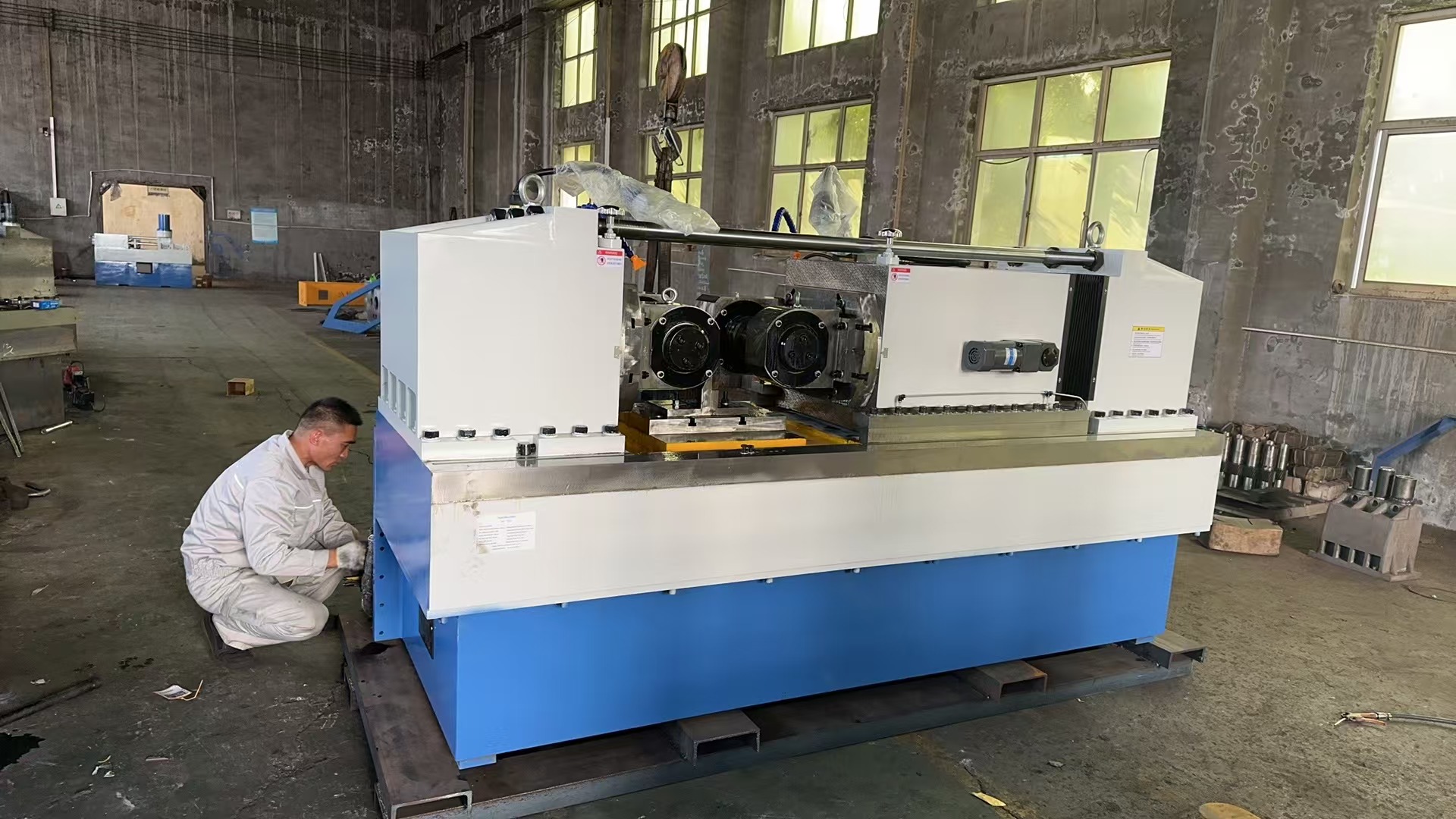
For export buyers of thread rolling equipment, a common question is: Can one thread rolling die handle both custom prototype and bulk export orders? The answer affects tooling cost, part consistency, lead time, and long-term production stability. Before reusing the same die, it is essential to evaluate material compatibility, wear tolerance, accuracy requirements, and export-quality standards to avoid hidden risks in mass manufacturing.
Can one thread rolling die handle both custom prototype and bulk export orders?
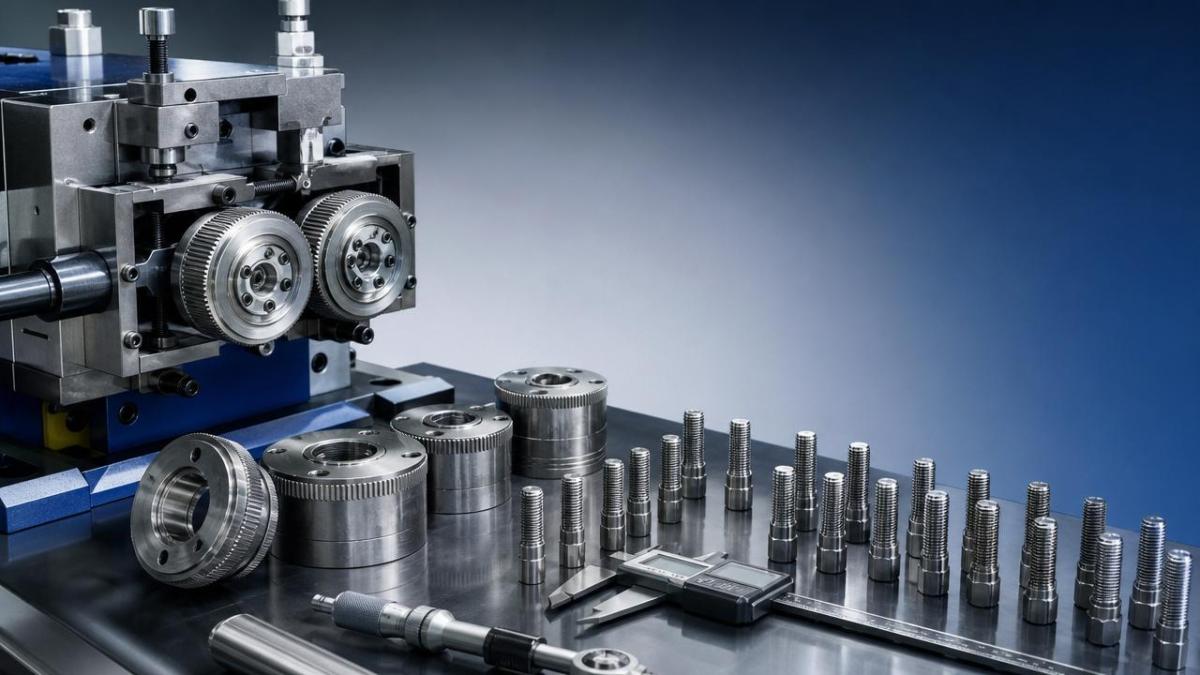
In many cases, the answer is yes, but not automatically. A die used for prototype validation can sometimes continue into mass production, yet only when the part drawing, raw material, thread standard, surface requirement, and expected output remain stable.
For export manufacturing, the question is not only whether the die can form the thread. Buyers must ask whether it can maintain repeatability across thousands or tens of thousands of parts without creating quality drift, unplanned downtime, or rejection risk at destination inspection.
In thread rolling, prototype and volume production often serve different purposes. Prototyping verifies geometry, thread engagement, assembly function, and basic machine setup. Bulk export orders require stable cycle time, controlled wear, documented inspection, and predictable tool life.
- If the prototype run used the same material grade, diameter tolerance, lubrication method, and thread profile as the export order, reuse is more realistic.
- If the sample die was adjusted aggressively just to make a few acceptable parts, reusing it for mass production may increase defect rates.
- If export buyers need CE-aligned equipment documentation, traceable quality records, and dimensional consistency, the die condition must be checked more strictly.
This is why experienced machinery suppliers do not give a one-word answer. They review process data, product tolerance, die hardness, machine rigidity, and delivery expectations before confirming whether one thread rolling die can handle both custom prototype and bulk export orders.
Prototype success does not always equal production readiness
A prototype may pass because the operator manually compensates for setup variation. In batch production, that same die must perform under normal operating rhythm. Any dependence on extra operator correction is a warning sign.
Export buyers should therefore separate “sample approved” from “tooling approved for continuous production.” The first confirms design feasibility. The second confirms manufacturing stability.
What determines whether the same die can be reused?
The decision depends on a combination of tooling condition, process control, and order requirements. A thread rolling die is not judged by appearance alone. Wear pattern, flank condition, pitch accuracy, and material compatibility matter more than whether the die still looks clean.
The table below helps export buyers evaluate whether one thread rolling die can handle both custom prototype and bulk export orders under realistic production conditions.
The practical conclusion is simple: die reuse is safest when process inputs remain unchanged and the die still has sufficient life margin. If any critical variable changes, separate production dies or at least a new validation run should be considered.
Four technical checkpoints buyers should request
- Confirm the prototype material specification, hardness range, and bar diameter tolerance.
- Ask for die usage history, including sample quantity and visible wear condition.
- Review the target thread standard, such as metric or inch series, and the required inspection method.
- Verify whether the same machine, feed setting, lubrication method, and operator instructions will be used in production.
Where do prototype dies usually fail in export batch production?
The most common failure is not catastrophic breakage. It is gradual inconsistency. Threads may still form, but pitch diameter shifts, crest quality worsens, and assembly torque becomes unstable. These issues can remain hidden until shipment inspection or end-user installation.
This is especially important in manufacturing and processing machinery, where threaded parts may be used in frames, fixtures, hydraulic subassemblies, welded structures, or mechanical supports. A slightly unstable thread can affect downstream assembly efficiency.
Typical risk points
- Prototype material was softer than the final export material, causing premature die wear in production.
- Sample quantity was small, so early-stage die wear was not visible during approval.
- The die profile was modified slightly to meet one sample need, reducing long-run stability.
- Lubrication quality changed between trial and production, increasing heat and friction.
- The buyer approved by visual inspection, but the export order required gauge-based verification and documented control.
When buyers ask, “Can one thread rolling die handle both custom prototype and bulk export orders?” they often focus on tool cost. In reality, the bigger cost may come from rework, delivery delay, sorting labor, and rejected parts after shipment.
How should buyers compare reuse versus a dedicated production die?
A practical comparison should cover more than die price. It should include sample timing, expected order volume, process stability, and the cost of quality deviation. For low-volume repeat orders, reuse can make sense. For strategic export programs, dedicated production tooling is often safer.
The following comparison table shows how procurement teams can assess the two options.
For many buyers, the third route is the most practical. It reduces risk while avoiding premature tooling expense. A pilot batch provides real wear data, cycle stability data, and inspection evidence before mass export shipments begin.
When dedicated tooling is strongly recommended
Dedicated production dies are usually the better choice when the part has tight fit requirements, the customer needs repeated annual orders, or the final destination imposes strict acceptance checks. This is common for industrial fasteners, mechanical connectors, and threaded components used in equipment assembly lines.
What should export buyers ask before approving die reuse?
A good supplier should provide more than a verbal promise. Buyers need a review process that connects tooling condition with commercial expectations. This is where an experienced export-oriented machinery company adds value.
Wuxi Armada International Trade Co., Ltd, established in 2012 in Wuxi, Jiangsu Province, supplies mechanical equipment and related products for international buyers. With export experience across Southeast Asia, Europe, North and South America, and Oceania, the company understands that tooling decisions affect not just production but shipment reliability and compliance expectations.
Recommended buyer checklist
- Request confirmation of thread type, pitch, rolling length, blank diameter, and material grade used in the prototype run.
- Ask whether the die was used only for sampling or also for process debugging and repeated trials.
- Define the export order quantity and whether the delivery will be one batch or several releases.
- Clarify quality records needed, such as sample inspection reports, in-process checks, or final gauge verification.
- Discuss whether backup dies should be prepared to reduce lead time risk if wear appears earlier than expected.
For buyers sourcing thread rolling machines together with related fabrication equipment such as CNC cutting machines, welding systems, lathes, or milling machines, it is useful to work with one supplier that understands the full production chain. Tooling decisions are rarely isolated from the rest of the line.
How do standards, quality systems, and export compliance affect the decision?
Export projects require more discipline than local sample work. Even when a die can technically still roll the thread, buyers may still need stronger evidence before approving reuse. That evidence often relates to quality system practice, machine documentation, and traceability.
Wuxi Armada organizes production and design in accordance with ISO9001 quality system certification and EU CE standards. For export buyers, this matters because decisions on die reuse should fit within a controlled process, not rely on guesswork.
The table below shows how standards and compliance concerns change the tooling decision for export orders.
In short, compliance does not automatically forbid die reuse. It simply raises the standard of evidence needed to approve it.
Cost control: is reusing one die really cheaper?
At first glance, reusing a prototype die reduces tooling cost. But export buyers should compare total manufacturing cost, not only initial die spend. A cheaper start can become more expensive if it increases sorting time, machine stoppage, or late replacement during shipment preparation.
The more critical the order, the more important it is to calculate the cost of interruption. For machinery-related threaded parts, delayed components can hold back welding, assembly, packing, or installation schedules.
Hidden costs that buyers often miss
- Additional inspection labor when thread consistency starts drifting.
- Production downtime caused by emergency die replacement.
- Material waste if rolled threads fail gauge checks after partial processing.
- Freight and schedule impact if replacement tooling delays export shipment.
- Customer dissatisfaction if batch performance differs from approved samples.
That is why many professional buyers ask for a balanced proposal: reuse feasibility, expected remaining die life, backup plan, and cost of a second die. This creates a more secure purchasing decision than choosing purely by lowest initial price.
FAQ: what do buyers most often ask?
How can I know whether the prototype die still has enough life for export production?
Ask for the die usage record, trial quantity, material used, and current inspection condition. Then compare that information with your planned order quantity, tolerance level, and delivery schedule. If the supplier cannot provide a clear assessment, a pilot batch or new die is safer.
Is one thread rolling die suitable for both prototype and bulk orders when the part design stays the same?
Possibly, but design stability alone is not enough. Material lot consistency, hardness variation, lubrication, and target output must also match. The same drawing does not guarantee the same rolling conditions.
What order size usually justifies a dedicated production die?
There is no universal quantity because die life depends on thread form, material, and process setup. However, when buyers expect repeat export shipments, strict inspection, or long continuous runs, dedicated tooling becomes more attractive even at moderate volumes.
What should be confirmed when buying thread rolling equipment for export projects?
Confirm applicable thread standards, workpiece range, machine capacity, die format, setup repeatability, lubrication arrangement, spare parts plan, and documentation support. If the project includes other fabrication equipment, coordination across the line should also be reviewed.
Why choose a supplier that understands both machinery and export production planning?
The question “Can one thread rolling die handle both custom prototype and bulk export orders?” is partly technical and partly commercial. Buyers need advice that connects machine capability, tooling life, quality expectations, and shipment timing.
Wuxi Armada International Trade Co., Ltd provides mechanical equipment and related products with broad exposure to international market needs. Its product scope covers thread rolling machines as well as CNC machine tools, lathes, milling machines, welding robots, laser cutting machines, H-beam production line equipment, and other fabrication machinery. This wider manufacturing perspective helps buyers align tooling decisions with real production flow.
If you are evaluating whether to reuse a die after prototyping, you can consult on specific points such as part parameters, thread standard, material grade, target order quantity, delivery schedule, sample support, and whether ISO9001-based quality control or CE-related expectations need to be considered in the equipment solution.
For a more accurate recommendation, send your drawing, thread specification, material information, prototype status, expected annual demand, and destination market requirements. This makes it easier to discuss machine selection, die strategy, lead time, spare tooling planning, and quotation details with a practical export-focused approach.