
— —
What Risks Come With Using One Die Across Order Sizes?
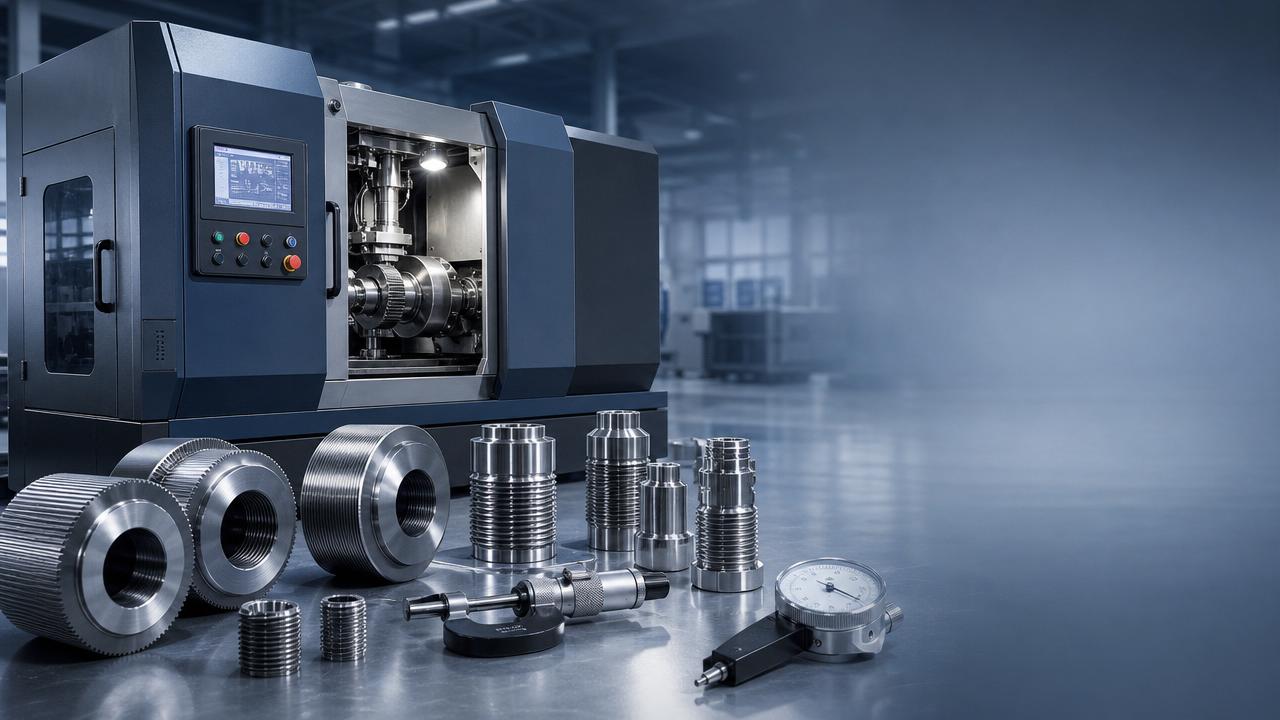
Manufacturers often ask, Can one thread rolling die handle both custom prototype and bulk export orders? The answer affects product consistency, tooling life, delivery speed, and total production cost. In metalworking and machinery manufacturing, using one die across different order sizes may seem efficient, but it can introduce quality, tolerance, and wear risks that directly impact long-term output and customer satisfaction.
For buyers of thread rolling machines, dies, and related forming equipment, this is not a theoretical question. It directly influences scrap rates, first-pass yield, export compliance, and whether a supplier can maintain stable output from a 20-piece prototype batch to a 20,000-piece production run.
In practice, one die may sometimes cover more than one order size, but not without conditions. Material grade, thread specification, hardness range, lubrication control, machine rigidity, and inspection standards all determine whether the same tooling can move safely from sample development to full-scale shipment.
For machinery buyers working with international suppliers, especially across Southeast Asia, Europe, the Americas, and Oceania, understanding these limits helps reduce rework, avoid delivery disputes, and choose the right thread rolling setup from the beginning.
Why One Die Across Order Sizes Can Become a Production Risk
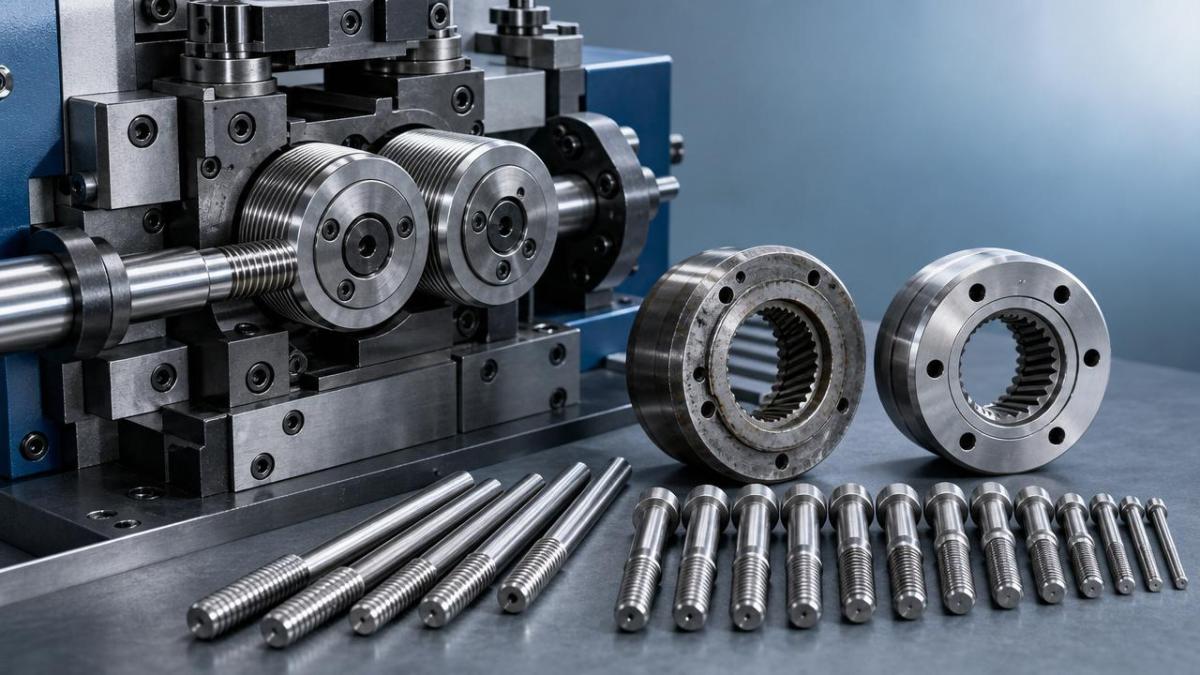
At first glance, using one die for both prototypes and volume orders looks cost-efficient. A factory can save initial tooling expense, shorten setup time by 1 to 2 days, and keep programming and operator training simpler. However, the real cost appears later if the die is pushed beyond its suitable production window.
A prototype order usually focuses on verification. The goal is to confirm thread geometry, mating performance, material behavior, and downstream assembly results. A bulk export order, by contrast, demands stable repeatability over hundreds or thousands of cycles, often with tolerance control within ±0.03 mm to ±0.10 mm depending on the part and standard.
Prototype Conditions Are Not the Same as Mass Production Conditions
In a prototype run, operators may inspect every 5 to 10 parts, slow down machine speed, and adjust rolling pressure more frequently. In a production run, line speed may increase by 20% to 50%, while inspection intervals stretch to every 100 or 300 pieces. This changes the load profile on the die.
Even if the first 30 samples look acceptable, the same die may start showing flank wear, pitch drift, or surface marking after several thousand parts. That is why the question, Can one thread rolling die handle both custom prototype and bulk export orders?, should always be evaluated in terms of process duration, not only first-piece quality.
The Main Risks Buyers Should Watch
The most common risks are dimensional inconsistency, premature die wear, unstable surface finish, and machine stoppage. These problems often appear gradually rather than at the beginning, which makes them more expensive. A defect discovered after 5,000 parts is far more costly than one found during a 50-piece trial.
- Thread pitch deviation caused by die wear accumulation
- Surface galling from poor lubrication during long runs
- Forming pressure mismatch between soft prototype material and harder production material
- Higher rejection rates when export specifications require tighter consistency
- Unexpected downtime due to regrinding or die replacement
The table below shows how risk levels usually change when the same die is used across different order types in thread rolling applications.
The key point is that acceptable performance in a short run does not guarantee acceptable performance in a long run. Buyers who compare only unit tooling cost may miss much larger risks tied to consistency, maintenance, and shipment acceptance.
When One Die May Still Be Acceptable
There are cases where one die can support both order types. This is more realistic when the thread profile is standard, the material lot is stable, the hardness variation stays within a narrow range such as HRC 2 to 4 points, and the total production volume is still moderate.
For example, if a customer orders a prototype of 50 pieces and then a follow-up lot of 2,000 pieces using the same carbon steel grade, same blank size, and same machine settings, one die may remain practical. But for stainless steel, high-strength alloy, or export lots above 10,000 pieces, a separate production die is often the safer approach.
Technical Factors That Determine Die Compatibility
To answer, Can one thread rolling die handle both custom prototype and bulk export orders?, buyers need to move beyond quantity and examine technical compatibility. In thread rolling, die performance is influenced by at least 6 core factors: material, hardness, blank accuracy, thread form, lubrication, and machine stability.
1. Workpiece Material and Hardness Range
Different materials place very different loads on a die. Mild steel, medium carbon steel, stainless steel, and alloy steel do not deform in the same way. A die that performs well on low-carbon steel prototypes may wear significantly faster on hardened export parts if tensile strength rises from 400 MPa to 700 MPa or more.
If the production material changes even slightly between sample and shipment, the die may produce different crest fill, flank pressure, or surface finish. This is one of the most overlooked reasons why a single die strategy fails in metal fastener and shaft manufacturing.
Material-related checks before reusing the same die
- Confirm the exact steel grade used for both sample and production
- Check hardness spread within each lot
- Verify blank diameter tolerance, often within ±0.02 mm to ±0.05 mm
- Confirm lubrication method for short run and long run
2. Thread Geometry and Tolerance Class
Fine threads, deep threads, and non-standard profiles are more sensitive to wear than general-purpose coarse threads. If export customers require a tighter class of fit or stricter gauge acceptance, the die may need a dedicated production setup even when the prototype passed initial inspection.
This matters especially for components that must fit automated assembly lines, hydraulic connectors, or high-frequency installation tools. A small pitch drift after 3,000 to 8,000 cycles can turn into assembly failure, leakage risk, or customer returns.
3. Machine Rigidity and Process Stability
A high-quality die still depends on machine condition. Thread rolling machines with better frame rigidity, servo control, and feed repeatability can extend die life noticeably. On older or less rigid machines, vibration and alignment error may accelerate wear by 15% to 30% in long production cycles.
For this reason, machinery suppliers often evaluate the die together with the rolling machine, support system, and operator control plan. A tooling decision made without considering the equipment platform is incomplete.
The following table summarizes practical technical checkpoints for deciding whether one die can realistically support prototype and volume production.
A buyer does not need every factor to be perfect. But if 2 or 3 items fall into the higher-risk column, the safer strategy is usually to separate prototype tooling from production tooling.
Commercial and Quality Consequences for Export Orders
The die decision is not only technical. It also affects procurement planning, delivery commitments, and quality responsibility. For export-oriented manufacturing, a poor tooling choice can create delays of 7 to 21 days if replacement dies, process retesting, or reshipment become necessary.
Delivery Risk Increases with Batch Size
In custom development, production pauses are inconvenient but manageable. In export business, they may affect container scheduling, customs coordination, and customer installation plans. If one die fails midway through a 15,000-piece order, the impact reaches beyond the workshop.
That is why experienced buyers often ask suppliers for both a die strategy and a backup plan. A reliable supplier should explain when one die is enough, when an additional die is recommended, and how spare tooling is prepared to support lead time control.
Cost Savings Can Be Misleading
The upfront saving from using one die may look attractive, especially in prototype-to-order transitions. Yet the real comparison should include four cost layers: die purchase, setup time, rejection loss, and delivery interruption. In many cases, a second die costs less than the scrap and delay generated by overusing the first one.
- Direct tooling cost saved: often 1 unit of die investment
- Potential scrap cost added: may rise sharply after wear threshold
- Potential machine downtime: 4 to 12 hours for changeover and revalidation
- Potential customer claim cost: much higher if shipment quality is inconsistent
Quality Documentation Matters More in International Supply
When parts are exported, buyers often need inspection records, material traceability, and stable manufacturing documentation. If prototype and production parts are made under different wear conditions using the same die, quality records may look acceptable at first but become inconsistent across the run.
Suppliers serving global markets usually benefit from structured control systems aligned with ISO9001 practices and, where applicable, equipment designed to meet CE-related expectations. This does not remove die risk by itself, but it improves preventive control and decision-making.
How to Decide: One Die, Two Dies, or a Staged Tooling Plan
A practical decision framework helps manufacturers avoid overengineering small jobs while still protecting larger orders. The right answer often depends on order sequence, repeatability requirements, and how critical the threaded part is to downstream assembly or safety.
Option A: One Die for Low-Volume Validation and Moderate Follow-Up
This option works best when the prototype quantity is small, the follow-up order remains under a moderate threshold, and all technical conditions remain stable. It is most suitable for standard threads, common materials, and non-extreme tolerance demands.
Typical use case: 30 to 100 prototype parts followed by 1,000 to 3,000 production parts, using the same material lot or a closely matched lot, with full process verification before bulk release.
Option B: Separate Prototype Die and Production Die
This is often the preferred route for export projects, high-volume orders, or custom geometry. The prototype die focuses on design confirmation, while the production die is optimized for life, consistency, and throughput. This separation reduces compromise.
Although initial tooling investment is higher, the process becomes easier to control over 10,000 to 50,000 pieces. For buyers seeking long-term supplier stability, this option is frequently more economical over the full order cycle.
Option C: Staged Tooling Plan with Wear Monitoring
A staged plan is a balanced strategy. One die is used for prototype approval and early production, while a second die is prepared in advance based on a defined wear limit. This approach works well when order forecasts are uncertain but expansion is likely.
For example, the first die may be approved for sample production and the first 2,000 to 5,000 pieces, with dimensional checks every 300 pieces. Once wear indicators appear, the second die is installed before quality drift reaches a rejection threshold.
A simple 5-step purchasing checklist
- Define prototype quantity and forecasted annual volume
- Confirm material grade, hardness, and blank tolerance
- Clarify required thread class and inspection standard
- Ask the supplier for die life assumptions and backup plan
- Decide whether cost priority or consistency priority is more important
What Buyers Should Expect from a Machinery and Tooling Supplier
A capable supplier should not answer the die question with a generic yes or no. Instead, the supplier should review the actual production scenario, machine configuration, and quality target. In the manufacturing and processing machinery sector, solution value comes from matching equipment, tooling, and process logic.
Companies such as Wuxi Armada International Trade Co., Ltd, based in Wuxi near Shanghai, serve buyers looking for mechanical equipment ranging from CNC machine tools and welding systems to thread rolling machines, pipe benders, and sheet metal equipment. In such environments, practical tooling advice is part of the equipment decision, not a separate afterthought.
Useful Questions to Ask Before Ordering
- What die life range is typical for my material and thread specification?
- How often should dimensional checks be performed during long runs?
- Is one setup suitable for both sample approval and export production?
- What spare tooling or replacement lead time is available?
- How will machine rigidity and lubrication affect die life?
Service Support Reduces Tooling Risk
When buyers source from experienced machinery partners, they gain more than hardware. They gain process recommendations, configuration guidance, and a clearer understanding of where tooling shortcuts create downstream cost. This is especially important for cross-border procurement, where correction cycles are longer and more expensive.
A supplier that works under organized production control and recognized quality practices can help buyers balance cost, lead time, and repeatability more effectively. That support becomes valuable when scaling from trial orders to regular export business.
Final Decision Guidance for Manufacturers
So, can one thread rolling die handle both custom prototype and bulk export orders? Sometimes yes, but only when material, tolerance, machine condition, and order volume remain within a controlled range. Once quantity rises sharply or quality requirements tighten, a single-die strategy becomes increasingly risky.
For most B2B buyers, the best decision is based on total production reliability rather than the lowest initial tooling expense. If your project involves custom threads, export-quality consistency, or repeat orders above several thousand pieces, a separate or staged die plan is usually the smarter investment.
If you are evaluating thread rolling machines, tooling strategies, or broader metalworking equipment for prototype and mass production needs, contact us to discuss your application. You can get a more suitable equipment recommendation, a tailored tooling plan, and practical guidance for stable production and export delivery.