
— —
How a Multi Spindle Drilling Machine Reduces Cycle Time in Repetitive Hole Patterns
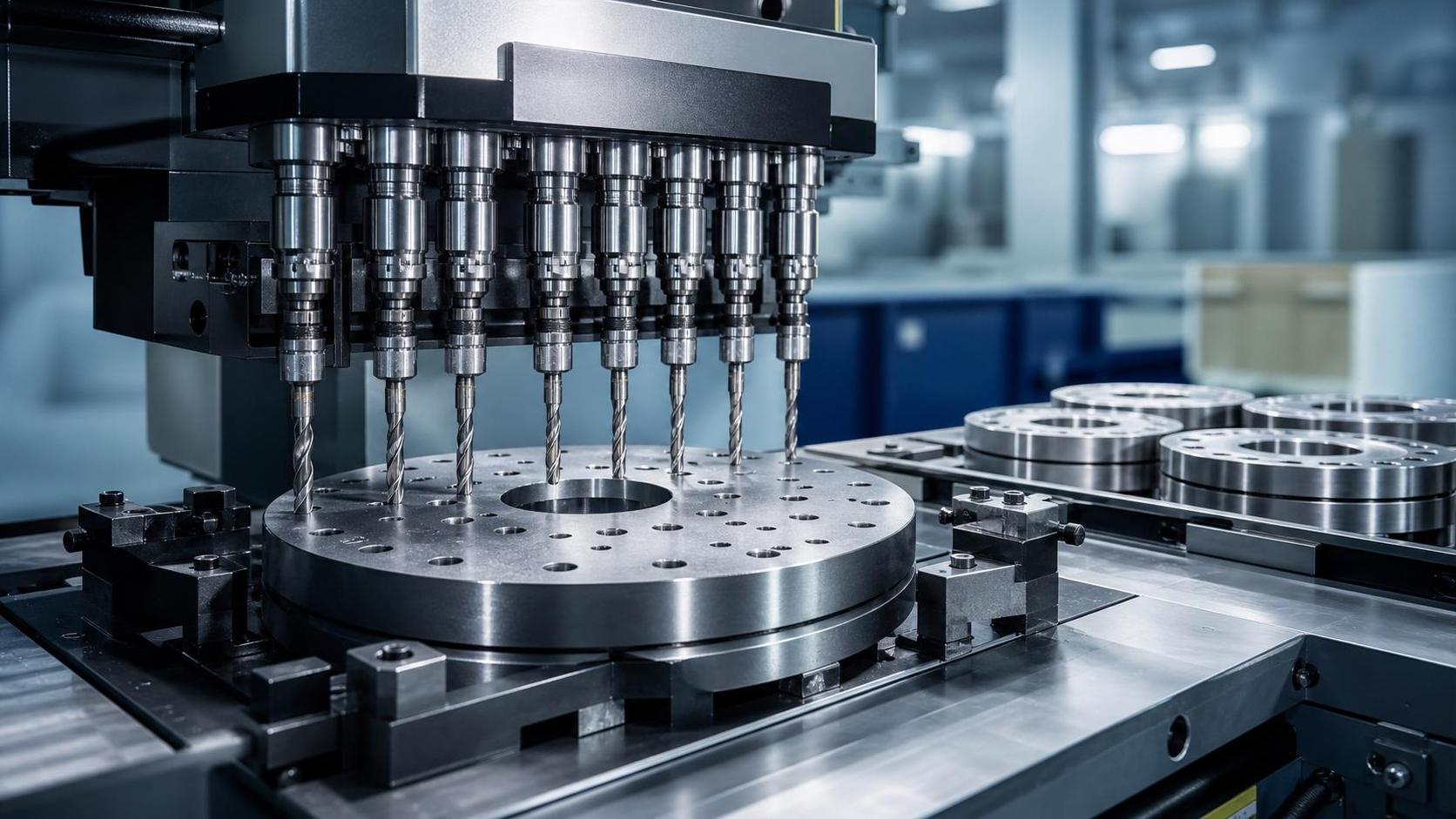
For manufacturers facing repetitive hole patterns, a multi spindle drilling machine offers a practical way to cut cycle time, improve consistency, and reduce labor costs. By drilling multiple holes in a single pass, it helps decision-makers boost throughput without sacrificing precision. This article explores how the technology supports faster production, better efficiency, and stronger competitiveness in modern machining operations.
Why Decision-Makers Look at a Multi Spindle Drilling Machine First
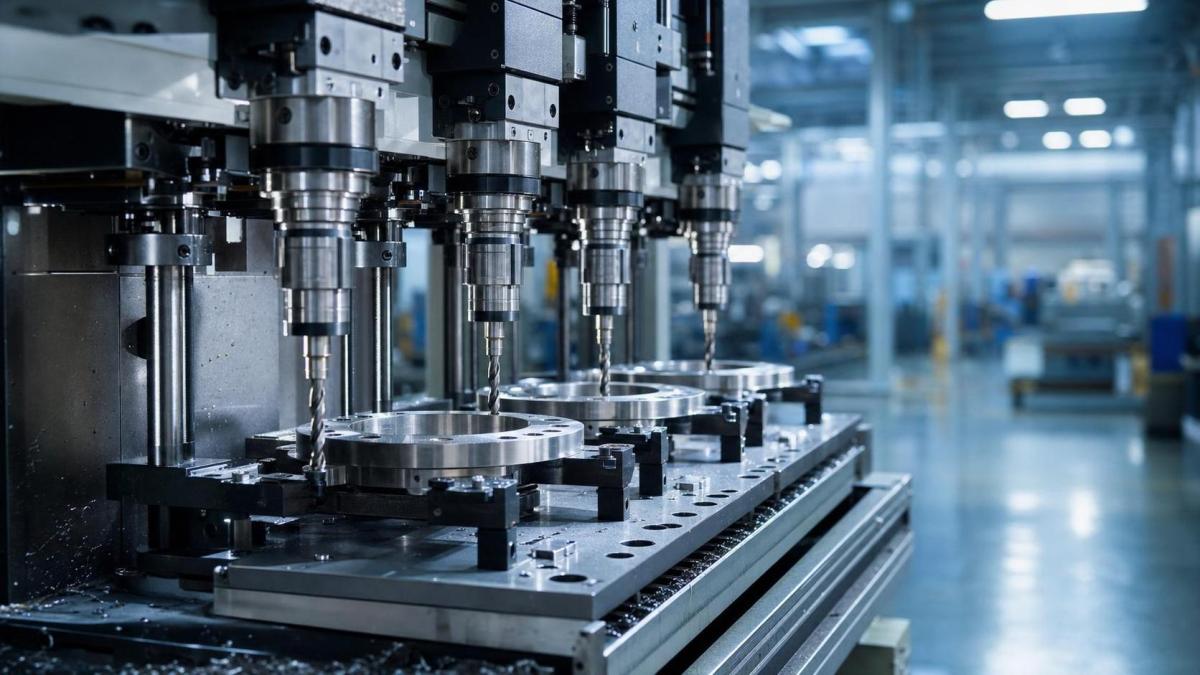
The core search intent behind multi spindle drilling machine is practical evaluation, not theory. Buyers want to know whether it will shorten cycle time enough to justify investment.
For enterprise decision-makers, the biggest concern is usually not how the machine works mechanically. It is whether production can move faster, more consistently, and with lower unit cost.
In repetitive hole pattern jobs, cycle time often becomes a hidden bottleneck. A conventional single-spindle setup may meet accuracy requirements, yet still waste time through repeated positioning and drilling steps.
A multi spindle drilling machine addresses that issue directly. Instead of producing one hole at a time, it drills several holes simultaneously, reducing handling time and compressing the total machining sequence.
That simple change has broader business impact. Faster cycle times can improve output per shift, reduce labor dependency, and help manufacturers respond more confidently to larger order volumes.
How It Actually Reduces Cycle Time in Repetitive Hole Patterns
The main time-saving mechanism is simultaneous drilling. When one component requires four, six, or eight identical holes, the machine can complete them in one working stroke.
With a standard process, each hole may require separate positioning, feed, drilling, and retract actions. Even if each action is short, the accumulated delay across thousands of parts becomes significant.
By combining these steps, a multi spindle drilling machine removes repeated non-cutting time. That includes less table indexing, less operator intervention, and fewer stop-start motions between holes.
Setup can also be optimized around fixed patterns. For parts with stable production drawings, dedicated spindle arrangements allow repeat jobs to run faster with fewer adjustments during batches.
Another benefit comes from process balance. Because the holes are created together, there is less variation between the first and last hole in a pattern, which supports more predictable downstream assembly.
In many production environments, these gains matter more than a small increase in spindle power. The real value is reduced elapsed time per finished component, not just faster cutting speed.
Where the Largest Productivity Gains Usually Appear
Not every drilling job benefits equally. The strongest return usually appears where hole locations are fixed, part families are repeated, and annual production volumes are high enough to reward process specialization.
Examples include flanges, mounting plates, structural members, brackets, machine frames, and fabricated components that require uniform hole spacing across large production runs.
In these cases, the gain is not limited to drilling time alone. Operators spend less time clamping, aligning, measuring, and restarting the cycle for each individual hole position.
That reduction in manual touchpoints can improve line rhythm. It also lowers the chance of human positioning errors, especially on shifts where fatigue or workforce turnover affects consistency.
For management teams, this matters because labor efficiency and process repeatability are often more difficult to scale than machine capacity. Multi-spindle drilling helps on both fronts.
What Buyers Should Evaluate Beyond the Headline Speed Claim
Faster cycle time is attractive, but purchasing decisions should go deeper. A serious evaluation looks at part mix, fixture design, accuracy needs, maintenance demands, and expected order stability.
First, review whether the hole pattern is truly repetitive. If product designs change constantly or hole layouts vary from batch to batch, a dedicated spindle arrangement may deliver less value.
Second, examine fixturing. The machine can only deliver stable output if the workpiece is clamped consistently and the drilling heads remain aligned with real production tolerances.
Third, calculate total process savings rather than spindle speed alone. Include loading time, operator attendance, scrap reduction, rework avoidance, and downstream assembly improvements.
Fourth, consider maintenance and tooling management. More spindles mean more tooling positions to monitor, so preventive maintenance discipline becomes part of the return-on-investment equation.
Decision-makers should also assess supplier capability. Machine quality, after-sales service, spare parts access, and application support often determine whether projected efficiency gains are realized in practice.
Business Benefits That Matter at the Plant and Management Level
The most visible benefit is throughput. Shorter cycle times allow more parts to be completed per shift without automatically expanding floor space or adding parallel manual operations.
A second benefit is cost control. When multiple holes are drilled in one pass, labor time per component falls, helping manufacturers defend margins in competitive markets.
Consistency is another major advantage. Uniform hole positioning improves fit-up quality in later processes such as welding, fastening, or mechanical assembly, which can reduce hidden quality losses.
There is also planning value. More predictable cycle times make production scheduling more reliable, which supports delivery performance and reduces the operational stress caused by capacity uncertainty.
For companies serving export markets or high-standard industrial customers, process stability can be commercially important. Buyers often care as much about repeatability and delivery confidence as price alone.
That broader perspective is why many investments in machining equipment are justified. The machine is not only a production asset, but also a tool for protecting lead time and reputation.
When a Multi Spindle Drilling Machine May Not Be the Best Choice
It is not the right answer for every factory. If production volumes are low, part geometries vary widely, or custom work dominates the order book, flexibility may matter more than dedicated speed.
In those settings, CNC machining centers or more general drilling platforms may offer better utilization. The wrong equipment can create idle capacity rather than operational advantage.
Decision-makers should also be realistic about implementation readiness. A multi-spindle system performs best when supported by stable drawings, repeatable fixtures, trained operators, and planned tooling control.
If those foundations are weak, expected savings may be delayed. The machine can still be effective, but only after process discipline catches up with the equipment capability.
How to Estimate Return on Investment Before Purchase
A practical ROI review should begin with the current cycle time per part. Break it into drilling time, repositioning time, loading time, unloading time, and inspection or correction time.
Then compare that with the expected one-pass cycle using a multi spindle drilling machine. The time eliminated between holes is often the largest source of measurable savings.
Next, multiply the saved seconds by daily and annual production volume. This converts technical improvement into a management metric: extra available machine hours or added output capacity.
After that, include quality-related savings. Lower rework rates, reduced scrap, and fewer downstream fit problems can materially strengthen the payback period, especially in repetitive production.
Finally, weigh capital cost against order stability. The best ROI usually comes when the same or similar parts will run for long enough to keep the machine productively loaded.
Why Equipment Buyers Often Compare Adjacent Forming and Finishing Processes Too
In real factories, drilling decisions rarely happen in isolation. Management often reviews adjacent forming, threading, deburring, and finishing steps to improve total line efficiency rather than one operation alone.
For example, companies in the construction industry may pair hole-making improvements with thread forming upgrades for fasteners, anchors, or structural connection parts used in repeat production.
One relevant example is the ZC28-6.3 thread rolling machine, designed for rolling precision external threads on carbon steel, alloy steel, and non-ferrous metals.
Its capabilities include rolling high-strength standard parts, anchor bolts, and T-shaped screws, while improving surface roughness, hardness, and strength through a cold rolling process.
With PLC control, human-machine interface support, and manual, semi-automatic, and automatic working modes, it reflects the same investment logic many buyers use for drilling automation.
Whether evaluating drilling or thread rolling, the key management question is similar: can the equipment reduce cycle time, improve consistency, and create stronger economics across repeated production work?
What Strong Suppliers Bring to the Buying Process
For industrial equipment purchases, the supplier relationship matters almost as much as the machine specification. Buyers need clear technical communication, realistic recommendations, and dependable post-sale support.
Wuxi Armada International Trade Co., Ltd specializes in mechanical equipment and related products, including CNC machine tools, milling machines, lathes, laser cutting systems, welding equipment, and sheet metal machinery.
Its product portfolio also covers bending machines, shearing machines, plate rolling machines, deburring machines, pipe benders, end face milling machines, edge milling machines, and H-beam production line equipment.
With manufacturing experience, ISO9001-based production organization, and alignment with EU CE standards, the company positions itself around quality, practical solutions, and long-term equipment value.
For decision-makers, this kind of supplier breadth can be useful. It means discussions can focus on process fit across the production line instead of treating each machine as an isolated purchase.
Conclusion
A multi spindle drilling machine reduces cycle time mainly by removing repeated positioning and drilling actions in fixed hole patterns. That makes it especially valuable in high-volume, repeatable manufacturing environments.
For enterprise buyers, the decision should be based on more than speed claims. The strongest case comes from measurable gains in throughput, labor efficiency, consistency, and downstream process stability.
When the application is right and the supplier support is reliable, this technology can become a practical source of competitive advantage. It helps manufacturers produce more, control quality better, and scale with greater confidence.