
— —
How a Radial Drilling Machine Factory Controls Build Quality
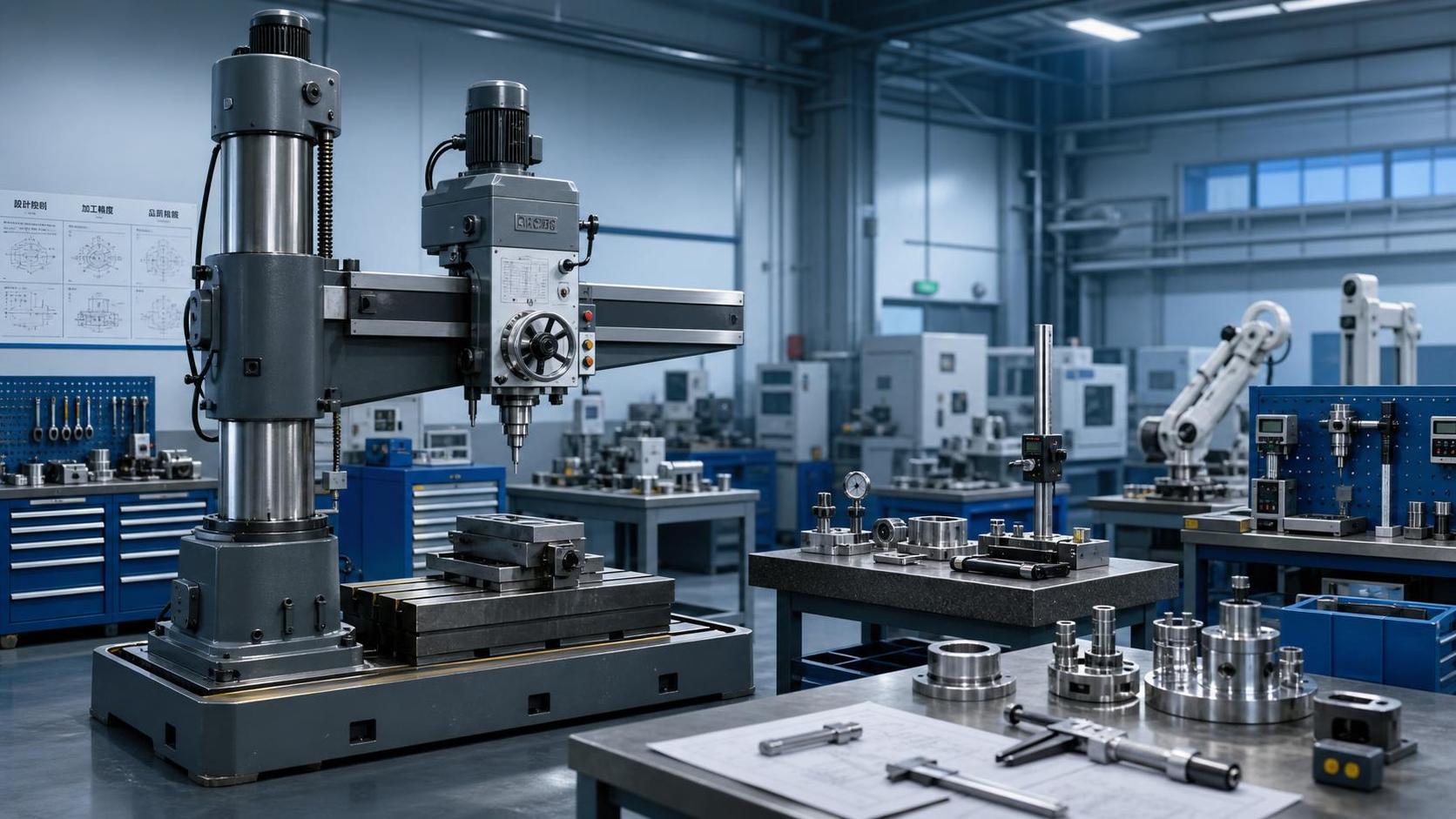
Build quality in a radial drilling machine is not decided at the final inspection table. It is built much earlier, through engineering discipline, supplier control, machining stability, assembly accuracy, and documented testing.
That is why a reliable Radial drilling machine factory is judged by process evidence, not by brochure claims or low pricing alone. For industrial workshops, weak control often becomes a safety issue, a maintenance burden, and a productivity loss.
In metal fabrication and general machinery production, radial drilling machines are expected to handle large workpieces, maintain hole position accuracy, and remain stable under repeated load. Quality control therefore affects both output consistency and workplace risk.
Where Build Quality Really Starts
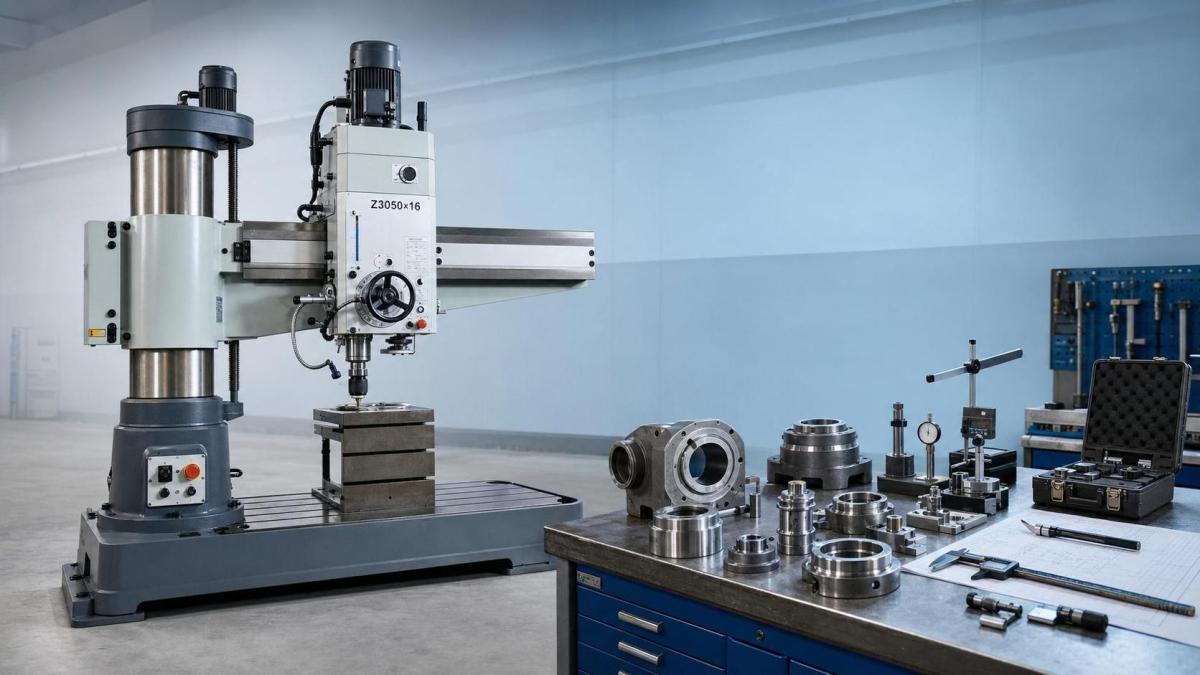
A capable Radial drilling machine factory starts with design control. The machine structure, spindle system, arm movement, clamping force, and electrical layout must be defined around real operating loads.
If the design stage is rushed, later inspection can only catch part of the risk. It cannot fully correct weak castings, poor alignment logic, or undersized transmission components.
Good factories usually create controlled drawings, revision records, process sheets, and inspection checkpoints before production starts. This matters because drilling accuracy depends on the relationship between every major component.
Material Traceability Is a Practical Control Point
One of the clearest signs of a disciplined Radial drilling machine factory is traceability. Cast iron bases, columns, gears, bearings, motors, and electrical parts should be linked to purchasing records and incoming inspection data.
This is especially important for structural parts. A machine may look acceptable after painting, while hidden material defects shorten service life or create vibration under load.
Incoming quality checks usually focus on these areas:
- chemical composition and hardness for critical metal parts
- dimensional verification of castings and machined blanks
- bearing, motor, and electrical component brand conformity
- surface defects, cracks, porosity, and transport damage
When these controls are documented, supplier evaluation becomes more objective. It also helps explain whether a claimed ISO9001 system is operating in practice or only presented as a certificate.
Machining Accuracy Has More Impact Than Appearance
For a Radial drilling machine factory, machining quality is often the dividing line between a durable machine and a troublesome one. Cosmetic finish is easy to display. Geometric accuracy is harder to maintain and far more important.
The spindle box, arm guide surfaces, column contact areas, gearbox bores, and base mounting faces must be machined within controlled tolerances. Small deviations in these areas can affect feed smoothness and drilling repeatability.
A useful supplier review often asks how the factory controls:
A factory that can explain its measurement tools and sampling rules is usually easier to trust than one that only promises “high precision.”
Assembly Quality Links Safety and Performance
Assembly is where individual parts become a working machine. In a Radial drilling machine factory, this step should follow standard work instructions, torque requirements, lubrication rules, and alignment checks.
Poor assembly often appears later as vibration, oil leakage, electrical instability, clamping failure, or abnormal spindle temperature. Those issues are not minor defects. They directly affect operator safety and machine uptime.
The most important assembly controls include spindle installation, arm lifting synchronization, gearbox meshing, limit switch function, cable routing, grounding, and protection cover fitment.
In broader fabrication plants, the same discipline is expected from related equipment. For example, controlled rotation and stable speed are critical in Bolt adjusting welding rotator applications used for cylinder work piece rotating, big diameter pipe butt welding, and pressure vessel work.
That equipment commonly uses one drive unit and one idler unit, with VFD speed control and remote hand control functions. The principle is similar: stable motion and verified assembly reduce process variation and operator strain.
Testing Should Simulate Real Use, Not Just Idle Running
A serious Radial drilling machine factory does more than switch the machine on for a few minutes. Final testing should check operating behavior under realistic conditions.
Typical final inspection items include spindle runout, drilling accuracy, noise level, lubrication flow, electrical protection, emergency stop response, and repeated movement of the arm and head.
Load testing is especially valuable. A machine can pass visual inspection and still fail under sustained torque, feed pressure, or prolonged operation.
Where export markets are involved, compliance adds another layer. Wuxi Armada International Trade Co., Ltd, established in 2012 in Wuxi, follows ISO9001 quality system requirements and EU CE standards across a broad machinery portfolio.
That background matters because companies serving Southeast Asia, Europe, the Americas, and Oceania usually face different documentation and safety expectations. A mature quality system has to support all of them consistently.
What to Examine When Comparing Suppliers
Not every Radial drilling machine factory offers the same level of control, even when specifications look similar. Practical comparison should focus on evidence that connects process to performance.
- Ask for inspection records for castings, spindle parts, and electrical components.
- Check whether geometric accuracy is measured before and after assembly.
- Confirm that test reports match the actual model offered.
- Review guarding, interlocks, grounding, and emergency stop arrangements.
- Look for traceable serial numbers and spare parts support.
- Verify whether exported machines are prepared for the target voltage and standards.
It is also useful to ask how the factory handles nonconforming parts. Rework control, segregation, and root cause action reveal much more than polished catalog language.
Why This Matters in Daily Operations
The value of a well-controlled Radial drilling machine factory appears after installation. Better build quality means steadier accuracy, fewer unexpected stoppages, lower maintenance frequency, and clearer safety margins.
That matters in workshops handling steel structures, plate processing, machine repair, mold work, or heavy fabrication. In these settings, inconsistent drilling quality can disrupt downstream fitting, welding, and inspection work.
The same thinking applies across connected equipment lines. Whether evaluating drilling machines, CNC systems, cutting machines, or welding support equipment, process discipline is usually the best predictor of long-term reliability.
A Useful Next Step
When reviewing a Radial drilling machine factory, start with a simple checklist built around materials, machining, assembly, testing, and compliance. Then compare suppliers against the same points, using records rather than claims.
That approach makes technical evaluation more consistent and reduces the chance of hidden quality gaps. It also creates a clearer basis for factory audits, sample approval, and future maintenance planning.
If a supplier can show controlled production, traceable components, and test evidence that reflects actual working conditions, the quality discussion becomes much easier to verify and much safer to act on.