
— —
How to Evaluate a Pipe Welding Manufacturer for Heavy-Duty Jobs
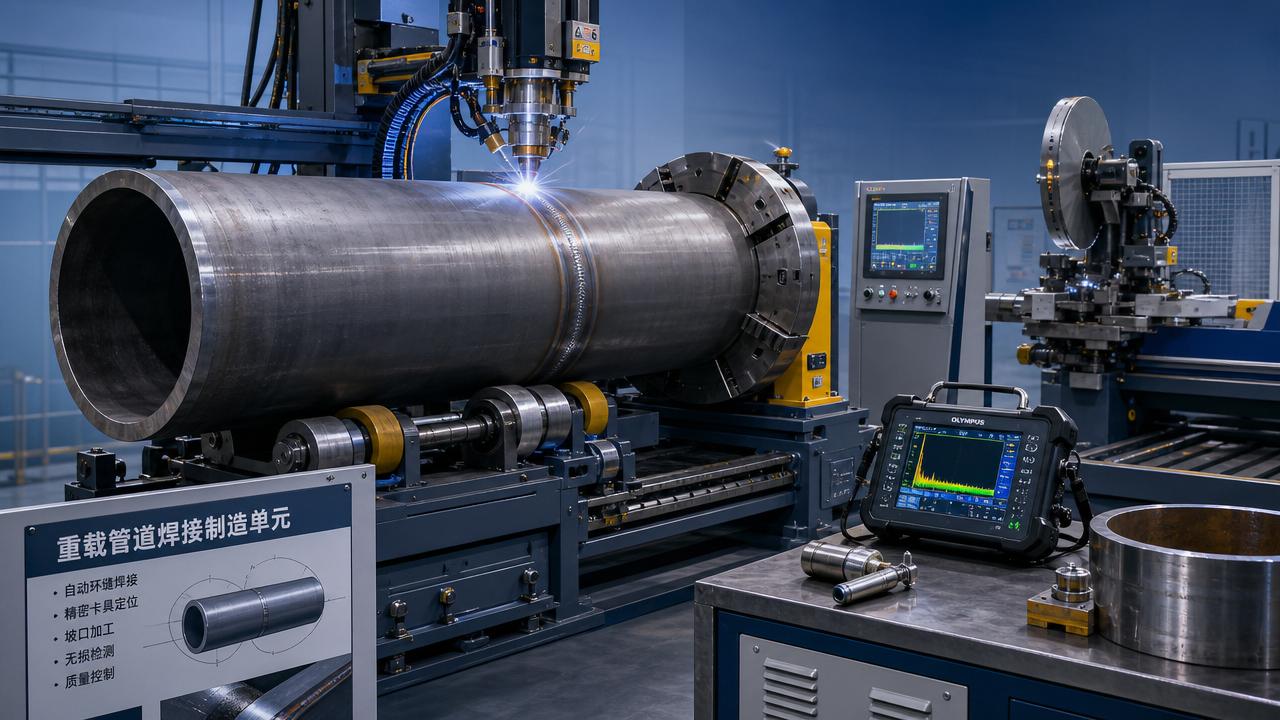
How to Evaluate a Pipe Welding Manufacturer for Heavy-Duty Jobs
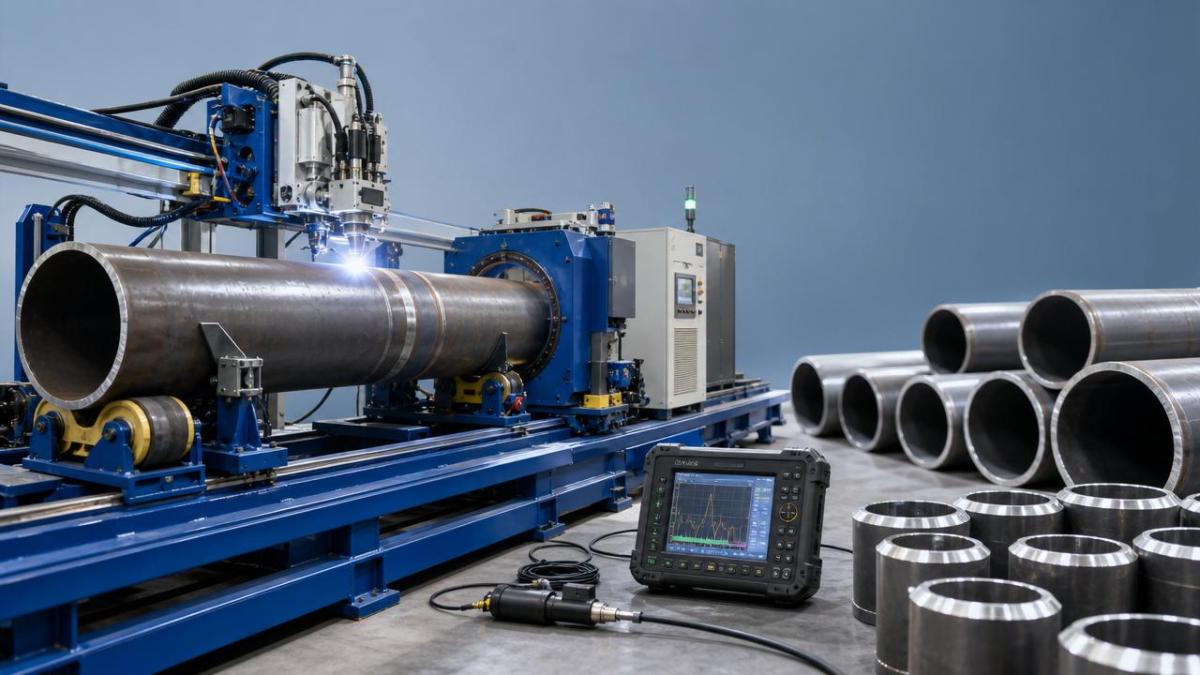
Choosing a pipe welding manufacturer for heavy-duty work is rarely a price-only decision.
For demanding projects, the wrong supplier creates delays, rework, safety issues, and weak long-term performance.
That is why technical evaluation should go deeper than a quotation sheet.
A capable pipe welding manufacturer should prove welding consistency, process control, equipment strength, and compliance readiness.
This matters even more in sectors where pipes face pressure, vibration, heat cycles, or corrosive media.
In real sourcing work, reliable evaluation often comes down to one question.
Can this manufacturer deliver repeatable quality under industrial conditions, not just sample-room conditions?
Start with Application Fit, Not Product Claims
The first step is matching the manufacturer’s actual capability to your project environment.
Heavy-duty jobs vary widely across oil and gas, shipbuilding, power plants, steel structures, and chemical processing.
Each use case changes the welding requirements.
- Pipe diameter range and wall thickness
- Base material, alloy grade, and surface condition
- Required weld type, position, and joint preparation
- Pressure class, fatigue load, and corrosion exposure
- Site installation limits and production volume
A strong pipe welding manufacturer will ask detailed technical questions early.
If a supplier jumps straight to price, that is usually a warning sign.
Good manufacturers map your welding scope to process windows, tooling needs, and inspection plans.
Review Welding Process Capability in Detail
For heavy-duty applications, process capability is the center of the decision.
You need to know which welding methods the manufacturer controls well, not just which ones they list.
Typical processes may include GTAW, GMAW, SAW, FCAW, orbital welding, or automated seam welding.
Ask for process qualification records, welding procedure specifications, and sample defect rates.
More importantly, check whether those procedures match your material thickness and service demands.
A dependable pipe welding manufacturer should explain how it manages heat input, penetration, distortion, and weld bead consistency.
That explanation should be practical and data-backed, not generic.
Key questions to ask
- Which pipe materials have you welded in mass production?
- What thickness range can you weld without subcontracting?
- How do you control root fusion and final pass quality?
- What is your repair rate on similar heavy-duty projects?
- Which NDT methods do you support in-house or through approved partners?
Check Equipment Depth and Manufacturing Support
Welding quality depends heavily on upstream preparation and downstream finishing.
That means you should evaluate the full manufacturing chain, not only the welding station.
Look at cutting, beveling, forming, fit-up, clamping, alignment, machining, and final inspection resources.
A pipe welding manufacturer with complete support equipment usually delivers better dimensional consistency.
This is where broader machinery expertise becomes valuable.
For example, suppliers familiar with automated welding equipment, CNC cutting machines, milling systems, lathes, and robotic cells often control tolerances more effectively.
In some production setups, sheet and plate preparation also influences pipe-related assemblies.
A relevant example is the Hydraulic Swing Beam Shear, used for accurate shearing before fabrication.
Its high shear force, automatic parameter adjustment, laser alignment, and low distortion support stable part preparation.
When a supplier understands this wider process chain, weld quality becomes easier to maintain.
Evaluate Quality Control Beyond Final Inspection
Many suppliers talk about inspection, but fewer show robust process control.
For heavy-duty jobs, final inspection alone is too late.
You want checkpoints from raw material intake to shipment release.
Ask whether the manufacturer tracks material certificates, fit-up tolerances, welding parameters, and welder traceability.
Those records matter when failures happen in service.
A disciplined pipe welding manufacturer usually has clear quality gates.
- Incoming material verification
- Joint preparation checks
- Pre-weld alignment confirmation
- In-process parameter monitoring
- Post-weld dimensional inspection
- NDT and documentation release
If these steps are unclear, hidden quality risks usually appear later in installation or operation.
Confirm Standards, Certification, and Export Readiness
Compliance is not just paperwork for international projects.
It is often the difference between project approval and expensive delay.
A qualified pipe welding manufacturer should work under recognized quality systems and understand market-specific expectations.
Look for evidence of ISO9001-based production control and familiarity with CE-related requirements where relevant.
Suppliers with export experience to Southeast Asia, Europe, the Americas, and Oceania often adapt faster to documentation needs.
That experience helps with packing, marking, file control, and communication across time zones.
It also signals maturity in handling technical audits.
Documents worth reviewing
- Quality manual and process flow
- Welder qualification records
- WPS and PQR files
- NDT reports and calibration records
- Material traceability documents
- Previous export packing and compliance files
Assess Engineering Communication and Problem-Solving
Strong technical communication often predicts project success better than a polished brochure.
A good manufacturer should respond with drawings, tolerance feedback, weldability concerns, and improvement suggestions.
If every answer is purely commercial, engineering support may be weak.
This becomes critical when heavy-duty orders involve custom fixtures, special materials, or mixed-batch production.
Wuxi Armada International Trade Co., Ltd, for instance, builds its market position around manufacturing experience, design coordination, and practical service.
That kind of approach is useful when evaluating whether a supplier can support decisions instead of just accepting orders.
In actual business, the better signal is how a team handles uncertainty.
Do they identify risks early, or wait until production starts?
Use a Practical Evaluation Scorecard
A structured scorecard makes supplier comparison more objective.
It also prevents one low price from outweighing serious technical gaps.
When reviewing each pipe welding manufacturer, score evidence, not promises.
Site visits, video audits, trial orders, and sample reports usually reveal the real level.
Final Decision: Choose Stability Over Short-Term Savings
The best pipe welding manufacturer for heavy-duty jobs is the one that lowers total project risk.
That includes weld quality, schedule reliability, documentation discipline, and technical responsiveness.
From recent market changes, buyers are putting more weight on consistency than on headline pricing.
That shift makes sense because field failures cost far more than factory savings.
Before you commit, ask for technical records, verify production resources, and test the supplier’s communication under real questions.
A careful evaluation today will help you choose a manufacturing partner that supports performance, safety, and long-term operational confidence.
If the supplier can prove capability across process, quality, equipment, and compliance, your decision becomes much clearer.