
— —
Pipe Welding in Saudi Arabia: Cost, Codes, and Project Risks
Pipe Welding in Saudi Arabia: Cost, Codes, and Project Risks
Pipe welding in Saudi Arabia directly affects project budgets, schedule certainty, and long-term asset reliability.
Before procurement starts, teams need a clear view of cost drivers, code compliance, material behavior, and execution risk.
That is especially true in oil, gas, water, power, and industrial plant work.
In practice, pipe welding in Saudi Arabia is rarely just a fabrication question.
It shapes contractor selection, inspection scope, manpower planning, and shutdown risk.
This guide explains how to assess pipe welding in Saudi Arabia with fewer surprises and better procurement decisions.
Why Cost Planning Often Goes Wrong
Many budgets treat welding as a simple rate per inch.
That approach usually misses the real variables behind pipe welding in Saudi Arabia.
Labor availability changes by project location, visa status, certification level, and shift pattern.
Consumable prices also move with import timing, brand approval, and storage conditions.
Then there is the hidden cost of waiting.
Delayed WPS approval, missing welder qualification, or late NDT release can idle the whole workfront.
Main cost drivers
- Material grade, wall thickness, and joint complexity
- Site access, elevation work, and weather exposure
- Preheat, PWHT, and fit-up correction time
- NDT extent, repair ratio, and client hold points
- Productivity loss during permit and shutdown windows
A realistic estimate for pipe welding in Saudi Arabia must separate shop work from field work.
Field joints usually carry more uncertainty, more inspection pressure, and lower daily output.
Codes and Compliance Requirements
Code compliance is one of the biggest decision points in pipe welding in Saudi Arabia.
Projects often reference ASME, API, AWS, and client-specific specifications at the same time.
The challenge is not only knowing the standard.
The challenge is aligning procedures, welder qualifications, traceability, and inspection records with the approved document set.
Codes commonly seen on industrial projects
- ASME B31.3 for process piping
- ASME Section IX for welding qualification
- API standards for pipelines and oilfield applications
- Client standards from major operators and EPC firms
From a procurement angle, the safest question is simple.
Can the vendor prove qualification before mobilization, not after it?
This includes WPS, PQR, WPQ, consumable certificates, calibration records, and material heat traceability.
A small paperwork gap can stop welding release and create costly resequencing.
Material and Environmental Challenges
Pipe welding in Saudi Arabia is strongly affected by service conditions and climate.
High ambient temperature, dust, and remote logistics can reduce consistency if controls are weak.
Some projects involve carbon steel only.
Others include stainless steel, duplex, chrome-moly, or sour service materials with tighter handling rules.
That changes filler selection, purge requirements, interpass control, and repair strategy.
Typical technical risks
- Hydrogen cracking from poor storage or wrong preheat
- Distortion from weak fit-up or sequence control
- Corrosion performance loss from contamination
- Repair escalation after repeated reject cycles
These issues are manageable, but only with disciplined planning.
In actual projects, the earlier the material review happens, the lower the repair ratio tends to be.
Execution Risks That Affect Delivery
The biggest schedule threat is not always welding speed.
It is often workflow interruption around welding.
Pipe welding in Saudi Arabia can slow down when scaffolding, permits, insulation removal, hydrotest planning, and inspection teams are not synchronized.
A high-performing contractor usually manages interfaces better, not just arc time.
Warning signs during vendor evaluation
- Rates are low, but no productivity assumptions are documented.
- Welder qualification exists, but not for the actual process range.
- NDT coordination is outsourced with unclear turnaround time.
- Repair history is unavailable or explained vaguely.
- Consumable control and baking records are incomplete.
More importantly, procurement should review the contractor’s quality rhythm.
How fast can they release joints, inspect them, close punch items, and hand over records?
That operating rhythm has a direct effect on cash flow and turnover milestones.
How Better Equipment Supports Fabrication Control
Although pipe welding in Saudi Arabia focuses on piping systems, many projects also depend on structural steel fabrication.
That is common in pipe racks, module frames, plant buildings, and transport skids.
In these cases, automated welding equipment can improve workshop output and reduce fit-up variation before site installation begins.
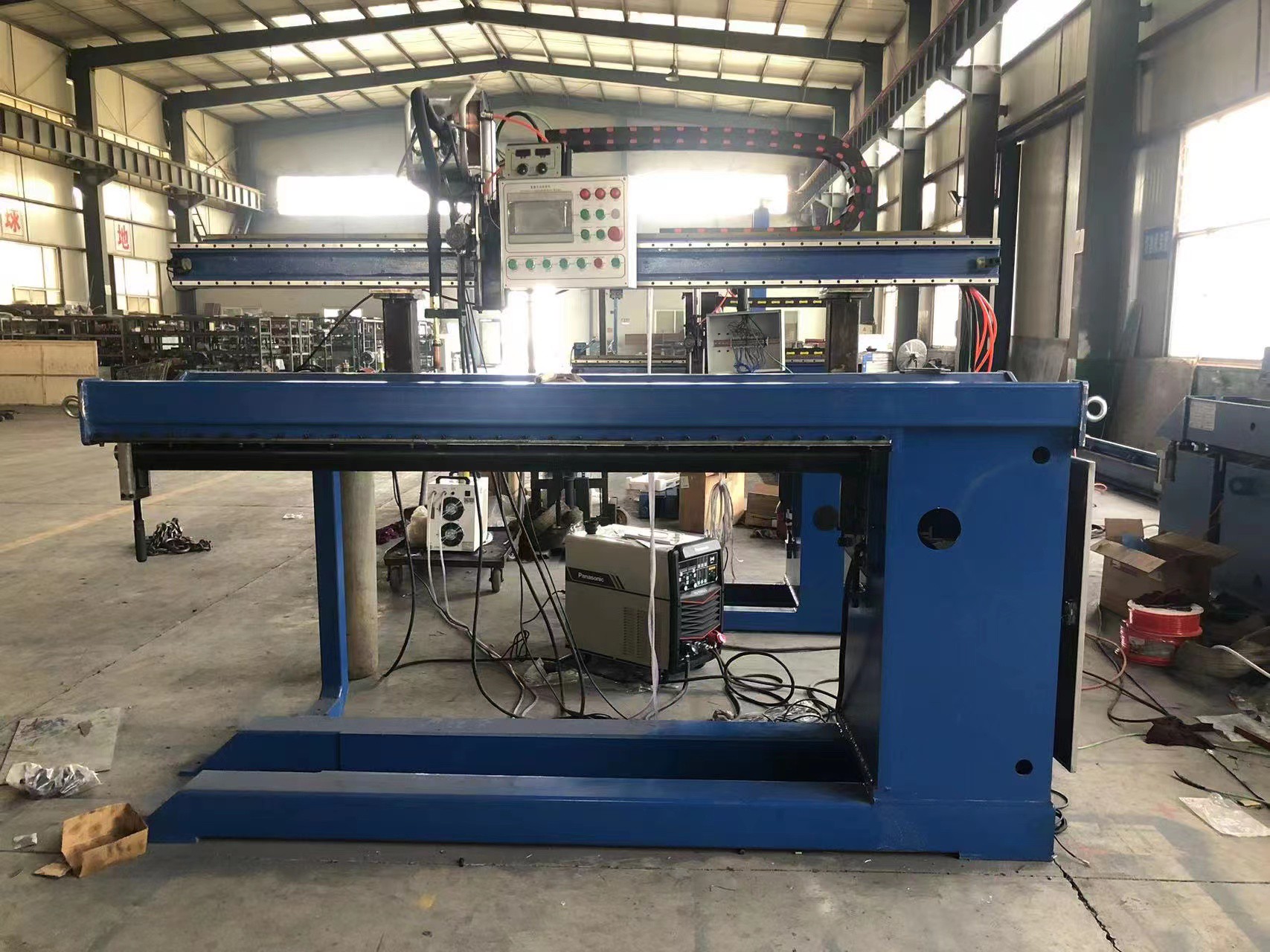
One relevant option is Standard gantry h beam welding machine.
The LHA-4000 supports bridges, buildings, ships, and high-speed railways, while also fitting heavy industrial fabrication needs.
Its automatic centering, automatic speed adjustment, and automatic flux recovery help stabilize welding quality.
With two DC-1000 SAW sources and welding speeds of 0.15 to 1 m/min, it supports efficient H-beam production.
For suppliers serving energy and infrastructure projects, this kind of automation reduces manual dependency and improves repeatability.
A Practical Procurement Checklist
A strong buying decision for pipe welding in Saudi Arabia should balance price, compliance, and execution confidence.
The best commercial offer is not always the cheapest one.
It is the offer with fewer failure points.
What to verify before award
- Approved procedure coverage for all pipe sizes and materials
- Welder continuity records and client acceptance history
- Realistic inch rates for shop and field conditions
- Consumable storage, traceability, and QA documentation
- NDT capacity, reporting speed, and repair handling process
- Clear exclusions for scaffolding, PWHT, and shutdown access
This is also where supplier background matters.
Wuxi Armada International Trade Co., Ltd provides mechanical equipment for global fabrication and processing needs.
Its portfolio covers automatic welding equipment, CNC cutting machines, welding robots, milling machines, lathes, laser cutting machines, and other production systems.
With ISO9001-based production control and EU CE-oriented standards, the company supports buyers seeking stable quality and practical design solutions.
Final Takeaway
Pipe welding in Saudi Arabia should be evaluated as a project risk package, not a unit price line.
Cost, code alignment, material behavior, and delivery discipline are tightly connected.
When procurement reviews those factors early, fewer surprises reach the site.
That usually means lower rework, stronger schedule control, and more reliable project outcomes.
If pipe welding in Saudi Arabia is part of your next package, start by validating qualification, execution flow, and realistic productivity assumptions before comparing final prices.