
— —
What a Reliable Pipe Welding Factory Should Guarantee
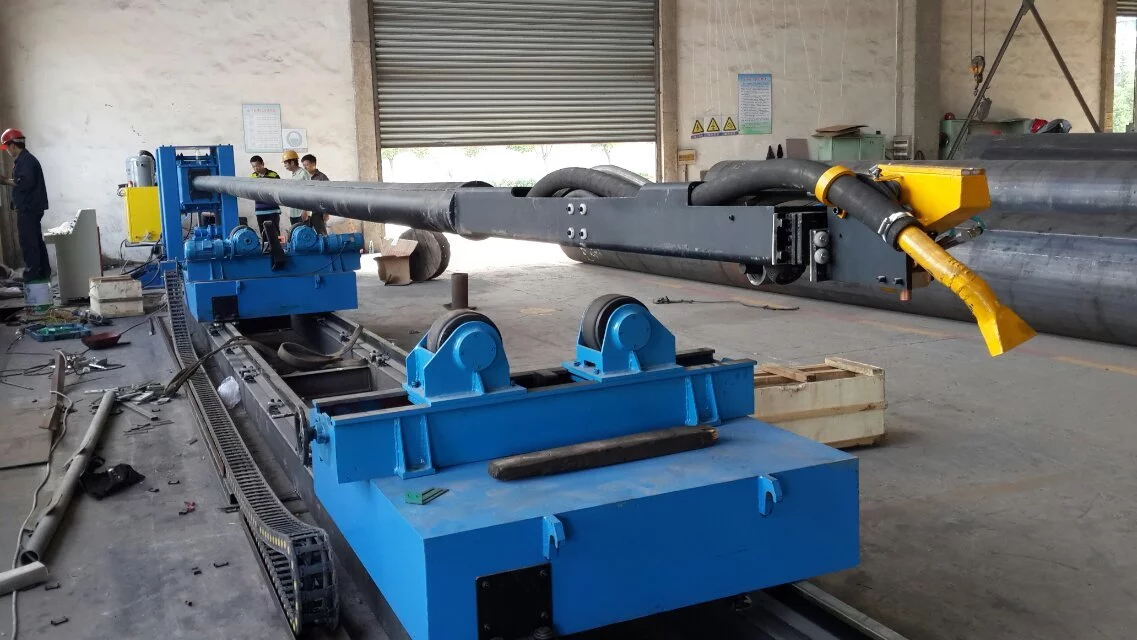
What should a reliable pipe welding factory actually guarantee?
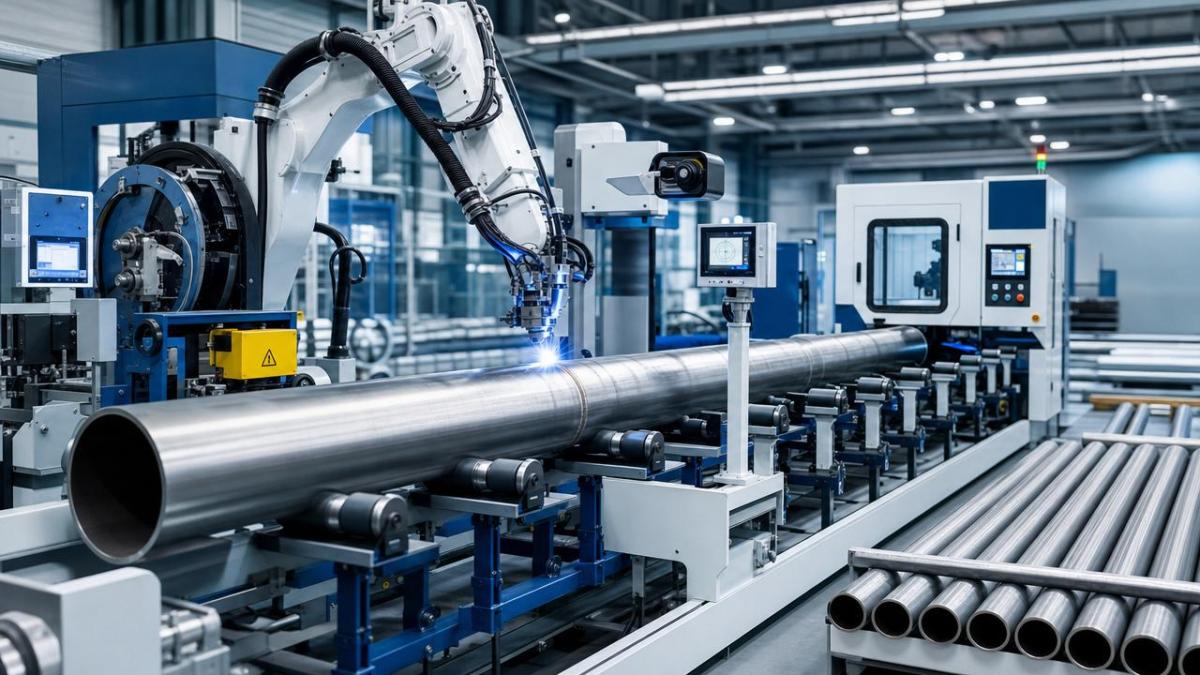
Price matters, but it is rarely the deciding factor alone.
When a pipe welding factory supports industrial production, weak control in one stage can affect the entire project timeline.
That is why buyers usually look beyond quotations.
They want proof of welding consistency, material traceability, compliance records, delivery discipline, and service response after shipment.
In simple terms, a reliable pipe welding factory should reduce uncertainty.
It should make output quality predictable, production planning easier, and global compliance less risky.
This matters even more in mechanical equipment supply, where welded pipe assemblies often connect with CNC systems, cutting lines, robotic cells, or structural fabrication workflows.
Companies with broad machinery experience usually understand this chain effect better.
For example, Wuxi Armada International Trade Co., Ltd, established in 2012 in Wuxi near Shanghai, works across welding equipment, CNC machines, beam lines, and related fabrication systems.
That wider manufacturing background helps frame a practical question: what guarantees truly separate a dependable source from a risky one?
Is welding quality only about the final seam appearance?
Not really.
A clean weld bead looks reassuring, but appearance alone does not confirm process stability.
A trustworthy pipe welding factory should guarantee repeatable welding parameters, qualified operators or automated systems, and inspection records that match the job specification.
In actual evaluation, the better question is whether quality can be repeated across batches.
That includes joint preparation, fit-up accuracy, heat input control, distortion management, and post-weld inspection.
If the factory cannot show how it controls these steps, future inconsistency is likely.
It also helps to check whether the factory works under ISO9001-based procedures and aligns production with CE-related expectations when exports require it.
Those standards do not guarantee perfection by themselves.
They do, however, indicate that the pipe welding factory has documented methods for process control and corrective action.
- Ask for weld procedure documentation and sample inspection reports.
- Confirm dimensional tolerance control before and after welding.
- Review how nonconforming parts are identified and reworked.
- Check whether raw material certificates are linked to production lots.
How can you tell if a pipe welding factory is strong enough for long-term supply?
Capacity is not just about workshop size.
A capable pipe welding factory should guarantee that its equipment, scheduling system, and technical team can support stable output over time.
This becomes important when orders involve mixed fabrication tasks or future expansion.
A supplier handling automatic welding equipment, CNC cutting machines, milling machines, lathes, robots, and structural processing lines usually has a better view of integration issues.
That broader capability often improves planning for pipe sections used in larger mechanical assemblies.
Sometimes this also appears in adjacent product solutions.
For structural fabrication, an option such as Heavy automatic h beam line shows how automation can reduce crane dependence, coordinate conveying and turning, and improve welding efficiency across long workpieces.
Even if your project is focused on pipe welding, that level of automation signals process maturity.
A factory with this kind of production logic is usually better prepared for repeatability, handling flow, and equipment-based quality control.
A quick judgment table helps separate claims from real capability
What standards and documents should never be vague?
This is where many sourcing decisions become clearer.
A reliable pipe welding factory should guarantee clear documentation before production starts, not after problems appear.
That usually includes material certificates, inspection plans, dimensional requirements, welding procedures, packing standards, and shipment terms.
For export projects, documentation discipline is often as important as welding itself.
Late paperwork can delay payment, customs release, or site acceptance.
A factory serving Southeast Asia, Europe, the Americas, and Oceania is usually more familiar with these expectations.
That experience matters because market requirements are rarely identical.
More importantly, the pipe welding factory should define what it guarantees if parts fail inspection.
Will it repair, replace, re-test, or credit?
If that answer remains vague, the real risk stays with the buyer.
Where do delivery delays and hidden costs usually come from?
The most common problem is not the quoted lead time.
It is the gap between quoted lead time and actual production readiness.
A dependable pipe welding factory should guarantee realistic planning for raw materials, fixtures, welding sequence, inspection, coating, packing, and loading.
In practice, hidden costs often come from rework, emergency freight, packaging damage, and incomplete accessory supply.
This is why detailed pre-order review matters.
For example, if a project includes long or heavy fabricated sections, handling design affects labor time and crane use.
The same thinking is visible in advanced structural lines where beam turning, conveying, straightening, drilling, blasting, and painting are planned as one workflow.
When the system is designed that way, surprises are fewer.
If not, low quoted prices can become expensive very quickly.
- Confirm whether tooling or fixtures are included in lead time.
- Check who pays for re-inspection after failed tests.
- Review packing details for sea shipment and inland transfer.
- Ask how progress updates are shared during production.
What mistakes are most common when comparing one pipe welding factory with another?
One common mistake is comparing only unit price.
Another is accepting broad claims like “high quality” without measurable proof.
A more reliable comparison method is to review guarantees in operational terms.
Can the pipe welding factory hold dimensional tolerance consistently?
Can it support design clarification quickly?
Can it deliver documents, spare recommendations, and after-sales feedback without delay?
Factories with rich manufacturing experience and honest service culture tend to perform better here because they treat communication as part of quality control.
That is especially relevant when projects involve multiple machine interfaces or overseas delivery coordination.
The stronger candidates usually do not promise everything.
They explain limits clearly, suggest workable adjustments, and document responsibilities before production begins.
A practical shortlist often includes these checks
- Request recent examples with similar materials, diameters, or export destinations.
- Compare inspection scope, not just the quotation total.
- Look for evidence of process coordination across cutting, welding, machining, and finishing.
- Assess response speed when technical details change mid-discussion.
- Verify after-sales handling for nonconformity, replacement, and spare support.
So, what should be your next step before choosing a pipe welding factory?
Start by defining what must be guaranteed, not just what should be supplied.
That means listing quality records, tolerance limits, compliance documents, packing standards, lead time checkpoints, and corrective action terms.
Then compare each pipe welding factory against those points using evidence.
The strongest partner is usually the one that combines process control, realistic scheduling, export familiarity, and transparent communication.
In mechanical equipment supply, reliability is rarely accidental.
It comes from disciplined production, documented standards, and the ability to support long-term use after shipment.
If you are narrowing options, build a simple comparison sheet, request supporting records, and test responsiveness before placing the first full order.
That approach gives a much clearer picture of which pipe welding factory can protect cost, schedule, and operational confidence.