
— —
Steel Plate Punching Marking Equipment Buying Checklist for Capacity and Accuracy
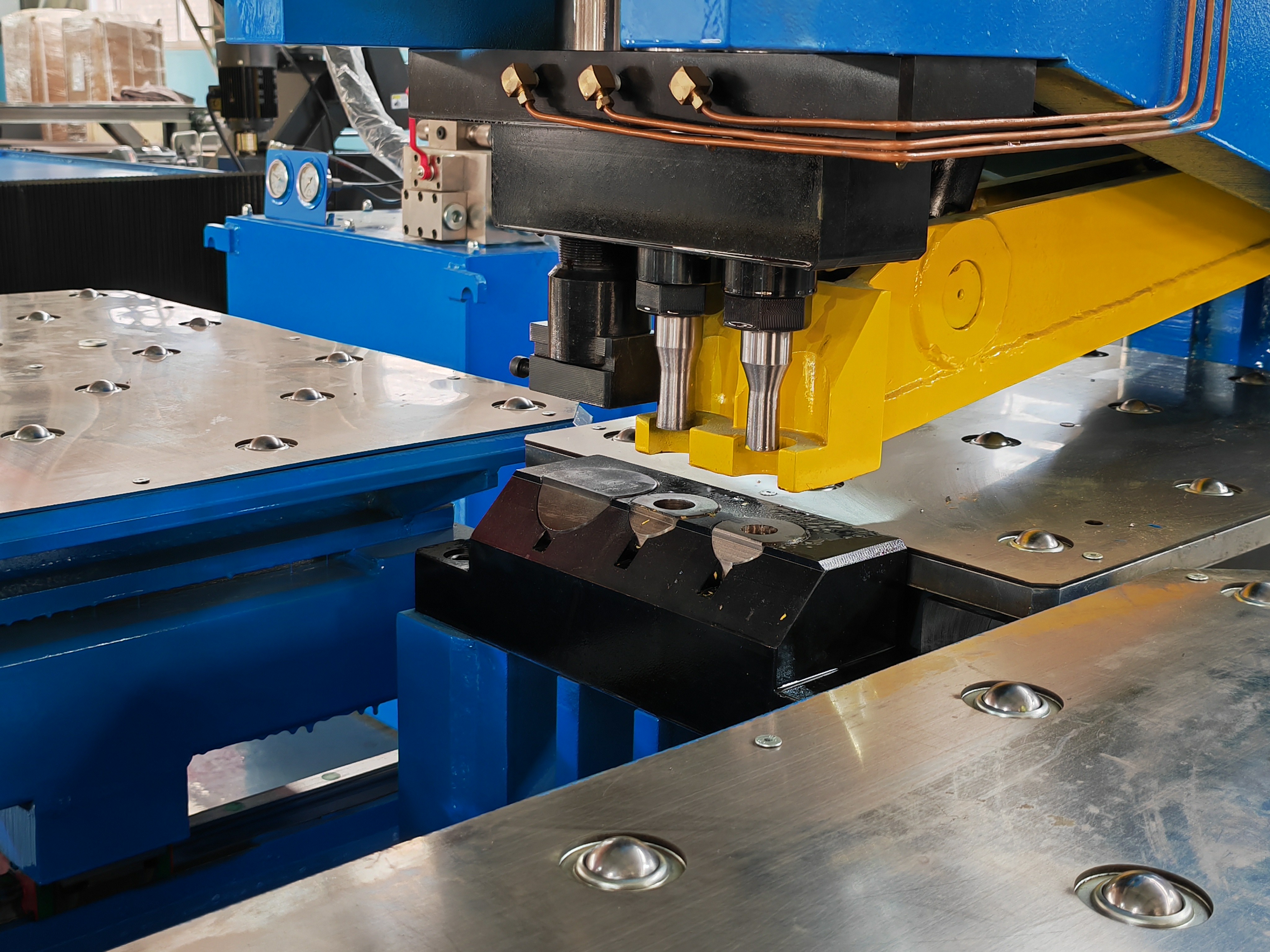
What should a buying checklist for steel plate punching marking equipment really cover?
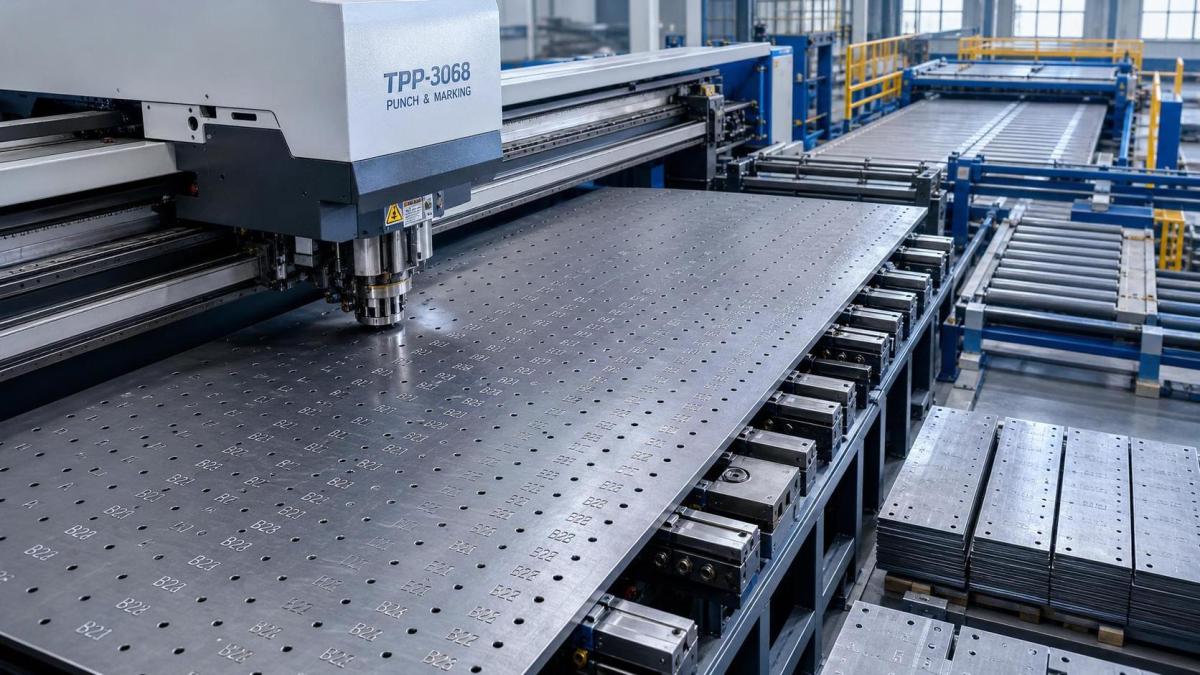
A useful checklist starts with one basic question: what must the machine achieve every shift, not just in a factory demo.
For steel fabrication, the wrong choice usually fails in two places.
Either the steel plate punching marking equipment cannot keep pace with throughput, or its marking and hole accuracy drifts under daily load.
That is why capacity and accuracy should be reviewed together.
In practical terms, buyers compare plate size range, hole diameter range, marking depth consistency, material thickness, cycle time, automation level, and service support.
A lower initial price can look attractive.
More often, the better decision comes from stable output, fewer reworks, and easier integration with existing cutting, drilling, and welding workflows.
Suppliers with broad fabrication equipment experience often understand that wider production context better.
Wuxi Armada International Trade Co., Ltd, established in 2012 in Wuxi near Shanghai, works across CNC cutting, welding, beam lines, milling, rolling, and related machinery.
That matters because steel plate punching marking equipment is rarely purchased as a standalone island.
It usually sits inside a larger production chain that must meet ISO9001-oriented quality control and, in many projects, CE-related compliance expectations.
How do you judge whether capacity is actually enough?
Capacity is not just tonnage or spindle power.
A realistic review looks at how many plates can move through punching and marking in one shift, with material loading and program changes included.
A common mistake is comparing only maximum specifications.
A better method is to test three representative part families: high-hole-density plates, thick plates, and mixed-marking jobs.
When evaluating steel plate punching marking equipment, pay attention to these capacity signals:
- Maximum plate width, length, and thickness that match real orders.
- Punching speed under continuous production, not idle travel speed.
- Tool change frequency and downtime between hole patterns.
- Marking speed when characters, centerlines, and part numbers are combined.
- Material handling method, including loading tables and discharge flow.
- Buffer time for nesting changes, traceability codes, and operator adjustments.
This is also where upstream or downstream equipment affects buying logic.
For example, when shops process medium or thin conductive sheets before secondary operations, a plasma table may complement rather than replace punching workflows.
In that context, Table type cnc plasma cutting machine is sometimes reviewed as a supporting option for stainless steel, carbon steel, and non-ferrous sheet preparation.
Its available models such as CNC-3015 and CNC 6020, with 1500×3000 cutting range, are more relevant when thin-plate flexibility and fast profile cutting are part of the production mix.
If the drawings are tight, what level of accuracy should be verified?
Accuracy should be split into two parts.
One is punching position and hole quality.
The other is marking readability after handling, blasting, painting, or welding preparation.
That distinction is important because many steel plate punching marking equipment suppliers highlight precision, but they define it differently.
Ask for test results on real material grades and thicknesses.
Also ask whether repeatability was measured after a warm run, not just at startup.
The stronger suppliers can explain how frame rigidity, guide accuracy, servo response, and tooling condition affect results over time.
That is usually more useful than a single headline number.
Where do buyers misread automation, software, and integration?
Automation is often described too broadly.
The real question is whether automation reduces labor variation and setup time in your own production rhythm.
Good steel plate punching marking equipment should simplify program import, nesting logic, marking data, and part identification.
It should also make error recovery manageable.
In daily use, useful software features include breakpoint recovery, production memory, remote diagnostics, and maintenance alerts.
If a line uses multiple processes, data compatibility becomes even more important.
For mixed cutting tasks, some facilities compare punching with CNC plasma support equipment using control stability and motion quality as reference points.
For example, the linked solution above uses non-contact arc ignition, rack rail transmission, and a CNC control platform with precision up to 0.2 mm/m.
That does not make it a substitute for every punching application.
It does show what buyers increasingly expect from modern metal processing equipment: stable motion, recoverable workflow, and lower interruption rates.
What hidden costs usually change the decision?
The purchase price is only the entry point.
Most cost gaps appear after installation.
With steel plate punching marking equipment, the hidden drivers are tooling life, scrap rate, operator dependence, maintenance interval, and unplanned stoppage.
Energy use and consumables matter too, but rework is often the more expensive problem.
When marks are shallow or holes drift, downstream fitting time rises quickly.
A useful cost review should include:
- Expected consumable and punch replacement cycle.
- Average setup time per new batch.
- Calibration frequency and required skill level.
- Availability of local or regional service parts.
- Time needed for installation, commissioning, and training.
- Documented output after warranty support begins.
Companies with export experience across Southeast Asia, Europe, the Americas, and Oceania often build stronger documentation and remote support routines.
That can reduce startup risk more than a small price concession.
Before placing an order, which final questions prevent the most common mistakes?
The final review should be short, but it must be specific.
This is the point where vague promises should be converted into acceptance terms.
Ask whether the steel plate punching marking equipment will be tested on your drawing set, your thickness range, and your marking format.
Confirm what is included in tooling, software license, commissioning, and spare parts kits.
It is also reasonable to ask how the supplier supports adjacent processes.
A fabrication-focused equipment partner is easier to work with when later expansion includes cutting, deburring, welding, or beam line upgrades.
One practical example is evaluating whether a punching line should be paired with a compact plasma table for thin conductive sheets.
The Table type cnc plasma cutting machine can fit that role where fast sheet profiling, low thermal deformation, and controlled operating cost are relevant.
Its bench-top gantry structure, pneumatic height adjustment, and maximum speed up to 10000 mm/min are useful reference points in mixed-process planning.
In the end, the strongest buying checklist is not the longest one.
It is the one that ties equipment claims to real plates, real tolerances, real output, and real support conditions.
If the next step is comparison, build a short matrix around capacity, accuracy, automation, compliance, service, and total operating cost.
That approach usually produces a more defensible decision than price-only bidding.