
— —
Is One Die Enough for Custom Samples and Export Production?
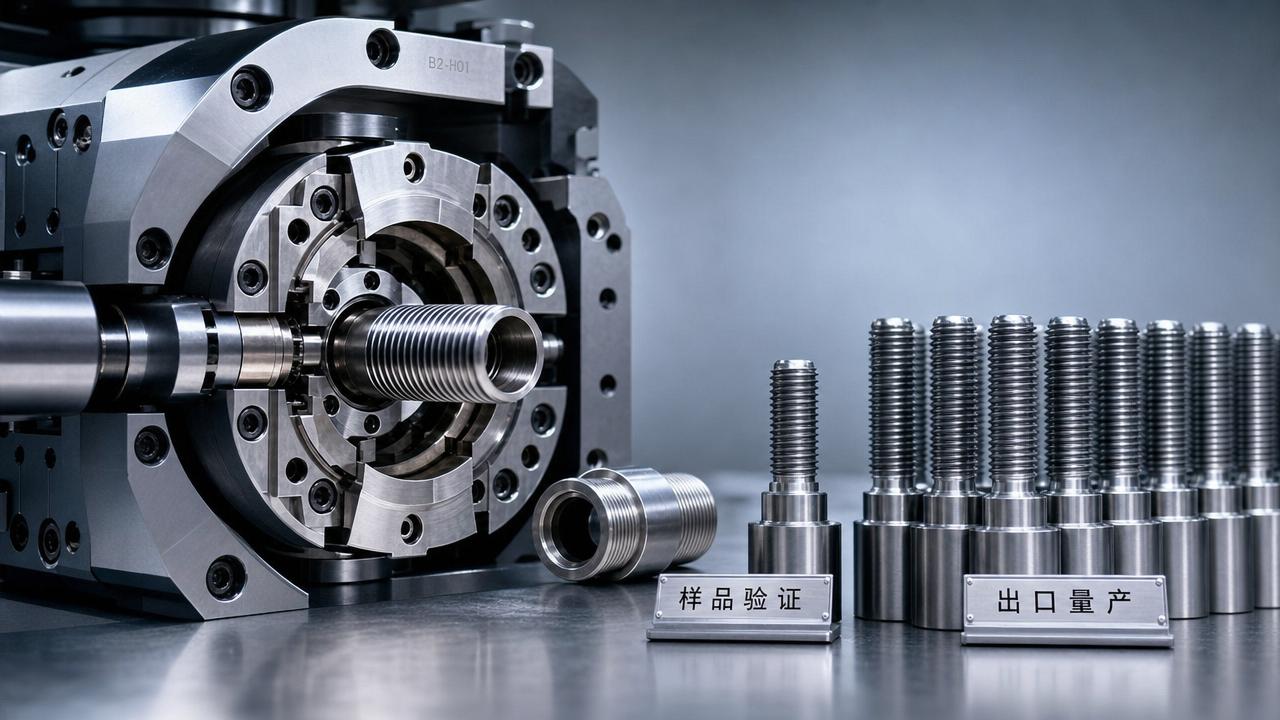
Can one thread rolling die handle both custom prototype and bulk export orders? For manufacturers balancing sample validation with large-scale delivery, this is a critical question. In machinery and metal processing, the answer depends on die design, material consistency, precision standards, and export quality requirements. Understanding these factors helps buyers reduce tooling costs, improve production efficiency, and ensure stable performance from prototype testing to international batch production.
Can one thread rolling die handle both custom prototype and bulk export orders in real production?

In many projects, the short answer is yes, but only under controlled conditions. A single thread rolling die can sometimes support sample making and later export production when the thread specification stays unchanged, the raw material lot is stable, the tolerance target is realistic, and the die is designed with production life in mind.
However, buyers often underestimate the gap between prototype confirmation and export manufacturing. A sample may require only a few hundred parts for testing, while an export order may demand tens of thousands of parts, repeatability across shifts, and documentation for inspection, packaging, and international shipment.
That is why the question, Can one thread rolling die handle both custom prototype and bulk export orders, should never be answered by price alone. It must be evaluated from tooling wear, machine compatibility, thread accuracy, workpiece hardness, and downstream customer acceptance.
- If the prototype uses the same material grade and blank dimensions as batch production, one die is more likely to work for both stages.
- If the sample is only for concept verification and the mass order later changes diameter, pitch, or hardness, one die is usually not enough.
- If export quality requires tighter consistency, the same die may still work, but only with stricter maintenance, inspection, and backup planning.
For machinery buyers, the better question is not only whether one die can do both jobs, but whether it can do so at acceptable cost, acceptable risk, and acceptable delivery speed.
What determines whether one die can cover samples and batch export production?
Several technical factors directly decide whether one tooling set can move from custom sample approval to continuous export production. The table below helps buyers evaluate the main variables before they commit to a one-die strategy.
This comparison shows why the same die may succeed in one project and fail in another. The key is not only die shape, but the full combination of material, machine setup, inspection practice, and shipment expectations.
Die design must match real manufacturing conditions
A custom prototype often focuses on proving that the thread can be formed. Export production focuses on whether the same thread can be formed continuously, with low scrap and stable cycle time. If the die was designed only for sample approval speed, its life may be too short for commercial production.
For this reason, experienced suppliers evaluate blank diameter tolerance, lubrication conditions, machine rigidity, and workpiece straightness before recommending a one-die plan.
Material variation can break the one-die assumption
Many buyers ask, Can one thread rolling die handle both custom prototype and bulk export orders, while assuming all steel is the same. In practice, different hardness levels, coating conditions, or microstructure variations can change rolling pressure and final thread quality. A die that performs well on sample bars may wear faster when mass production materials come from another heat or supplier.
Which application scenarios are suitable for one die, and which are not?
Not every order needs a separate sample die and production die. In some machining and fastener-related applications, one die strategy is practical. In others, it creates unnecessary risk. The following scenarios help buyers judge more accurately.
Scenarios where one die is often practical
- The prototype is intended as a pre-production sample, not a design experiment, and all dimensions are already frozen.
- The customer confirms that sample material, surface condition, and blank tolerances will match the export batch.
- Order volume is moderate, making die wear manageable without frequent regrinding or replacement.
- The thread rolling machine and operator control are stable enough to maintain repeatable forming conditions.
Scenarios where separate tooling is usually safer
- The sample is exploratory, and final dimensions or thread engagement requirements may still change after testing.
- The export order volume is large enough that downtime from a worn die would disrupt container loading or delivery commitments.
- The product is exported to markets where inspection records, traceability, or customer audits are stricter.
- The rolled thread is part of a higher-value assembly, so the cost of quality failure is much greater than the cost of backup tooling.
In other words, one die can be enough, but only when process risk is lower than the savings from avoiding extra tooling.
How should buyers compare one-die and two-die strategies?
When customers compare tooling plans, they should look beyond initial die cost. They should compare qualification speed, wear risk, export schedule impact, and inspection burden. This table summarizes the decision logic clearly.
For many export-oriented machining projects, the third option is often the most practical. It keeps tooling cost under control while reducing the risk of shipment delay caused by unexpected die damage or accelerated wear.
Cost must be weighed against delivery reliability
A low tooling budget can look attractive during quotation. Yet if one die fails during an urgent export order, the indirect cost may include machine idle time, missed vessel schedules, reinspection, and customer complaints. For many industrial buyers, delivery reliability matters more than saving one tooling set.
What technical checks should be completed before approving a one-die plan?
Before deciding that one thread rolling die can handle both custom prototype and bulk export orders, a disciplined review process is necessary. This is especially important in manufacturing and processing machinery, where minor setup differences can create large quality deviations over long runs.
- Confirm final thread standard, major diameter, pitch, length, and tolerance target before sample tooling is released.
- Verify raw material specification, hardness range, and blank preparation method for both sample and mass production lots.
- Check whether the rolling machine used for sampling is the same model, condition, and setup as the one planned for export production.
- Define the inspection plan, including first-piece approval, in-process checks, thread gauge method, and final lot acceptance rules.
- Estimate expected die life and compare it with sample quantity, pilot run quantity, and export order volume.
If any of these points remain uncertain, using one die for both stages becomes a gamble rather than a controlled production decision.
How do export standards and compliance affect the answer?
Export manufacturing introduces requirements that do not always appear during local sample approval. International buyers may ask for dimensional consistency records, packing compliance, machine safety references, or quality management alignment. These expectations influence whether one-die production remains practical.
Wuxi Armada International Trade Co., Ltd works with mechanical equipment and related production solutions under ISO9001 quality system organization and EU CE-oriented design principles for relevant products. In export projects, that background matters because tooling decisions must fit the full delivery process, not only the forming step.
For thread rolling applications connected to export machinery orders, the buyer should review:
- Whether the sample approval criteria are identical to the final shipment acceptance criteria.
- Whether replacement dies or maintenance plans are needed to support uninterrupted batch output.
- Whether packaging, traceability, and inspection documents require stable production records over time.
When export obligations are high, one die may still be enough, but only if quality control and process planning are equally strong.
What procurement mistakes do buyers make most often?
Many sourcing teams focus on tooling unit price and overlook the production context. That is why the question, Can one thread rolling die handle both custom prototype and bulk export orders, is often answered too quickly during early negotiation.
Common misunderstandings
- Assuming a good sample automatically proves long die life in batch production.
- Ignoring the effect of raw material change between pilot run and export order.
- Using a sample die heavily during development, then expecting the same die to start mass production without risk.
- Failing to ask for backup planning when delivery deadlines are linked to sea freight or project installation windows.
The more customized the project, the more important it is to discuss tooling strategy at the quotation stage, not after the sample is approved.
FAQ: practical questions buyers ask before ordering
How do I know if one die is enough for my order?
Check four points first: final thread specification, batch quantity, material stability, and export inspection standard. If all four are fixed and consistent from sample to shipment, one die may be enough. If any of them may change, a backup or separate production die is usually the safer choice.
Is one die suitable for urgent export production?
It can be suitable for urgent orders only when the die is new, tested under real conditions, and supported by a clear maintenance plan. If the delivery date is tight and the order volume is large, relying on a single working die without backup increases schedule risk.
Does one-die production always reduce total cost?
Not always. It reduces initial tooling expense, but total cost can increase if the die wears early, causes scrap, or delays shipment. The real cost comparison should include downtime, inspection, replacement lead time, and export delivery consequences.
What should I send to a supplier for accurate evaluation?
Provide thread drawings, material grade, hardness range, blank dimensions, expected order quantity, machine information if available, sample purpose, and export destination requirements. This allows a more reliable judgment on whether one thread rolling die can handle both custom prototype and bulk export orders.
Why work with a supplier that understands both machinery and export execution?
Tooling decisions are rarely isolated. They affect production rhythm, machine selection, quality planning, and shipment timing. A supplier familiar with both manufacturing equipment and international order execution can help buyers avoid expensive gaps between sampling and mass delivery.
Wuxi Armada International Trade Co., Ltd, based in Wuxi near Shanghai, has long focused on mechanical equipment and related products, including thread rolling machines, CNC machine tools, welding equipment, laser cutting machines, plate processing equipment, and other industrial solutions. This broad equipment background supports more practical discussions about process compatibility, not just isolated product sales.
For buyers evaluating whether one thread rolling die can handle both custom prototype and bulk export orders, we can help review:
- Thread parameters and drawing details that influence die suitability.
- Recommended machine matching and process stability points for sample and batch stages.
- Expected delivery cycle, tooling planning, and whether backup solutions are advisable.
- Export-oriented concerns such as quality documentation, production consistency, and packaging coordination.
If you are comparing prototype tooling, export batch requirements, or thread rolling machine options, contact us with your drawings, material details, sample quantity, and target order volume. We can discuss parameter confirmation, product selection, delivery timing, custom solutions, certification-related considerations, sample support, and quotation planning based on your actual project.