
— —
Mini Thread Rolling Machine Applications: Which Small Parts and Materials Work Best?
Where a Mini Thread Rolling Machine Fits Best
Choosing a Mini thread rolling machine starts with part size, material behavior, and output goals. If those three match, production stays stable and rework stays low.
For small-part manufacturing, thread rolling is often preferred over cutting because it improves surface finish, keeps fiber flow stronger, and reduces material waste.
This matters when parts are used in automotive, electronics, fasteners, hardware, appliances, and light industrial assemblies where consistency matters more than raw speed alone.
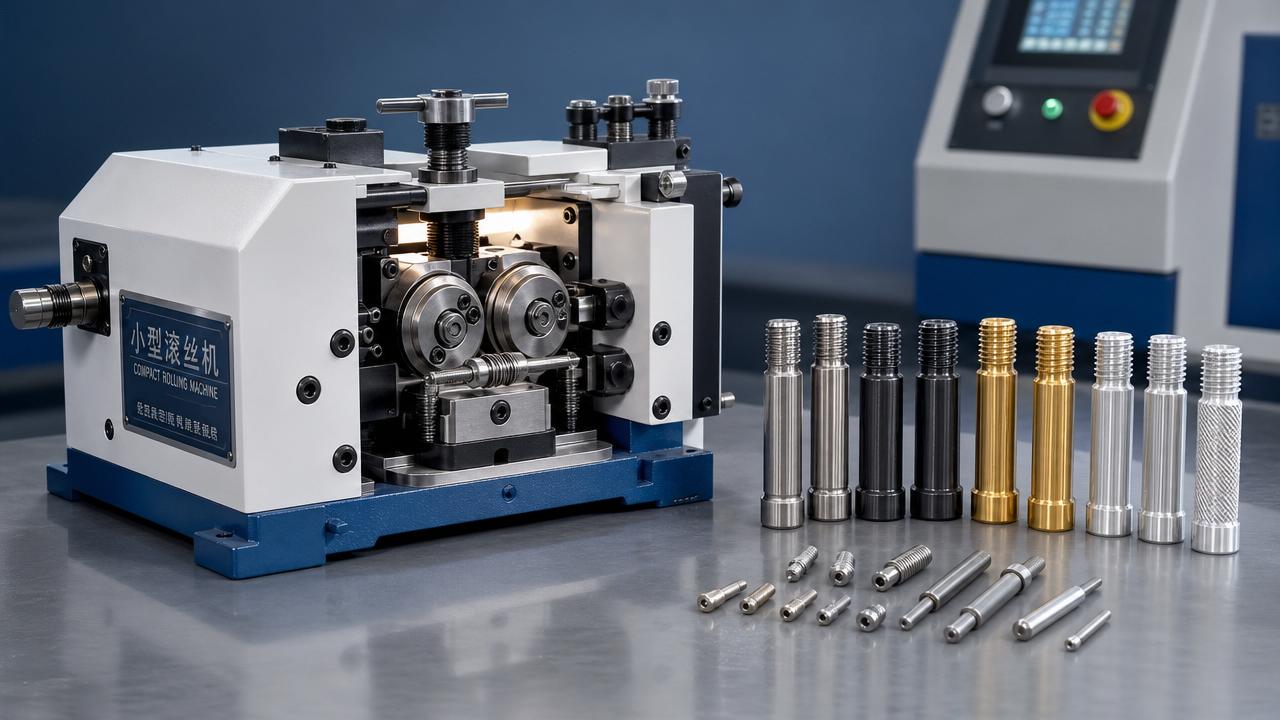
[Image 01: Mini thread rolling machine processing small screws and shafts in a compact production cell]
Wuxi Armada International Trade Co., Ltd has supplied mechanical equipment since 2012, with exports reaching Southeast Asia, Europe, the Americas, and Oceania. That experience helps when matching machine capability to real production conditions.
Small Parts That Usually Run Well
A Mini thread rolling machine works best on compact, repeatable parts with clear dimensional control. The sweet spot is usually small cylindrical workpieces with steady blank quality.
- Small screws and machine screws are common choices. They suit high-repeat jobs, especially when thread quality, appearance, and cycle consistency matter more than aggressive forming speed.
- Short bolts and studs also perform well. As long as the shank is straight and the blank diameter is controlled, thread rolling stays stable and easy to repeat.
- Pins, micro shafts, and stepped shafts are good candidates. They are often used in motors, hinges, connectors, and small transmission assemblies with tight fit requirements.
- Pipe fittings and miniature threaded connectors can work too. The key is checking wall strength, material hardness, and whether the part can resist rolling pressure.
- Special fasteners with short thread sections are practical. This is especially true when the design needs cleaner flanks and stronger threads than cutting can deliver.
If the part is too long, too soft, or poorly centered, the Mini thread rolling machine may create pitch error, thread collapse, or poor straightness. Part geometry matters as much as thread size.
A quick size rule before production
In many workshops, small threads such as metric M2 to M12 are typical for a Mini thread rolling machine, though the final range depends on die design, machine force, and material grade.
It is worth testing one real batch before confirming tooling. Catalog limits look fine on paper, but actual stability depends on blank preparation and lubrication quality.
Materials That Deliver the Most Stable Results
Material selection decides whether a Mini thread rolling machine runs smoothly or turns into a constant adjustment job. Ductility, hardness, and surface condition are the main checkpoints.
- Low and medium carbon steel are usually the safest starting point. They form clean threads, respond well to rolling pressure, and support steady output in volume production.
- Stainless steel can be rolled successfully, but setup is less forgiving. Higher forming resistance means better lubrication, tighter blank tolerance, and stronger die maintenance are necessary.
- Brass and copper alloys work well for small electrical and plumbing parts. They are easier to form, but surface marking must be controlled during die contact.
- Aluminum alloys are possible for lightweight components. Still, softness can create thread deformation if pressure, feed, and support are not carefully balanced.
- Heat-treated or high-hardness materials need extra caution. If hardness is too high for the Mini thread rolling machine, die wear rises quickly and thread quality drops fast.
A common mistake is choosing material only by final product drawing. In practice, rolled-thread performance depends on both alloy and process condition before rolling.
What to verify with stainless steel
Stainless steel parts often need slower trial runs first. Check galling, temperature rise, and whether the thread crest stays full after several continuous pieces.
If die wear shows early, do not increase pressure blindly. First review lubricant type, blank diameter, and surface condition. Those issues cause more trouble than people expect.
How to Judge Fit Before Ordering or Scaling Up
Before selecting a Mini thread rolling machine, focus on a few checks that directly affect output, scrap rate, and maintenance cost.
- Confirm the blank diameter window first. Even slight variation can change thread fill, rolling force, and final pitch stability more than many teams expect.
- Check part straightness and clamping support. Small shafts may bend under load, especially when thread length is long compared with the workpiece diameter.
- Match die profile to real standards and finish requirements. The right die saves far more time than repeated machine adjustment after installation.
- Review lubrication early, not later. In thread rolling, poor lubrication quickly leads to rough flanks, excessive die wear, and unstable forming pressure.
- Estimate batch size honestly. A Mini thread rolling machine is ideal for compact, efficient production, but oversized throughput expectations can create planning errors.
Typical Production Situations and Useful Adjustments
In fastener production, a Mini thread rolling machine is often used after heading or turning. The most useful habit is checking blank consistency before blaming the machine.
For motor shafts or small transmission pins, support rigidity becomes more important. If the part is slim, even a good machine cannot compensate for weak workpiece support.
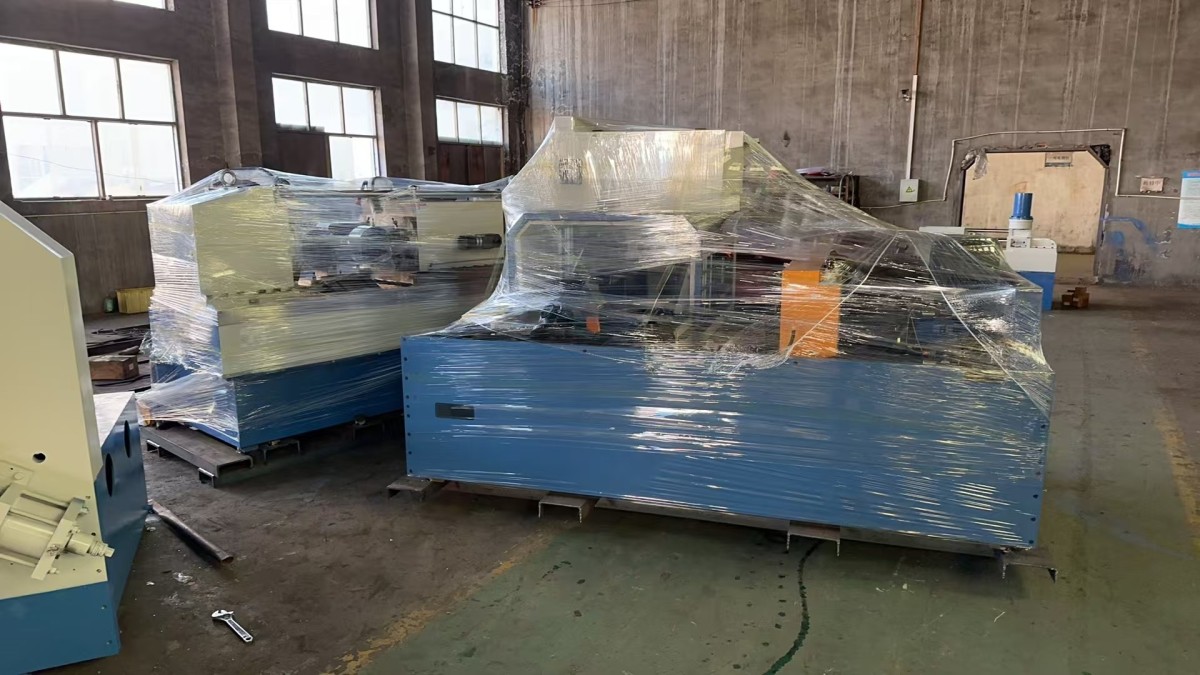
In mixed fabrication plants, thread rolling may sit beside other forming equipment. For example, projects that also require plate forming may use CNC Bending machine with 4 roller for large-scale plate rolling and end pre-bending, while a Mini thread rolling machine handles the smaller threaded components in the same workflow.
That kind of equipment pairing works well when one line produces structural frames, covers, cylinders, or cones, and another line finishes compact fastening parts for assembly.
When surface finish becomes the priority
For visible screws, fittings, or precision connectors, thread appearance matters almost as much as dimension. In that case, lubrication, die cleanliness, and part feeding deserve tighter control.
A rough surface often starts upstream. Burrs, scale, or poor turning marks on the blank can follow directly into the rolled thread.
What Gets Overlooked Most Often
Many problems blamed on a Mini thread rolling machine actually come from preparation, not machine design. These issues are easy to miss during early planning.
- Blank surface quality is often underestimated. Minor burrs, rust, and scale can damage thread finish quickly, even when the machine setting looks correct.
- Tool life planning is frequently too optimistic. Harder materials and long production runs need a realistic die replacement schedule to protect consistency.
- Thread inspection sometimes happens too late. Early in-process checking catches drift before whole batches turn into sorting or rework problems.
- People may ignore adjacent forming needs. If a project includes heavy plate work, equipment such as a four-roll plate bending solution may be needed in parallel.
That last point matters in integrated workshops. A machine like the CNC Bending machine with 4 roller is designed for sheet rolling, cylindrical and conical forming, and thicker plate applications above 50mm, so it solves a very different part of the production chain.
A Simple Way to Make the Final Decision
If the part is small, round, repeatable, and made from a rollable material, a Mini thread rolling machine is usually a strong choice. It is especially effective when thread strength and finish matter.
Start with five checks: part shape, thread size, material hardness, blank tolerance, and daily output target. Those five usually reveal whether the process will be smooth or troublesome.
When production also includes larger formed metal components, it helps to review the whole line instead of one machine in isolation. That is often where cost and scheduling improvements appear.
For practical selection, request sample evaluation with real drawings and materials. That step gives a far better answer than relying on specification sheets alone, especially for a Mini thread rolling machine in mixed-material production.