
— —
Multi Spindle Drilling Machine vs Single Spindle: Output, Accuracy, and Use Cases
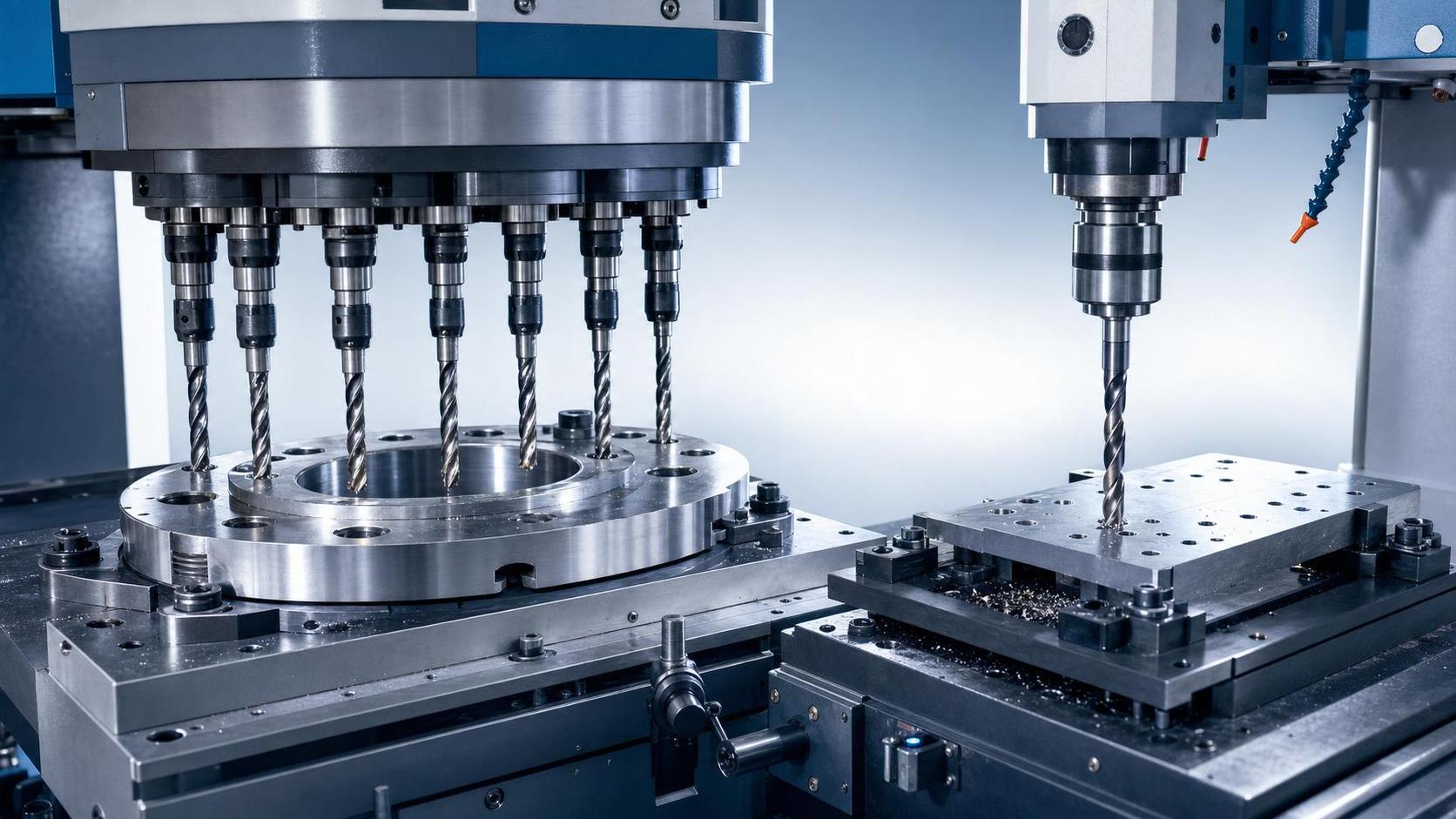
Multi Spindle Drilling Machine vs Single Spindle: Output, Accuracy, and Use Cases
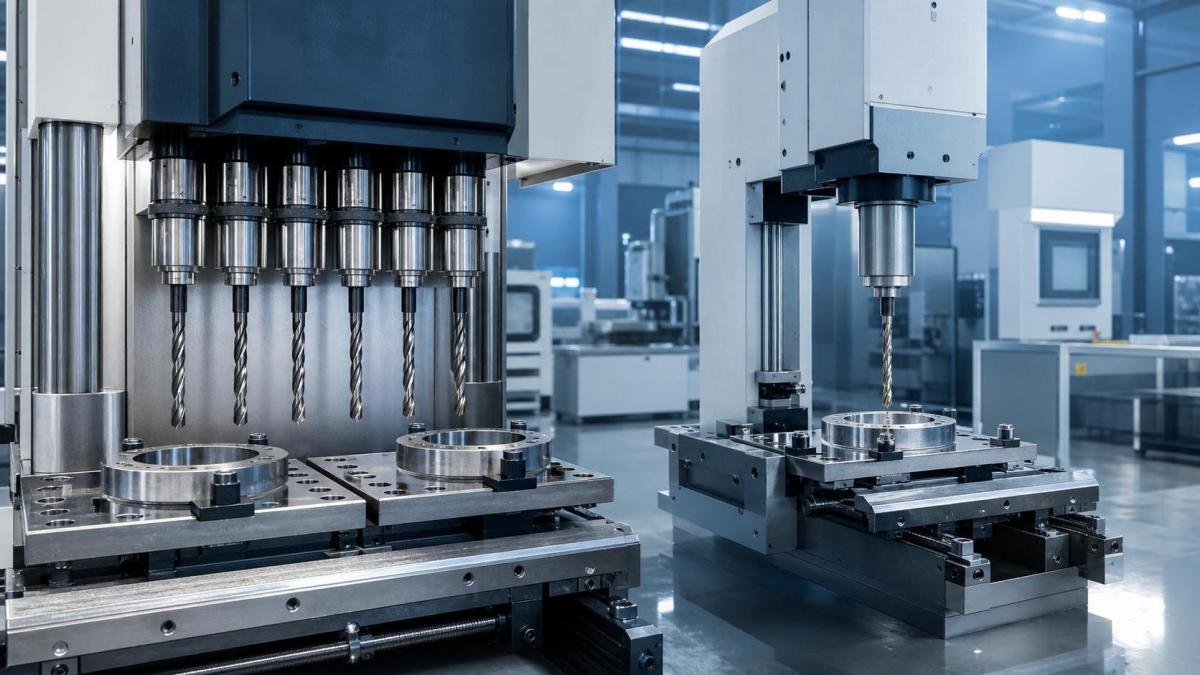
Choosing between a multi spindle drilling machine and a single spindle setup shapes cycle time, hole quality, labor demand, and unit cost.
That decision becomes more important when production volume rises or part tolerances start getting tighter.
A single spindle machine drills one hole at a time.
A multi spindle drilling machine drives several tools together, usually from one powered head or synchronized spindle group.
On paper, the comparison looks simple.
In practice, output gains, accuracy limits, fixture complexity, and changeover time all matter.
The right choice depends on part family stability, hole pattern repeatability, material behavior, and expected production mix.
For machining buyers and process teams, the useful question is not which machine is better overall.
The useful question is which machine delivers the best process economics for a specific drilling task.
How a Multi Spindle Drilling Machine Changes Output
The biggest advantage of a multi spindle drilling machine is throughput.
When four, six, or eight holes are drilled at once, cycle time drops sharply.
That matters most in repetitive work, where the hole pattern rarely changes.
A single spindle machine can still be productive, especially with CNC positioning and fast tool changes.
But it remains a sequential process.
Each hole adds time, even when motion control is optimized.
This is why a multi spindle drilling machine often wins in automotive brackets, flanges, plate components, and fixture plates.
The productivity gain is not only about drilling time.
It also reduces repeated positioning, indexing movement, and operator handling.
- Higher parts per hour for fixed hole patterns
- Lower labor time per component
- Less cumulative positioning delay
- Better cost control in batch and mass production
Still, raw output should not be viewed alone.
If changeovers are frequent, the benefit can narrow quickly.
Accuracy: Where the Comparison Gets More Nuanced
Many assume a single spindle machine is always more accurate.
That is only partly true.
A single spindle machine gives excellent control over individual hole location, feed, and tool condition.
It is easier to fine-tune when part geometry changes or tolerance zones are very tight.
A multi spindle drilling machine, however, can deliver very strong positional consistency between holes in a repeated pattern.
Because the spindles work simultaneously, relative spacing can remain highly stable once the head is properly built and aligned.
The real risk comes from setup rigidity, spindle alignment, tool wear balance, and uneven cutting load.
If one tool wears faster, the whole pattern can drift in quality.
This is especially visible in difficult materials or deep-hole work.
So accuracy is not a simple win for one side.
It depends on whether the process values flexible precision or repeated pattern stability.
Tooling Flexibility, Setup Time, and Maintenance
A single spindle platform is usually easier to program, fixture, and maintain.
That matters in low-volume and mixed-model production.
If part families change weekly, a multi spindle drilling machine can become expensive to keep reconfiguring.
Custom spindle heads, dedicated fixtures, and synchronized tooling all add complexity.
On the other hand, once the process stabilizes, that same dedicated structure becomes a strength.
It cuts variability and supports predictable output.
Maintenance planning also changes.
One spindle is simpler to inspect.
A multi spindle drilling machine needs closer attention to bearing condition, drive synchronization, lubrication, and equal tool performance.
- Choose single spindle when product mix changes often
- Choose multi spindle for stable, repeated drilling layouts
- Review fixture rigidity before promising tolerance capability
- Track spindle wear as a group, not as isolated tools
This is where many investment decisions are won or lost.
High output means little if uptime drops or setup hours rise.
Typical Use Cases for Each Machine Type
A multi spindle drilling machine fits best where the part design is stable and volumes justify dedicated tooling.
Good examples include valve bodies, mounting plates, steel connectors, appliance brackets, and repetitive fabrication parts.
It is also common in transfer lines and semi-automated production cells.
A single spindle solution is more suitable for job shops, prototypes, variable part sizes, and short production runs.
It gives process engineers room to adapt without rebuilding the whole drilling concept.
In broader metalworking lines, drilling is often only one operation in a chain.
That is why equipment compatibility matters.
For example, threaded parts produced after drilling may require high consistency in surface finish and dimensional repeatability.
In those linked processes, supporting machines such as the Z28-500 thread rolling machine help maintain downstream quality.
Its radial cold roll forming process suits carbon steel, alloy steel, and non-ferrous metals used in construction-related components.
With 500KN max rolling pressure, PLC control, automatic feeding, and GB197-63 Grade 2 precision, it supports stable threaded production after drilling operations.
Cost, Risk, and Decision Points Before Purchase
Purchase price alone rarely tells the full story.
A multi spindle drilling machine usually requires higher initial tooling and fixture investment.
But if annual volume is high, the payback can be fast.
A single spindle machine often costs less to launch and less to modify.
That lowers risk when demand forecasts are uncertain.
Before selecting either option, check these points carefully.
- Annual part volume and forecast stability
- Number of holes per part and pattern repeatability
- Tolerance band, burr sensitivity, and material type
- Fixture complexity and changeover frequency
- Maintenance skill level on the shop floor
- Whether later operations depend on exact hole consistency
Suppliers with broad machinery experience can help connect these variables more realistically.
Wuxi Armada International Trade Co., Ltd supplies mechanical equipment for fabrication and machining lines, including CNC machine tools, welding systems, milling machines, lathes, laser cutting machines, deburring solutions, and forming equipment.
Its production and design practices follow ISO9001 quality system requirements and EU CE standards, which is relevant when process reliability and export compliance both matter.
Which Option Makes More Sense?
If the process centers on repeat volume, fixed hole layouts, and aggressive cycle-time targets, a multi spindle drilling machine is often the stronger choice.
If the work requires flexibility, varied parts, or frequent engineering changes, single spindle equipment is usually the better fit.
The most reliable decision comes from mapping part mix, tolerance demand, tooling cost, and downstream process needs together.
That approach turns the multi spindle drilling machine comparison into a practical investment case rather than a basic machine feature check.
In real production, the best drilling choice is the one that keeps output high, quality stable, and future adjustments manageable.
Review the hole pattern, run a cycle-time estimate, and test fixture assumptions early. That usually reveals the right path faster than headline specifications.