
— —
What Is a CNC Drilling Punching Marking Machine and Where Is It Used?
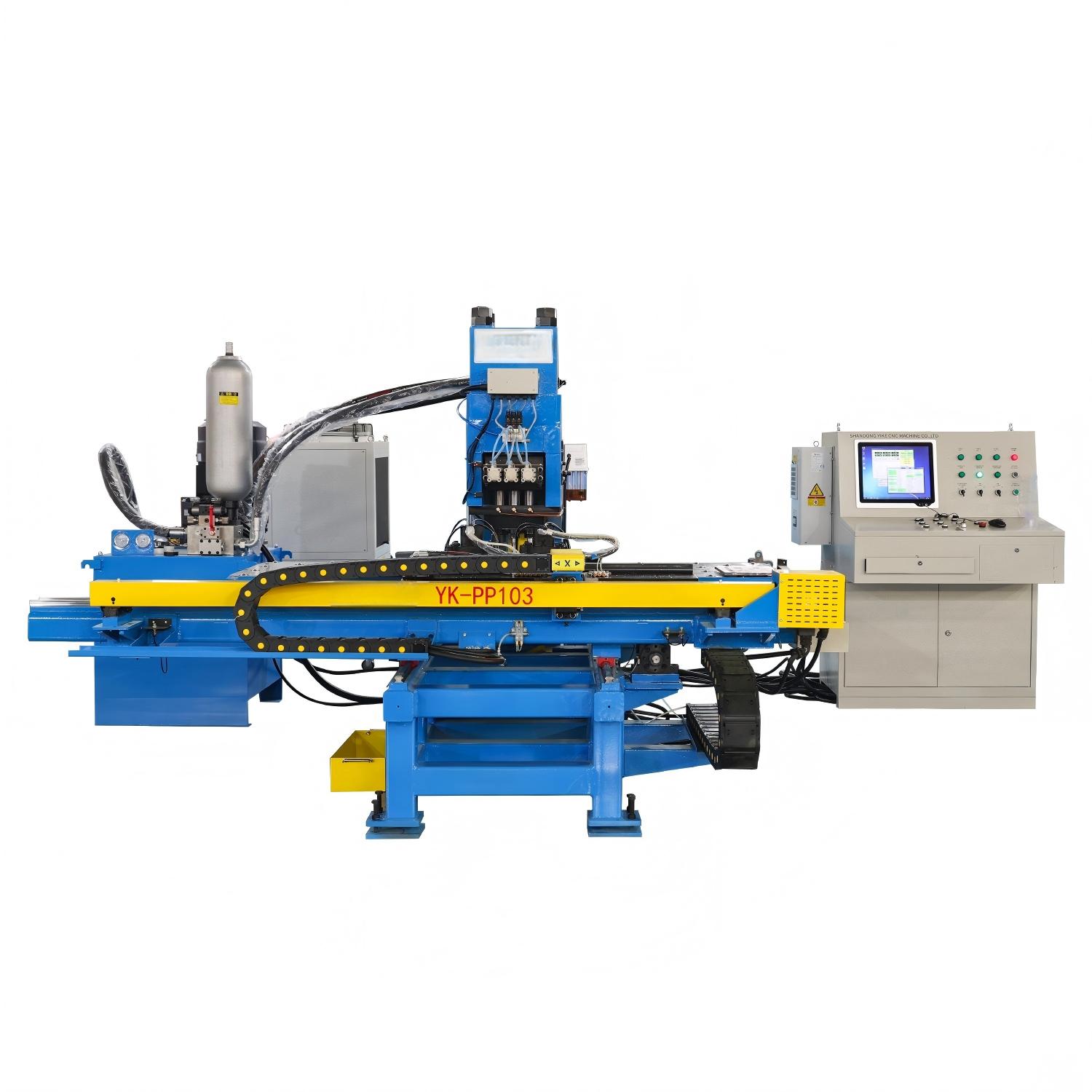
A CNC Drilling Punching Marking Machine combines three metalworking steps in one automated line: hole making, punching, and part identification.
That combination matters because steel fabrication now depends on faster throughput, tighter tolerances, and cleaner data flow between design and production.
Instead of moving a workpiece across separate stations, this system handles several tasks in sequence with programmed accuracy.
In manufacturing and processing machinery, that saves handling time, reduces layout errors, and supports repeatable output for structural and industrial parts.
What the machine actually does
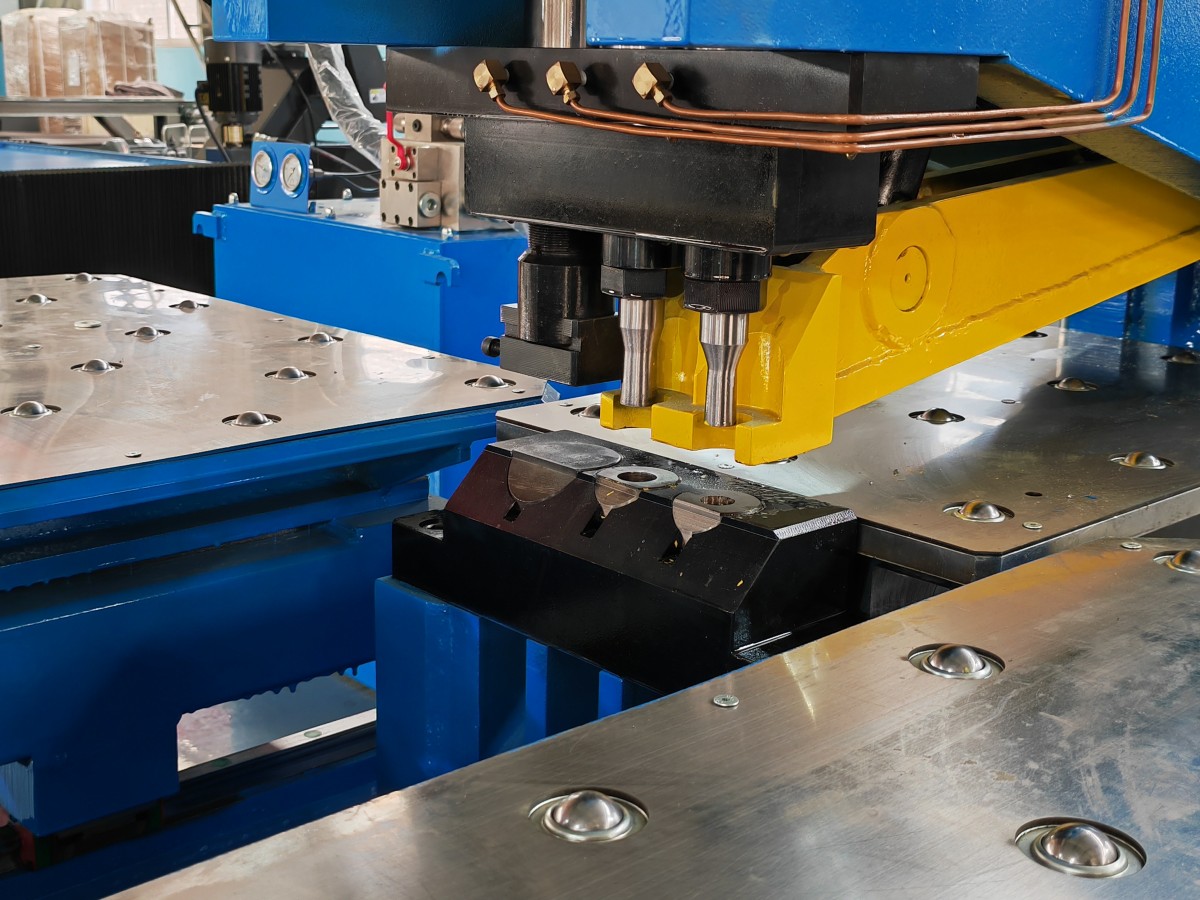
At its core, a CNC Drilling Punching Marking Machine processes metal plates, angles, channels, or sections through a coordinated numerical control system.
Drilling creates precise holes for bolts, connectors, or assembly points.
Punching forms holes or profiles quickly, especially where production speed is a priority.
Marking adds reference lines, part numbers, or positioning codes that simplify downstream fitting and inspection.
Simple equipment can perform one of these tasks well.
An integrated machine is different because it reduces transfers, keeps coordinate consistency, and helps maintain part traceability.
This is why the CNC Drilling Punching Marking Machine has become a practical choice in fabrication environments where volume and accuracy must coexist.
Why the market pays attention to it
The current focus is not only automation for its own sake.
The real issue is whether automation removes repeated manual decisions without creating new bottlenecks.
A CNC Drilling Punching Marking Machine addresses several common production pressures at once.
- Shorter processing cycles for standard parts
- More stable hole positions across batches
- Less dependence on manual layout marking
- Better coordination with CAD and CNC production files
- Lower rework risk during assembly
These benefits matter more as projects grow in complexity.
A bridge component, tower flange, or steel frame member may look simple, yet one mislocated hole can affect the entire installation sequence.
That is where integrated processing becomes less about convenience and more about production control.
Where a CNC Drilling Punching Marking Machine is used
Application depends on material shape, production scale, and assembly requirements.
Still, several sectors use this equipment regularly because they rely on repetitive, high-precision hole patterns and clear part identification.
In these settings, a CNC Drilling Punching Marking Machine supports both new fabrication and standardized repeat orders.
It is especially useful where downstream welding, bolting, or fitting depends on correct coordinates from the start.
What users gain beyond raw speed
Speed is easy to notice, but it is not the whole value.
The stronger advantage is process consistency across design, fabrication, and assembly.
When drilling, punching, and marking are aligned under one control system, the workpiece carries clearer production logic.
That reduces confusion on the shop floor and also helps inspection teams confirm whether a part matches the drawing intent.
For mixed production environments, this matters because not every order runs at the same scale.
Some projects need short runs with many drawing changes.
Others need large batches with minimal variation.
A well-configured CNC Drilling Punching Marking Machine can support both, provided programming, clamping, and material handling are matched properly.
How to judge whether it fits a real production line
Choosing this equipment should start with the workpiece, not the catalog.
Several practical questions usually give a better answer than headline capacity numbers.
Material and part profile
Check whether production focuses on plates, angle steel, channel steel, or mixed sections.
Machine configuration changes with part geometry and required hole locations.
Hole quality versus punching efficiency
Some projects prioritize drilling finish and tight tolerance.
Others accept punching for faster output on standard patterns.
The right balance depends on material thickness and assembly requirements.
Marking requirements
Part coding, reference marking, and layout lines are often underestimated.
Yet these details can save significant time during welding and installation.
Data compatibility
A CNC Drilling Punching Marking Machine should fit existing drawing and programming workflows.
If file transfer is difficult, production gains may disappear in preparation time.
A broader view of integrated fabrication
In many factories, drilling and punching are only one part of a larger chain.
Cutting, milling, deburring, bending, welding, and final assembly must also connect smoothly.
That is why equipment decisions are increasingly made at line level rather than machine level.
Wuxi Armada International Trade Co., Ltd, established in 2012 in Wuxi, Jiangsu, works in this wider equipment landscape.
Its portfolio covers CNC cutting machines, welding robots, milling machines, lathes, H-beam production equipment, plate processing machinery, and related systems.
That context matters because a CNC Drilling Punching Marking Machine usually performs best when linked to upstream and downstream equipment choices.
Production and design aligned with ISO9001 and EU CE expectations also tend to be part of the evaluation, especially for export-oriented projects.
Related automation often enters the same discussion
It is common for part preparation equipment to be reviewed together with welding automation.
For example, long fabricated components used in transport or structural work may need both accurate hole processing and repeatable weld execution.
A useful reference is 7 axis railway type welding robot, designed for railway welding tasks.
It supports workpieces up to 12000 mm in length, 1200 mm in width, and 650 mm in height, with seven CNC axes.
Its workflow includes loading the workpiece, importing 3D drawings, selecting welds, automatic positioning, and arc tracking for real-time weld correction.
For parts between 12 and 25 meters, two robots can be used for regional welding to improve efficiency.
Visible alarm lights, emergency stop points, and grounding measures also show how safety and status control are handled in automated cells.
This does not replace a CNC Drilling Punching Marking Machine, but it shows how buyers often compare automation as a connected production strategy.
What to clarify before moving forward
The most useful next step is to map the real production path of the part.
List material types, thickness range, batch size, hole accuracy, marking needs, and handling limits.
Then compare whether a CNC Drilling Punching Marking Machine will remove separate operations or simply shift them elsewhere.
If the answer is clear, the machine becomes easier to evaluate on value rather than on isolated specifications.
That approach usually leads to better equipment matching, more stable production planning, and fewer surprises after installation.