
— —
Thread Rolling Die Selection Guide: Material, Pitch, Hardness, and Die Life
Why die selection matters in thread rolling
Thread quality is rarely determined by machine power alone.
In most production lines, the Thread rolling die decides whether forming stays stable, repeatable, and economical over time.
A poor match can lead to flank damage, pitch error, early cracking, or unstable surface finish.
A correct match supports thread accuracy, longer die life, lower scrap, and smoother cycle planning.
This matters even more in manufacturing environments handling standard fasteners, anchor bolts, shafts, and larger-pitch workpieces.
For companies working across global markets, consistency is not just a quality issue.
It affects delivery reliability, maintenance intervals, and total production cost.
Wuxi Armada International Trade Co., Ltd has focused on mechanical equipment since 2012.
Its product range covers thread rolling machines and other metalworking systems supplied to multiple overseas regions.
That background makes die selection a practical issue, not a theoretical one.
The core relationship between die and formed thread
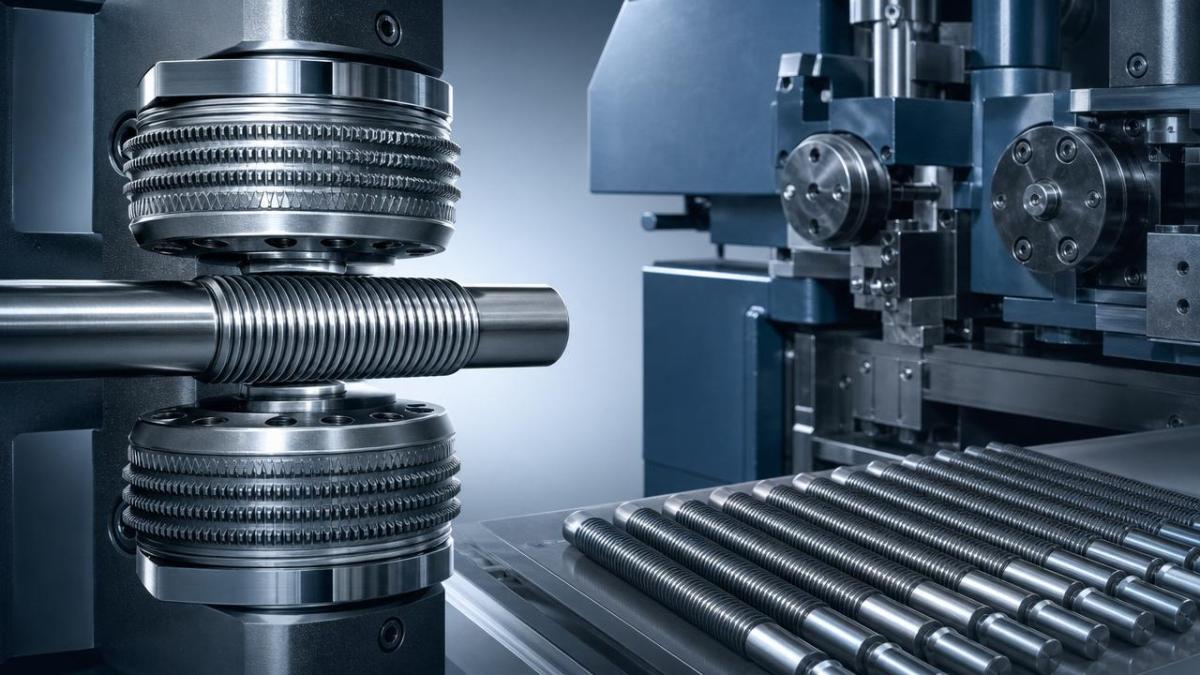
A Thread rolling die forms the thread by plastic deformation rather than cutting.
Material flow is compressed into shape, so the die must control geometry under repeated pressure.
That is why selection cannot be based on size alone.
The die profile, substrate, heat treatment, and surface condition all influence the final result.
In actual use, four questions usually drive the decision:
- What material is being rolled?
- What pitch and thread form are required?
- What hardness balance is needed between wear resistance and toughness?
- How long should the die remain stable before regrinding or replacement?
When these factors are reviewed together, the Thread rolling die becomes easier to evaluate in a realistic way.
Material choice shapes wear behavior
Die material must resist wear, pressure fatigue, and edge collapse.
At the same time, it cannot be so brittle that it chips during setup variation or overload.
High-speed steel remains common because it offers a practical mix of toughness and hardness.
Powder metallurgy grades are often preferred where higher wear resistance and dimensional stability are required.
Carbide can perform well in selected cases, but impact sensitivity must be considered carefully.
Workpiece material changes the recommendation.
Carbon steel may allow a broader die range.
Alloy steel often demands better wear resistance and stronger process control.
Non-ferrous metals may reduce wear, but adhesion and galling can become the main problem.
Simple material matching avoids two common errors.
- Selecting an overly hard die for unstable conditions
- Selecting a tough but low-wear die for abrasive, high-volume jobs
The best choice is usually the one that keeps form accuracy through the planned batch size.
Pitch compatibility is more than a dimensional check
Pitch affects contact conditions, forming load, and material flow behavior.
A Thread rolling die designed for one pitch family may perform poorly outside that intended range.
Larger pitch threads generally create higher local stress and require greater forming force.
Fine pitch threads tend to demand tighter control over alignment and die profile sharpness.
In practice, pitch review should include more than nominal thread data.
This is why pitch compatibility should be reviewed together with machine capability.
For example, Z28-1000 thread rolling machine is suited to precision external thread rolling, larger screw pitch workpieces, and high-strength standard parts.
Its radial feed range of Φ6-110mm, axial feed range of Φ6-80mm, and pitch range of Φ1-12mm provide a useful framework for matching dies to process limits.
Hardness must be balanced, not maximized
Hardness is often treated as a direct indicator of die quality.
That view is incomplete.
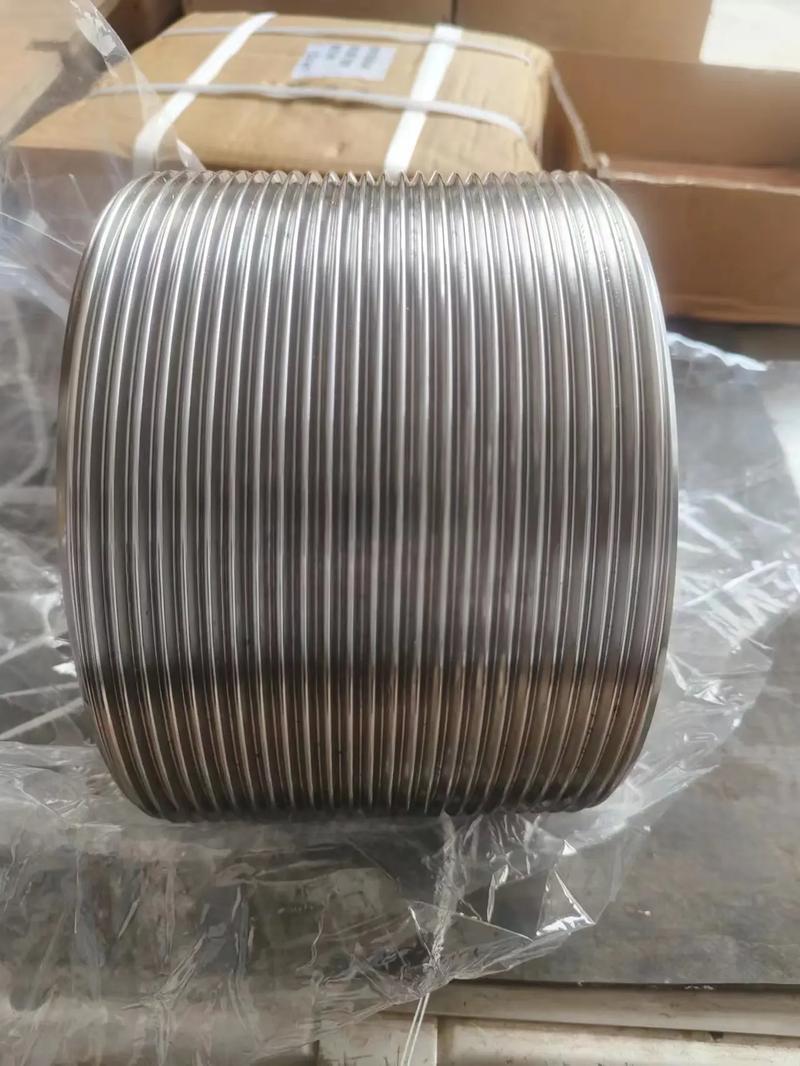
A harder Thread rolling die may resist abrasive wear better, but it can also become more vulnerable to cracking.
A softer die may survive shock, yet lose thread form too quickly.
The right target depends on workpiece hardness, lubrication quality, production speed, and die cross section.
Heat treatment consistency matters as much as the nominal hardness value.
Uneven hardness across the die can create localized wear and unstable thread geometry.
Surface treatment may also improve performance.
Coatings can reduce friction and delay adhesion, especially in demanding alloy or non-ferrous applications.
Still, coatings do not correct poor die design or incorrect base hardness.
Common failure signals linked to hardness
- Micro-chipping near thread crests suggests excessive brittleness
- Rapid flank wear suggests inadequate hardness or poor lubrication
- Surface pickup suggests friction issues or coating mismatch
- Profile rounding suggests loss of form under repeated load
Die life should be measured against process stability
Die life is not only the number of parts produced before replacement.
It is the usable period during which thread quality remains within target.
This distinction matters because some dies keep running after quality has already drifted.
A realistic die life review should include several variables.
- Actual parts per sharpening cycle
- Thread gauge pass rate over time
- Setup sensitivity after die change
- Scrap generated near wear limit
- Downtime related to cleaning, alignment, or replacement
In many plants, the lowest-cost die is not the lowest-cost solution.
If replacement frequency is high, production interruptions offset the initial savings quickly.
This is especially relevant where automation, automatic feeding, or continuous schedules are involved.
A rigid machine structure, stable feed control, and consistent cooling help the Thread rolling die achieve its expected service life.
Matching die selection to machine and application
Die performance depends on the full forming system.
That includes machine rigidity, feed mode, roller diameter, lubrication, cooling, and operator consistency.
For high-load applications, machine reserve capacity becomes important.
A system with 500KN maximum rolling pressure and roller diameter of Φ190-240mm is better positioned for demanding external thread jobs than a lightly built platform.
When parts include anchor bolts, T-shaped screws, or long workpieces, unlimited length capability and strong structural rigidity reduce process variation.
Manual, semi-automatic, and automatic modes also change the evaluation.
A Thread rolling die that performs well in short-batch manual operation may behave differently under PLC-controlled, automatic feeding conditions.
That is why equipment and tooling should be reviewed together instead of separately.
In this context, the second review of the Z28-1000 model is useful only as a process example.
Its radial cold roll forming approach, non-chip processing, and human-machine interface support stable evaluation when thread quality, automation, and material savings are all priorities.
A practical evaluation framework
A useful selection process starts with the part, then checks the die, then confirms machine compatibility.
The order matters because it prevents overreliance on catalog values.
Questions worth confirming before approval
- What are the workpiece material grade and hardness range?
- Is the thread standard coarse, fine, special, or custom?
- What batch size defines acceptable die life?
- Which failure mode causes the most cost today?
- Does the machine have enough pressure, rigidity, and cooling stability?
- Can regrinding or replacement be handled without disrupting the line?
When these answers are documented, Thread rolling die selection becomes easier to compare across suppliers and process routes.
It also creates a clearer basis for trial planning and acceptance criteria.
Where to focus next
The most reliable decisions usually come from connecting die data with production reality.
Material, pitch, hardness, and die life should be reviewed as one system, not four isolated parameters.
For ongoing projects, it helps to compare current thread defects, machine limits, and maintenance records before changing die specifications.
For new projects, establishing blank diameter rules, die wear checkpoints, and machine capability boundaries will reduce trial time.
A well-chosen Thread rolling die supports precision, longer service intervals, and more predictable output.
The next useful step is to align part drawings, material data, and rolling equipment parameters, then verify whether the proposed die can hold quality through the full production target.