
— —
What Affects Yield Gains from CNC Shearing Machines?
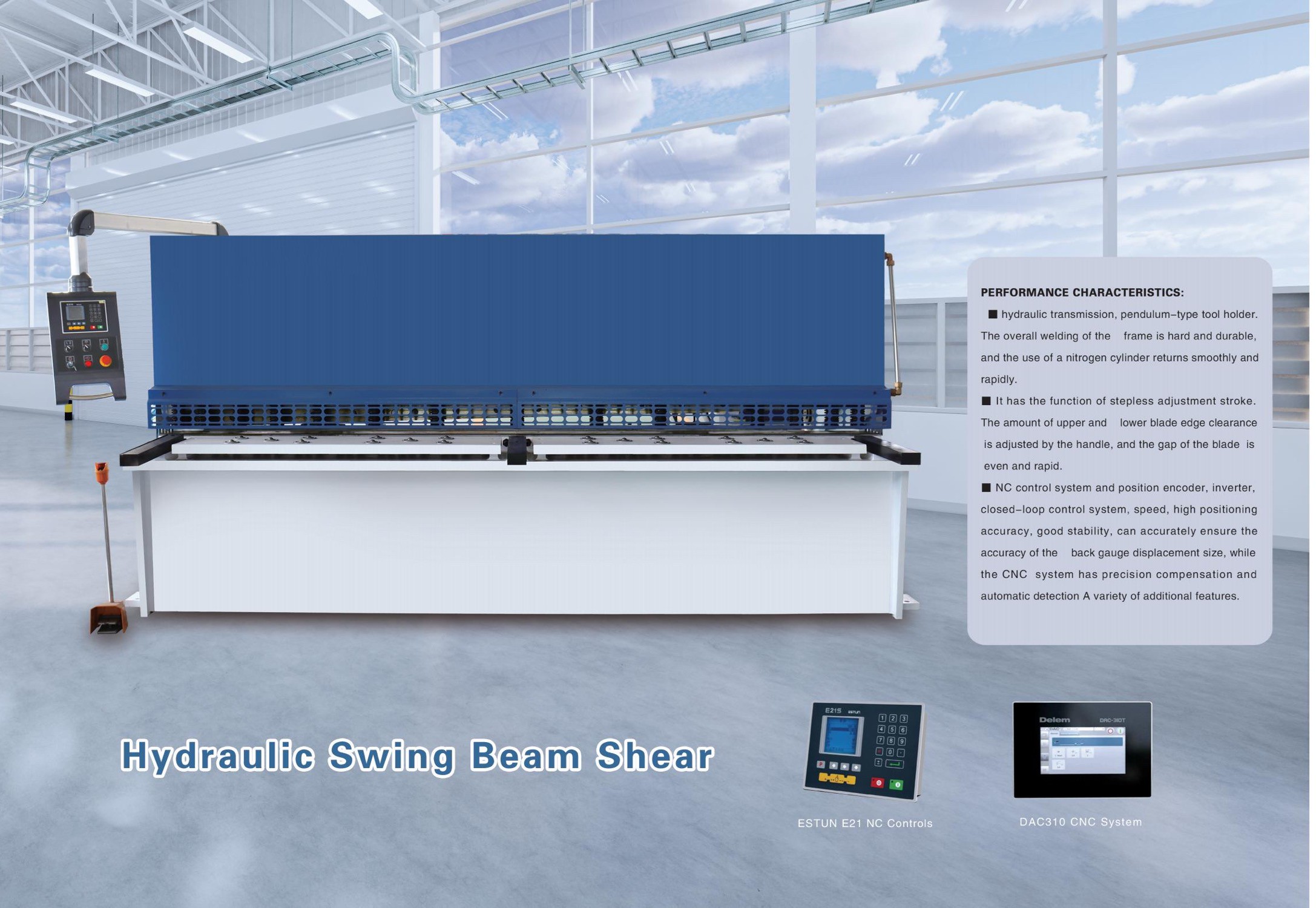
For sheet metal manufacturers seeking higher efficiency and lower material waste, a CNC shearing machine can make a measurable difference. But exactly how much can a CNC shearing machine improve sheet metal yield rate? And how does hydraulic guillotine shearing machine price 2026 relate to long-term production value? Understanding the key factors behind yield gains helps buyers choose equipment that delivers both precision and better returns.
How Much Yield Improvement Can a CNC Shearing Machine Realistically Deliver?
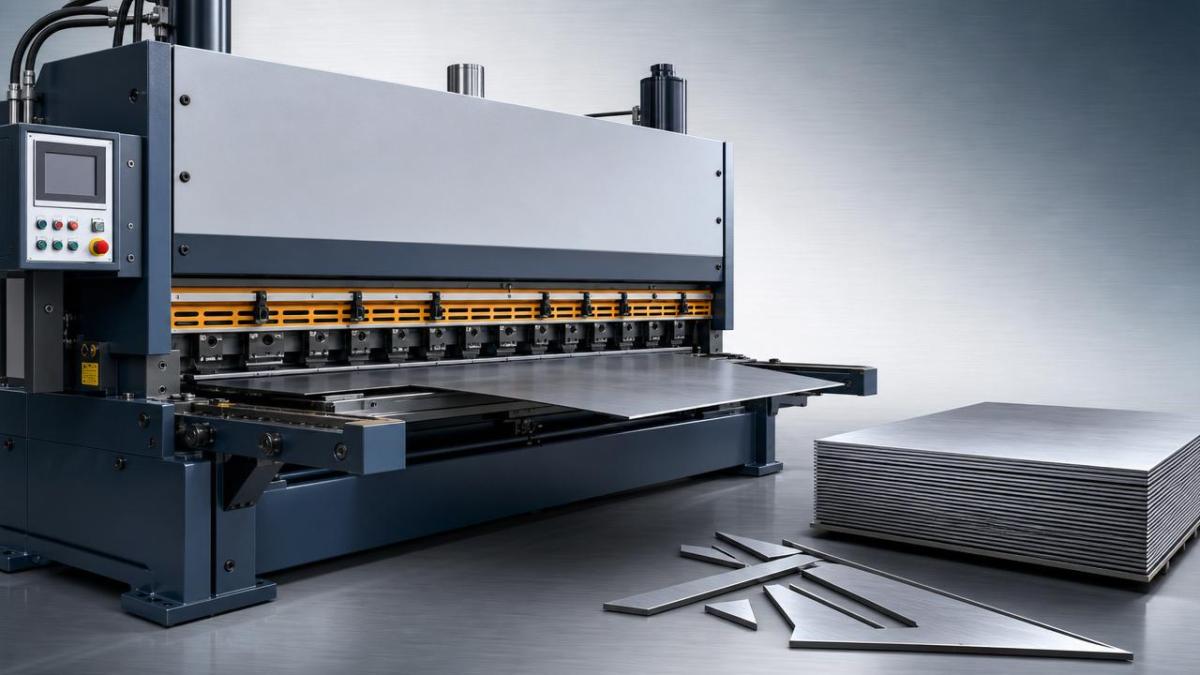
The core search intent behind this topic is practical and commercial. Buyers do not want abstract explanations. They want to know whether a CNC shearing machine will reduce waste enough to justify the investment.
In most sheet metal operations, yield improvement from a CNC shearing machine is not a fixed number. It depends on material type, cutting accuracy, batch size, operator consistency, and how much waste exists today.
For many manufacturers, a realistic yield gain ranges from 3% to 12%. In operations with poor manual positioning, frequent rework, or inconsistent cut lengths, the improvement can be even higher.
If a factory already has disciplined workflow and skilled operators using well-maintained conventional machines, the gain may be closer to the lower end. Even then, stable repeatability often creates value beyond material savings alone.
The most important point is this: yield gains come from system control, not only blade motion. CNC shearing improves the whole cutting process by reducing dimensional error, setup variation, and avoidable scrap.
What Decision-Makers Care About Before Buying
Most target readers for this topic are factory owners, production managers, purchasing managers, and technical decision-makers. Their first concern is not only machine capability. It is return on investment under real production conditions.
They usually ask a few direct questions. How much material can be saved each month? How quickly will the machine pay back? Will precision remain stable across shifts? Is the machine suitable for current orders?
They also care about the relationship between machine price and operating value. A low purchase cost can become expensive if the machine creates downtime, inconsistent cuts, high maintenance, or training difficulties.
That is why searches related to hydraulic guillotine shearing machine price 2026 are often not just about budget. They reflect a deeper need to compare upfront cost with long-term productivity and waste reduction.
For this audience, the most helpful content is specific. They want benchmarks, variables, calculation methods, equipment selection advice, and a realistic explanation of where yield gains actually come from.
Why CNC Control Improves Sheet Metal Yield Rate
Yield rate improves when more purchased material becomes sellable parts. In shearing operations, waste usually comes from wrong dimensions, poor sequencing, repeated trimming, edge defects, and operator inconsistency.
A CNC shearing machine addresses these problems through programmable backgauge control, accurate cut positioning, repeatable stroke settings, and reduced dependence on manual measurement for every sheet or batch.
When operators manually position plates, small errors accumulate. A few millimeters lost on every cut may not seem serious, but over hundreds of sheets, the waste becomes expensive and measurable.
With CNC control, the machine repeats the same dimensions more consistently. That consistency helps manufacturers nest cutting plans better, reduce offcuts, and turn more raw sheet area into usable components.
Another advantage is reduced trial cutting. In manual production, operators often test, measure, adjust, and cut again. CNC programming shortens this process, which reduces scrap generated during setup and changeovers.
Key Factors That Affect Yield Gains from CNC Shearing Machines
The machine alone does not determine the result. Yield gains depend on several production variables, and buyers should evaluate them before expecting a specific improvement percentage.
1. Existing process maturity. A plant upgrading from manual or semi-manual shearing often sees larger gains than a plant replacing a newer machine with similar automation features.
2. Material mix. Stainless steel, carbon steel, aluminum, and coated sheets behave differently during cutting. Material value also matters, because high-cost sheets make small waste reductions financially more meaningful.
3. Tolerance requirements. If customers demand strict dimensional consistency, CNC shearing creates stronger yield protection by reducing rejected parts and downstream fit-up problems.
4. Batch size and repetition. Repetitive production benefits more from programmable accuracy. The more often a job repeats, the more value comes from stored parameters and stable backgauge positioning.
5. Blade condition and machine rigidity. Even a CNC system cannot compensate for poor blade sharpness, weak frame structure, or unstable hydraulic performance. Mechanical quality directly affects usable results.
6. Operator training. Good programming and setup discipline are essential. A capable machine used incorrectly may still produce scrap, especially when sequence planning and material handling are weak.
Where the Biggest Yield Losses Usually Happen
Understanding waste sources helps buyers estimate potential savings more accurately. In many workshops, the biggest losses do not come from dramatic machine failure. They come from small, repeated inefficiencies.
One common problem is over-trimming. Operators leave extra allowance because they are unsure about positioning accuracy. That safety margin protects against mistakes, but it consumes material every day.
Another issue is dimensional drift across long batches. The first few parts may be acceptable, but later pieces go out of tolerance because manual stops shift or measurements are not repeated consistently.
Edge quality can also influence yield. If burrs, deformation, or cut-angle inconsistency make parts unsuitable for welding, bending, or assembly, those sheets effectively become hidden scrap.
Material handling matters as well. Poor support, sheet slipping, and inaccurate referencing before cutting can damage productivity. CNC control works best when combined with proper feeding, alignment, and maintenance practices.
How to Estimate the Real Financial Value of Better Yield
Many buyers search “How much can CNC shearing machine improve sheet metal yield rate?” because they need a business case, not just a technical answer. The best approach is to estimate savings from current production data.
Start with monthly material consumption, average sheet cost, current scrap rate, and actual rejected-part losses. Then compare that baseline with a realistic projected reduction in scrap after CNC adoption.
For example, if a factory consumes $120,000 of sheet metal per month and reduces waste by 5%, the gross material value protected is $6,000 per month. That number can be even higher with costly alloys.
Then add labor efficiency, lower rework, faster setup, and reduced customer complaints from dimensional inconsistency. These indirect gains are often large enough to shorten payback more than expected.
However, the estimate should remain conservative. It is better to model 3% to 5% improvement first, then treat higher gains as upside rather than building the investment decision on optimistic assumptions.
How Hydraulic Guillotine Design Influences Yield and Value
Hydraulic guillotine shearing machines remain a popular choice because they combine strong cutting force, broad application range, and reliable operation for many plate-processing environments.
From a yield perspective, machine frame stability, blade gap adjustment, hold-down consistency, and backgauge accuracy are more important than basic tonnage alone. These features affect cut quality and repeatability every day.
A well-designed hydraulic guillotine machine supports stable cutting on different sheet thicknesses without introducing excessive deformation. That helps preserve part quality and reduces the chance of losing usable material.
In addition, dependable hydraulic systems reduce performance fluctuation between shifts and workloads. Stability matters because yield improvement depends on repeatable output, not occasional peak precision during demonstration runs.
Buyers comparing hydraulic guillotine shearing machine price 2026 should therefore look beyond list price. Structure, controller quality, hydraulic reliability, safety design, and after-sales support all influence real production value.
What Shapes Hydraulic Guillotine Shearing Machine Price 2026
Price in 2026 will likely vary according to cutting thickness, cutting length, CNC configuration, brand positioning, automation level, electrical components, and origin of core parts.
Machines with advanced controllers, automatic blade gap adjustment, servo-driven backgauge systems, and stronger safety integration will normally cost more than basic hydraulic versions. That difference may be justified in high-volume production.
Export compliance also affects price. Equipment built to ISO9001-managed production standards and EU CE requirements may carry a higher cost, but it often offers better quality assurance and documentation.
Shipping, installation, voltage customization, optional front support systems, and tooling packages can also change the final quotation. Buyers should compare complete delivered value, not only ex-factory numbers.
For international customers, supplier capability matters as much as the machine itself. A manufacturer or exporter with broader experience in cutting, welding, and metalworking equipment usually provides more practical guidance during selection.
When a Higher-Priced Machine Is Actually the Better Deal
Many companies focus heavily on purchase price because shearing equipment is capital expenditure. But the cheapest machine does not always offer the lowest production cost over its service life.
If a slightly more expensive machine delivers tighter repeatability, easier setup, lower failure risk, and better material utilization, the total return can be stronger within a relatively short payback period.
This is especially true for manufacturers processing expensive materials, serving customers with tight tolerances, or running repeated orders where cumulative waste becomes significant over time.
A low-cost machine may still be appropriate for lighter duty, simpler product ranges, or low-volume operations. The right choice depends on the factory’s order structure and production discipline.
The key is to evaluate cost per useful output, not cost per machine alone. Yield, uptime, labor efficiency, and service support together determine whether the investment is genuinely economical.
Questions Buyers Should Ask Before Choosing a CNC Shearing Machine
To make a sound decision, buyers should ask suppliers practical questions linked to actual production needs rather than relying only on catalogs or headline specifications.
Ask what cutting accuracy can be maintained in continuous production, not just under ideal test conditions. Ask how the backgauge performs across different sheet sizes and whether repeatability data is available.
Request information about blade life, hydraulic component brands, controller interface, spare parts availability, and remote or local technical support. These factors influence long-term operating stability.
It is also wise to share your typical material thickness, sheet width, batch size, tolerance requirements, and monthly throughput. A good supplier should recommend configuration based on those details.
If possible, ask for sample calculations on yield improvement using your own production pattern. That discussion is often more useful than a generic claim about productivity gains.
Best Practices to Maximize Yield After Installation
Buying a CNC shearing machine is only the first step. To capture the full yield benefit, factories need disciplined use, maintenance, and workflow coordination.
Standardize cutting programs for recurring jobs so operators do not re-enter dimensions manually. This reduces avoidable input mistakes and improves consistency across shifts.
Maintain blade sharpness and correct clearance settings for each material category. Even a high-quality machine will lose yield performance if the cutting condition is not properly managed.
Train operators not only on machine operation, but also on sequence planning, material referencing, and inspection points. Good habits protect yield more effectively than relying on hardware alone.
Finally, measure results. Track scrap rate, rework, setup time, and dimensional rejection before and after installation. Without baseline and follow-up data, improvement remains an assumption rather than a proven gain.
Who Benefits Most from CNC Shearing Investment?
CNC shearing creates the greatest value for sheet metal processors that handle medium to high volumes, repeat orders, strict tolerances, or costly raw materials.
Fabricators serving construction steel, electrical cabinets, machinery parts, agricultural equipment, automotive support industries, and export manufacturing often benefit from improved consistency and material utilization.
Companies operating integrated production lines also gain more. When shearing feeds bending, welding, rolling, or machining processes, better cut accuracy helps reduce downstream delays and assembly issues.
For businesses aiming to improve competitiveness, yield improvement is not only about saving material. It also supports faster delivery, more stable quality, and better control of production cost.
That makes CNC shearing a strategic upgrade rather than just a replacement purchase, especially in markets where customers expect both precision and responsive lead times.
Conclusion
A CNC shearing machine can improve sheet metal yield rate in a meaningful and measurable way, but the result depends on process conditions, machine quality, operator discipline, and application fit.
For many manufacturers, realistic yield gains fall between 3% and 12%, with additional value coming from lower rework, better repeatability, and more efficient production planning.
When evaluating hydraulic guillotine shearing machine price 2026, buyers should look beyond the initial quotation and focus on total production value over time. A machine that cuts more accurately and consistently often pays back faster than expected.
The best buying decision comes from matching technical configuration to real factory needs. When that match is right, CNC shearing becomes a practical tool for reducing waste, protecting margins, and strengthening overall manufacturing performance.