
— —
What Is a CNC Drilling Machine and When Is It Better Than Manual Drilling?
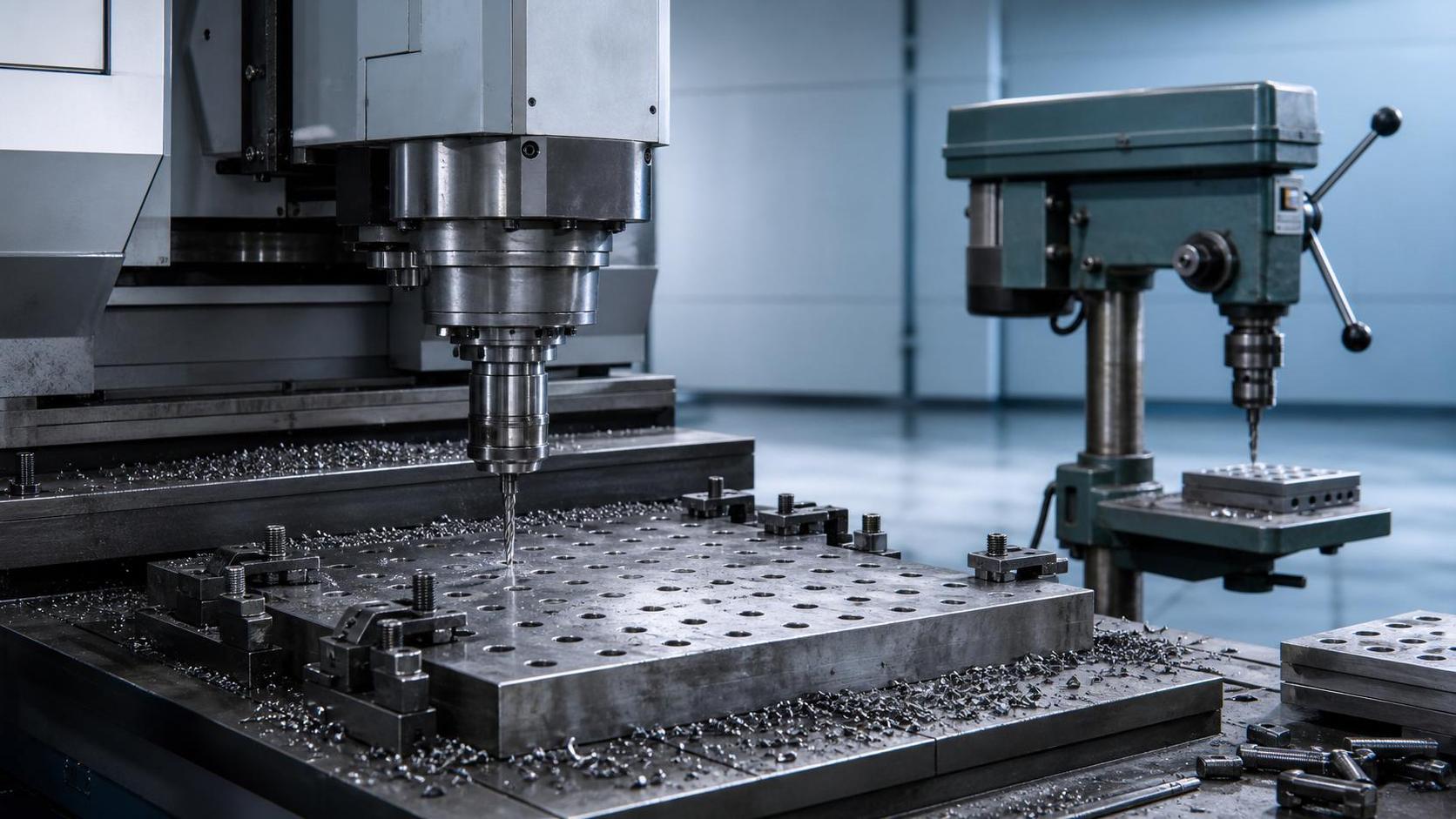
Why does a CNC drilling machine matter in modern fabrication?
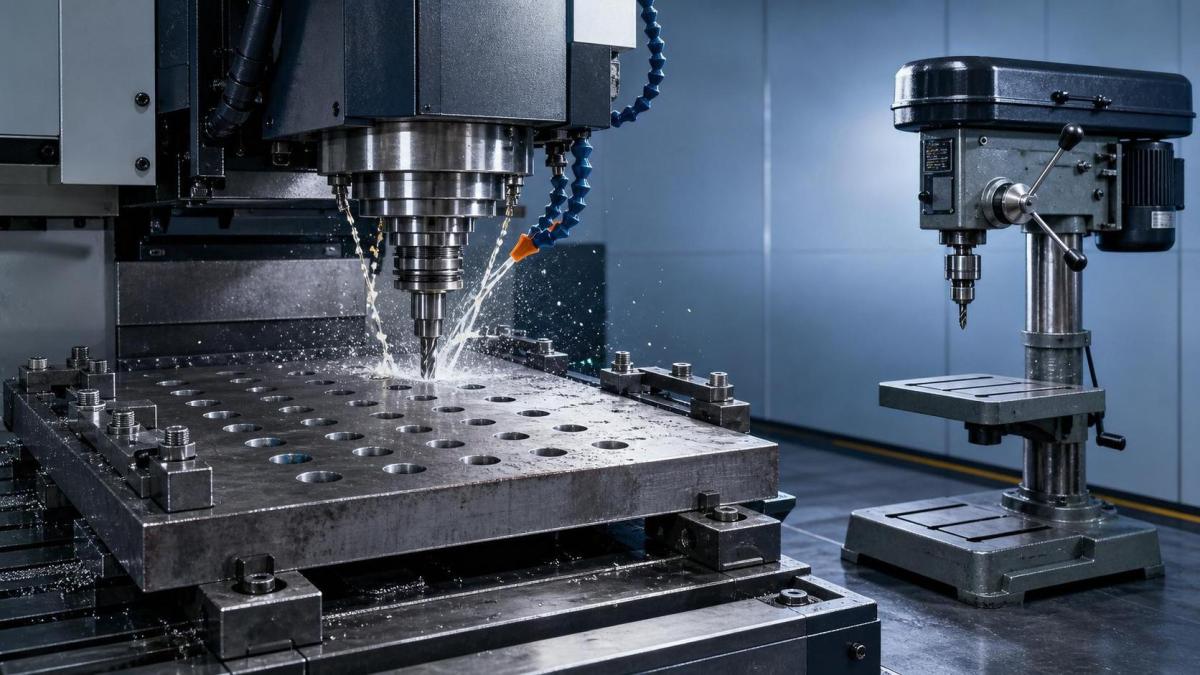
A CNC drilling machine automates hole making through programmed movement, fixed coordinates, and controlled spindle action.
In simple terms, it helps produce holes faster, with tighter positioning, and with far less variation between parts.
That matters in metal fabrication, machine building, structural work, and precision component production.
Manual drilling still has value, especially for repair work, one-off jobs, and simple bench tasks.
The real question is not whether CNC is newer.
The better question is when a CNC drilling machine creates measurable advantages in accuracy, cycle time, and process stability.
In actual workshops, that decision usually depends on part volume, tolerance demands, material thickness, and how often the same pattern repeats.
Companies with broad machinery portfolios often see this clearly across product lines.
Wuxi Armada International Trade Co., Ltd, established in 2012 in Wuxi, works across CNC machine tools, cutting equipment, welding systems, and sheet metal machinery.
That wider equipment background makes one point obvious: drilling quality affects many downstream steps, not only the hole itself.
What exactly is a CNC drilling machine doing that manual drilling does not?
The core difference is control.
A manual drill relies on the operator to locate, align, feed, and repeat every hole.
A CNC drilling machine stores those instructions in a program and executes them consistently.
This changes several things at once.
- Hole positions follow coordinates instead of manual marking.
- Feed rate and speed can match the material more precisely.
- Repeated parts stay closer to the same result.
- Setup can be reused for later batches.
- Labor effort shifts from hand control to process supervision.
This does not mean every CNC drilling machine is automatically high precision.
Machine rigidity, spindle quality, fixtures, tooling, and programming still decide the final result.
But compared with handheld or basic press drilling, CNC makes controlled repetition much more realistic.
That is why it is common in plates, flanges, beams, frames, and machined assemblies where hole location affects fit-up later.
So when is it actually better than manual drilling?
A CNC drilling machine becomes the stronger choice when manual work starts creating avoidable cost.
That cost may show up as scrap, rework, slower output, or inconsistent assembly.
The comparison below is a practical way to judge the shift.
A practical rule is this: when hole accuracy and repeatability affect the next operation, CNC starts paying for itself faster.
That next operation could be tapping, bolting, assembly alignment, robotic welding, or final inspection.
For example, if cylindrical fabrications need reliable positioning before automated welding, related handling equipment also becomes part of the efficiency picture.
In those lines, equipment such as Bolt adjusting welding rotator is often used to rotate pressure vessels or large pipes smoothly during welding.
The link is indirect but important: better drilling upstream often supports cleaner, faster downstream fabrication.
Which applications benefit most from CNC drilling?
Some jobs show the value immediately, while others barely justify the investment.
The strongest use cases usually combine repetition, size, or accuracy pressure.
- Steel plates with repeated bolt-hole patterns.
- Flanges that need accurate concentric hole placement.
- Structural members where assembly mismatch causes field delay.
- Machine components requiring consistent drilled locations before milling or tapping.
- Heavy fabrication where manual marking becomes too slow or error-prone.
A CNC drilling machine is also valuable when the material is thick enough that tool entry, chip control, and feed stability matter.
In lighter and simpler work, a drill press may remain perfectly reasonable.
The key is not complexity for its own sake.
The key is whether process control removes recurring problems.
That is one reason machinery suppliers with experience in welding, cutting, milling, and plate processing tend to evaluate drilling within the whole production route.
A hole is rarely just a hole once the part moves to fitting, rolling, welding, or export inspection under ISO9001 and CE-related expectations.
What are the common mistakes when comparing CNC and manual drilling?
The most common mistake is comparing only the purchase price.
That ignores scrap, layout time, fixture time, training, and lost repeatability.
Another mistake is assuming every manual operation is inefficient.
For maintenance, prototypes, and occasional modifications, manual drilling can still be the faster route.
There are also technical blind spots worth checking early.
- Ignoring fixture design, then blaming the CNC drilling machine for poor positioning.
- Using unsuitable tooling for stainless steel, thick plate, or high-strength material.
- Underestimating programming time on mixed-part production.
- Skipping preventive maintenance on spindle, guides, and coolant systems.
- Buying excess capacity that never matches actual part size or batch volume.
A balanced evaluation asks where the current process loses time or precision today.
Without that baseline, even a good CNC drilling machine can be judged unfairly.
How should you judge cost, implementation, and the next step?
The cost question is broader than machine price, tooling, and freight.
It should include setup time, labor input, error rate, material waste, and delivery consistency.
A short checklist helps keep the decision grounded.
In many cases, the right path is to compare sample parts, cycle time, and tolerance results before deciding.
That approach is more reliable than debating theory.
It is also useful to review the full fabrication chain.
If drilling supports vessel, pipe, or cylinder production, related motion and welding equipment may influence total efficiency more than expected.
For example, the same workshop planning drilling upgrades may also examine turning support for pressure vessel welding through Bolt adjusting welding rotator models with CE support, VFD speed control, and rated loads from 2T to 800T.
That is not the same machine category, but it reflects a practical truth.
Better productivity usually comes from matching each process step to the real job, not from upgrading one machine in isolation.
In the end, a CNC drilling machine is better than manual drilling when repeatability, throughput, and downstream fit matter more than low initial cost.
The next sensible move is to map actual parts, tolerance needs, batch frequency, and related equipment flow before choosing a configuration.